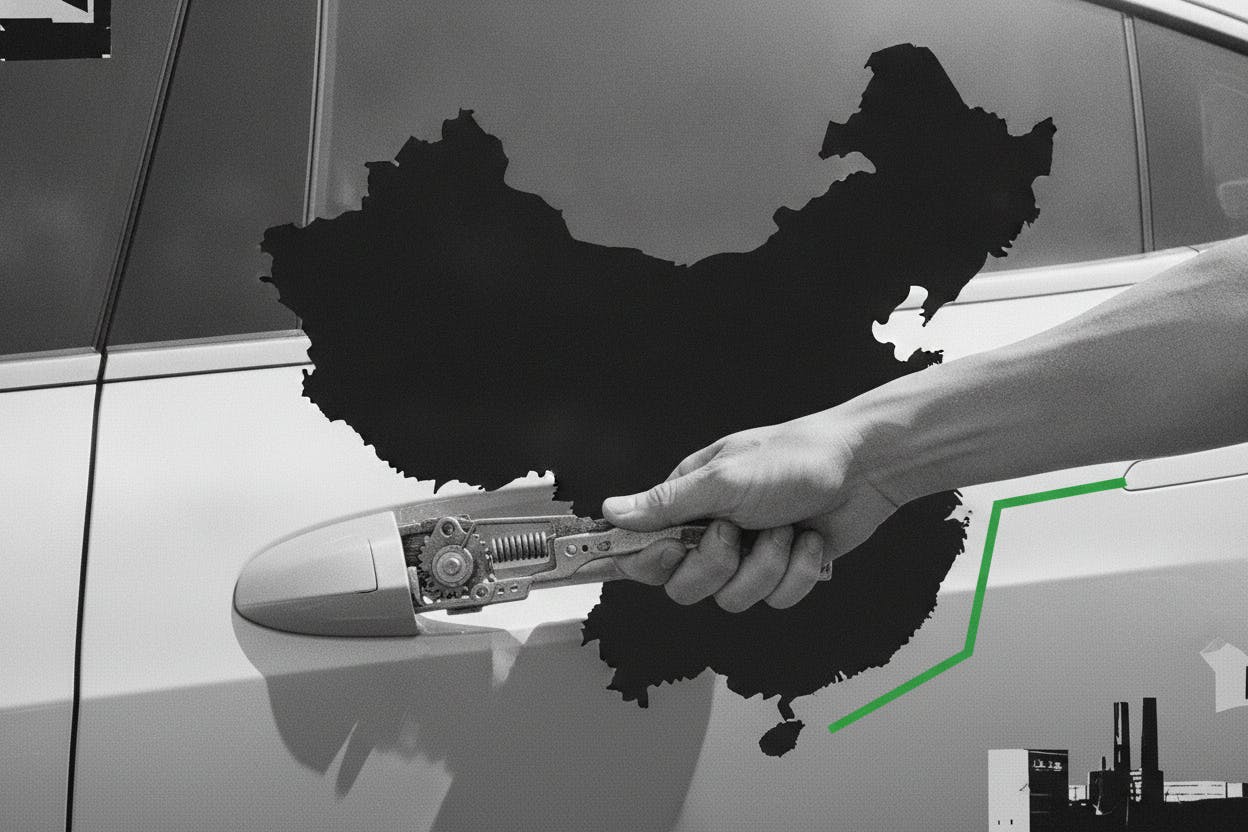
China has launched its largest vehicle recall ever, affecting 4.3 million cars, to ensure passengers can escape if an electric vehicle loses power. The sweeping action targets emergency mechanical door releases that drivers may struggle to locate in a crisis, a problem that has become more pressing as automakers replace traditional handles with flush, electronic designs.
According to Reuters, nine automakers—including Tesla, Xiaomi, and Leapmotor—are involved. Some fixes are as simple as adding clearer labels or markings to existing manual releases. Others are over-the-air software updates that, for example, automatically lower windows when the car detects an emergency, giving occupants another way out.
The recall follows a February policy move by Beijing: a ban on exterior electronic door handles that lack a traditional manual backup. That rule is set to apply to new models starting next year. Together, the recall and the new regulation signal that China is writing a new safety rulebook for the age of software-defined cars—and it is moving faster than regulators in the United States or Europe.
Why emergency door releases matter
In conventional cars, door handles are mechanical: pull the handle, a cable or rod opens the latch. But many modern EVs use electronic handles that pop out only when the car senses the key fob or a touch. If the battery dies or the car's electronics fail, those handles may not work, and passengers can be trapped inside.
To comply with safety rules, automakers include a hidden mechanical release—often a small lever or pull tab near the window sill. But in a panic, or in the dark, drivers and passengers may not know it exists. The recall aims to make these releases more obvious and, in some cases, to provide an alternative like lowering the windows.
The scale is unprecedented. A 4.3 million-vehicle recall dwarfs most previous actions in the auto industry. It touches some of the biggest names in EVs, including Tesla, whose Model 3 and Model Y are among the best-selling electric cars globally, and Xiaomi, the smartphone giant that entered the car market only last year with its SU7 sedan. Leapmotor, a smaller Chinese EV maker backed by Stellantis, is also affected.
Beijing's regulatory push
The recall is not happening in a vacuum. In February, China's Ministry of Industry and Information Technology announced that new models must include a traditional manual door release as a backup to electronic handles. The rule takes effect next year, giving automakers a deadline to redesign their doors.
This is a clear signal that Chinese regulators are willing to impose strict safety standards on the EV industry, even if it means extra cost and complexity for manufacturers. It also shows they are paying close attention to real-world risks that emerge as cars become more software-dependent.
By acting early, Beijing is effectively setting a global benchmark. Automakers that sell in China—which is the world's largest car market—must comply with these rules, and those designs often carry over to other markets. That means the safety standard China sets today could become the de facto norm worldwide, much as European crash-test standards have influenced car design everywhere.
What it means for investors
For investors, this recall is a reminder that regulatory risk is a real factor in the EV sector. Companies that move quickly to comply may avoid future penalties and reputational damage, while those that lag could face costly fixes or bans on new models.
The recall itself is unlikely to have a major financial impact on the automakers involved. The fixes are mostly software updates or simple labels, which are cheap compared to replacing batteries or motors. But the broader trend—stricter safety rules, more recalls, and higher compliance costs—could squeeze profit margins in an industry already facing intense price competition.
Investors should also watch how this affects consumer trust. A recall of this size, even for a relatively minor issue, can raise questions about a brand's quality and safety. For newer entrants like Xiaomi, which is still building its reputation in cars, a recall could be more damaging than for established players like Tesla.
At the same time, the move highlights China's determination to lead in EV technology and safety. That could benefit suppliers of safety components, software update platforms, and testing services. But it also adds another layer of complexity for global automakers trying to sell in China, especially as trade tensions rise—the US recently doubled tariffs on Canadian auto imports and is weighing new tariffs on Chinese goods, as the trade war widens.
For everyday investors, the key takeaway is that EVs are still a young and evolving industry. Safety standards are being written in real time, and companies that adapt best will likely be the long-term winners. The recall is a reminder to look beyond flashy features and consider how automakers handle the less glamorous side of carmaking: compliance, safety, and reliability.
As China pushes ahead with its own rulebook, other regulators may follow. That could mean more recalls and more scrutiny for automakers worldwide—but also safer cars for everyone.