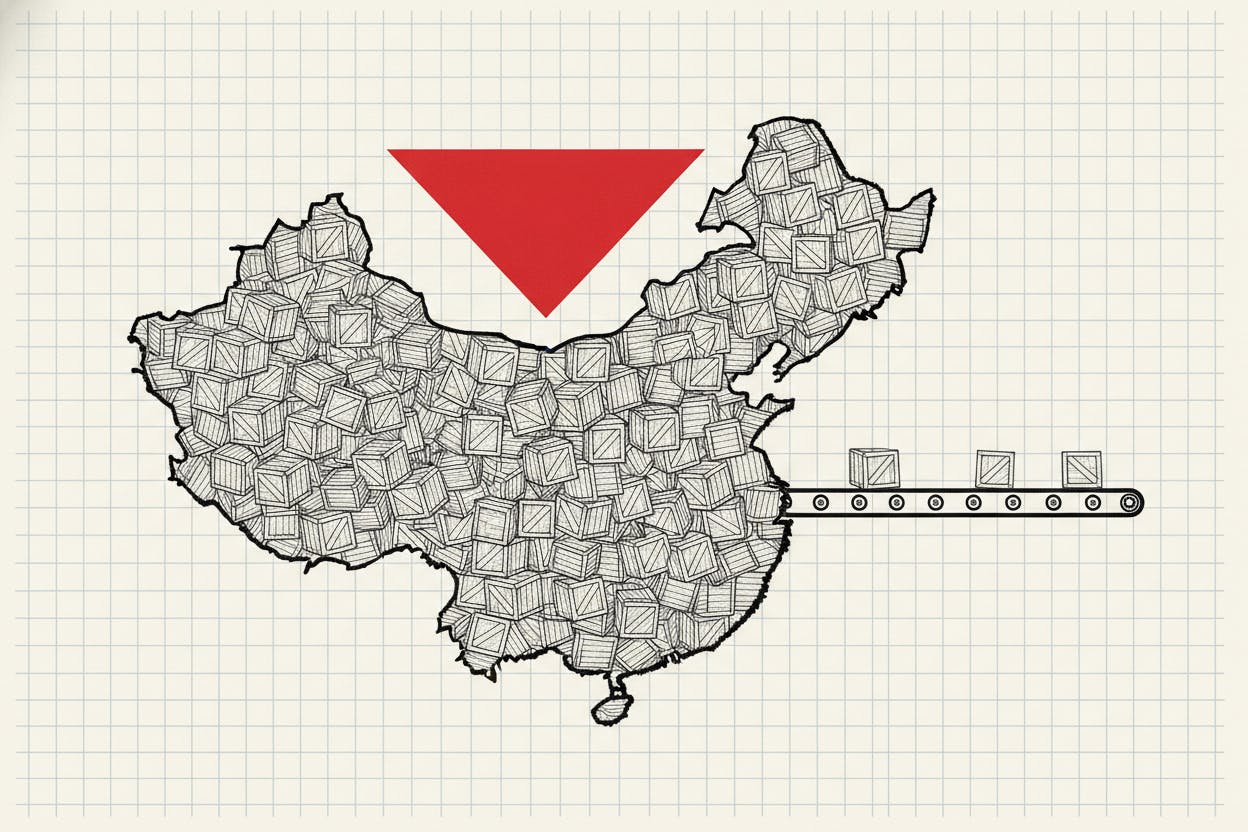
China's manufacturing sector lost some momentum in July, according to two closely watched surveys released this week. While one measure still pointed to expansion, the other slipped into contraction, underscoring the uneven nature of the country's economic recovery and adding to pressure on policymakers to step up support.
The private Caixin/S&P Global China General Manufacturing PMI fell to 50.9 from 51.7 in June, marking the slowest pace of expansion in four months. A reading above 50 signals growth, while below 50 indicates contraction. The official manufacturing PMI, compiled by the National Bureau of Statistics, dipped to 49.8, back into contraction territory after a brief return to growth in June.
What's behind the slowdown?
The details of the private survey show a broad softening. Output and new orders both grew more slowly than in June. New orders rose at their weakest pace since January, and export orders only just returned to modest growth after shrinking in May and June. That suggests demand, both at home and abroad, is losing steam.
On a more positive note, factories continued to add staff, a sign that businesses are not yet cutting back aggressively. But the overall picture is one of a manufacturing sector that is still expanding, but barely, and with momentum clearly fading.
The official gauge's return to contraction is particularly notable because it is the measure most closely watched by policymakers and markets. It reflects conditions at larger, state-owned enterprises, while the private survey tends to capture smaller, export-oriented firms. The divergence between the two is not unusual, but both now point in the same direction: slower growth.
Why it matters for investors
China is the world's second-largest economy and a key driver of global demand for everything from commodities to consumer goods. A slowdown in its factories can ripple through global supply chains and affect companies that sell into China or rely on Chinese manufacturing inputs.
For investors, the July data reinforces a narrative that has been building for months: China's post-pandemic recovery is uneven and losing momentum. While services have held up relatively well, manufacturing and exports are struggling against weak global demand and lingering domestic confidence issues.
The softer data also raises the stakes for Beijing. With the economy growing more slowly than many had hoped, pressure is mounting on leaders to deliver more stimulus. The brief notes that the data keeps pressure on leaders to lean on already-budgeted infrastructure spending. That suggests the government may accelerate spending on roads, bridges, and other public works to prop up growth, rather than rolling out broad new stimulus measures.
Infrastructure spending has been a go-to tool for Chinese policymakers in past slowdowns. It can boost demand for steel, cement, and machinery, and support employment. But it also adds to debt and can take time to feed through to the wider economy.
Investors will be watching for signs of further policy action, including any moves from the central bank. China's central bank has already signaled a more accommodative stance, as noted in recent coverage of its policy signals. More rate cuts or reserve requirement reductions could be on the table if data continues to weaken.
What to watch next
The coming weeks will bring more data points that will help clarify the trajectory. August's PMI readings will be closely scrutinized for any further deterioration. Also on the radar are trade data, which will show whether export orders are translating into actual shipments, and retail sales figures, which will indicate whether domestic consumption is picking up the slack.
For global investors, the key question is whether China's slowdown is a temporary blip or a more sustained trend. The answer will influence everything from commodity prices to the earnings outlook for multinational companies with significant China exposure.
In the meantime, the mixed signals from the factory surveys are a reminder that China's recovery is not a straight line. While the country remains a critical engine of global growth, the engine is currently sputtering. That is why markets are likely to remain sensitive to any news of policy support, as seen in recent rallies in Chinese tech stocks on policy pledges.
For everyday investors, the takeaway is to keep an eye on China as a barometer for global growth. A prolonged slowdown could weigh on international markets, while a decisive policy response could provide a boost. As always, diversification across regions and asset classes remains a prudent strategy.