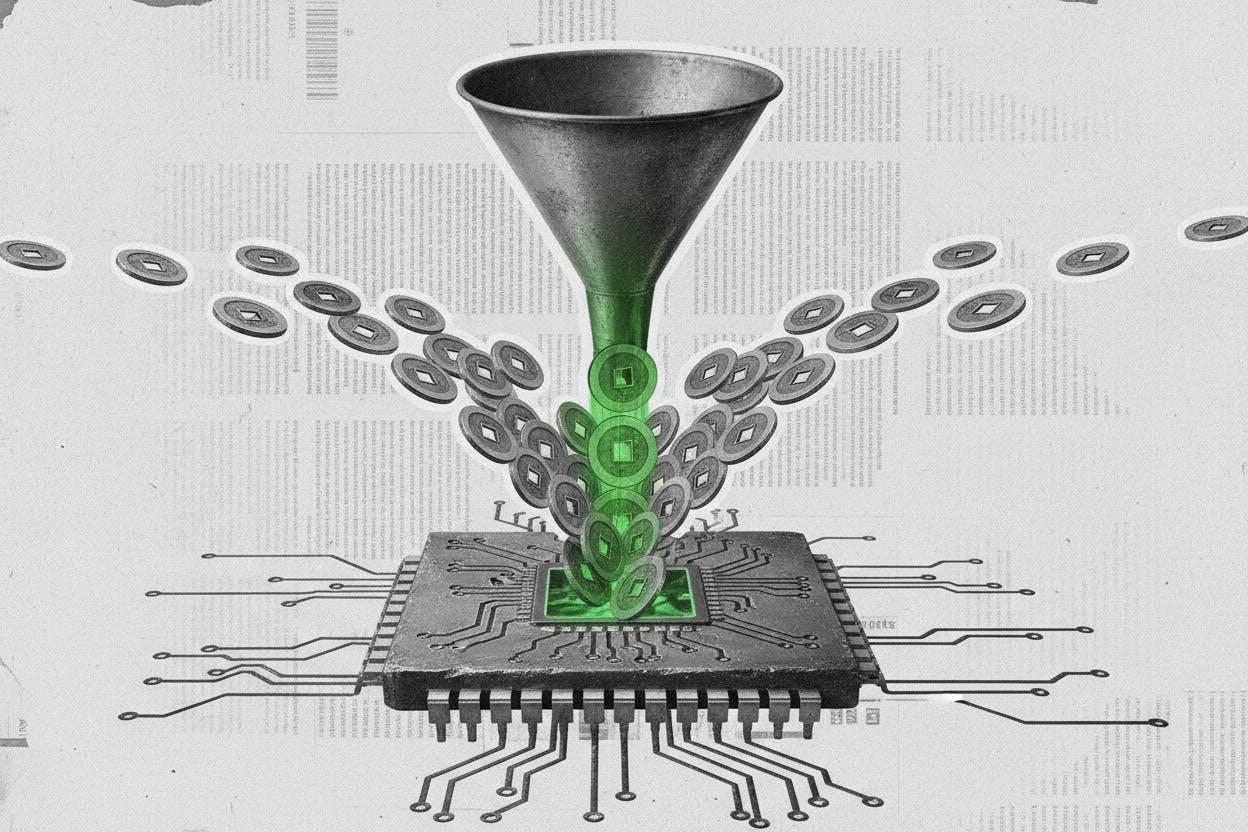
China's domestic market for technology initial public offerings (IPOs) is showing signs of a revival, with chip and artificial intelligence companies filing plans to raise at least 126.1 billion yuan (about $17.4 billion) on the Shanghai and Shenzhen stock exchanges. The surge follows signals from regulators that they will support listings in what Beijing calls "future industries," as part of a broader push for technological self-reliance.
What's behind the pipeline
The filings come after a period of relative quiet in China's onshore tech IPO market, when some companies looked to Hong Kong instead. Now, regulators are making it easier for tech firms to go public, aiming to channel capital into domestic chipmaking and AI development. According to Reuters, tech companies have raised $3.1 billion in China listings so far this year through June 18, more than five times the pace in the same period last year. Nearly 50 firms are currently in the IPO queue.
The largest potential deal is from memory-chip maker ChangXin Memory Technologies (CXMT), which is seeking a 29.5 billion yuan listing in Shanghai. Data provider LSEG says that would be the year's biggest IPO in China and could lift total proceeds to a three-year high. Other filers include a range of chip and AI hopefuls, reflecting Beijing's focus on reducing reliance on foreign technology.
Policy signals have been lining up. On June 17, regulators said they would support listings in areas such as quantum technology and brain-computer interfaces. The Shanghai Stock Exchange also issued rules aimed at smoothing share sales for large-language-model companies on the STAR Market, China's Nasdaq-style board for tech firms. These moves provide a clearer exit route for venture capital and private equity investors, who have been waiting for opportunities to cash out.
What it means for investors
Recent mainland tech IPOs have seen dramatic first-day pops. For example, SJ Semiconductor surged more than eightfold, and Semight Instruments jumped nearly 28-fold. These gains are partly because initial floats are often small, so a bit of extra demand can push prices sharply higher. But a fuller pipeline flips that dynamic: more deals and bigger deals mean more new shares for investors to absorb, which can chip away at the scarcity premium that helps power early pops.
For the STAR Market and onshore chip and AI names, that usually shows up as tougher pricing and more mixed performance after listing. Investors are likely to become more selective on valuations as supply grows. The CXMT IPO, if it proceeds, will be a key test of whether the market can absorb such a large deal without dampening enthusiasm for the sector.
The revival also contrasts with recent moves by Chinese regulators to restrict certain overseas exposures. For instance, China blocked brokers from adding new overseas stock exposure via total return swaps, a sign that Beijing wants to keep capital at home. Meanwhile, China's central bank has quietly pushed banks to lend more amid weak demand, providing liquidity that could support IPO activity.
Broader context
The push for tech self-reliance is a long-term theme for China, as it seeks to reduce dependence on foreign chips and AI technology. The IPO pipeline is one piece of that puzzle, alongside government funding and state-backed investment. However, the market's ability to absorb a wave of new listings will depend on investor appetite and broader economic conditions.
Other sectors are also seeing activity. For example, China's Z.ai plans a Shanghai listing after its open-source AI model rivaled US giants, highlighting the diversity of AI companies seeking public funding. And in commodities, iron ore headed for a seventh weekly drop as China port inventories swelled, reflecting mixed signals in the broader economy.
For everyday investors, the key takeaway is that China's onshore tech IPO market is shifting from a period of scarcity to one of abundance. That could mean more opportunities to invest in cutting-edge technology, but also more risk as valuations become harder to justify. As always, it pays to look beyond the hype and focus on the fundamentals of each company.