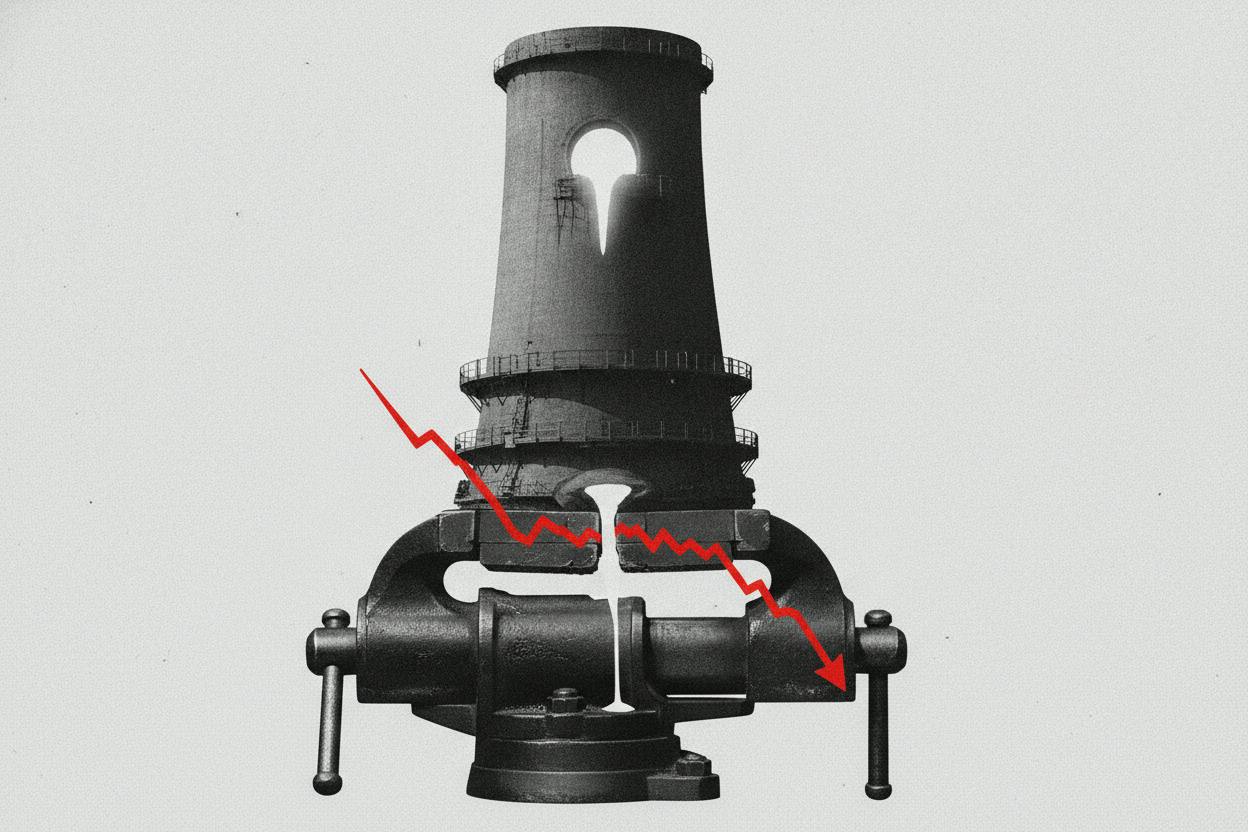
China's steel industry, the world's largest, kept its furnaces burning in September even as profits stayed razor-thin. Average daily crude steel output rose 1.9% to 2.45 million metric tons, according to the latest data, helped by robust export demand. But the surge in production did little to ease the financial strain on mills: only about 7% of producers were profitable by the end of the month.
Why output rose despite weak margins
The increase in production comes as Chinese steelmakers leaned on overseas buyers to absorb supply, with exports providing a crucial outlet for domestic overcapacity. This is a familiar pattern for the sector, which has long struggled with more capacity than the domestic market can consume. By shipping steel abroad, mills can keep utilization rates high, which helps spread fixed costs over more tons—even if each ton sells at a slim or negative margin.
However, the strategy has limits. Export markets are not infinite, and trade tensions can flare when Chinese steel floods global markets. Moreover, the domestic property sector, a traditional driver of steel demand, remains weak, leaving mills dependent on infrastructure spending and manufacturing for any local pickup.
The profitability squeeze
The fact that only about 7% of mills were profitable at month-end underscores how difficult the operating environment has become. Steelmaking is a capital-intensive business with high energy and raw material costs, and when prices for finished steel fall faster than input costs, margins get crushed. Many mills are likely operating at a loss, hoping to ride out the downturn rather than shut down capacity, which can be costly and difficult to restart.
This kind of margin pressure often leads to production cuts, as loss-making mills eventually reduce output to stem cash burn. But the September data suggests that, at least for now, export orders have been enough to keep many furnaces running. The question is how long that can last if global demand softens or if trade barriers rise.
What it means for investors
For investors, the steel sector's predicament is a mixed signal. On one hand, higher output points to resilient demand from export markets, which could support prices for raw materials like iron ore and coking coal. On the other hand, persistently low profitability suggests that steelmakers themselves are not generating strong returns, which could weigh on their share prices and on the broader industrial complex.
The data also feeds into the wider narrative about China's economic health. Steel output is often seen as a barometer of industrial activity, and the fact that mills are producing more even as profits collapse hints at a market that is being driven by volume rather than value. This is a trend that investors in Chinese equities, as well as in global miners and commodity traders, will be watching closely.
Relatedly, China's upcoming third-quarter growth data is set to be a key test for global markets, as investors look for signs of stabilization in the world's second-largest economy. The steel numbers offer a mixed preview: production is up, but the lack of profitability suggests underlying demand remains fragile.
Broader market context
The steel output report comes amid a mixed picture for global manufacturing. In the United States, factory output beat forecasts in September, helped by a surge in utilities, but services activity has signaled trouble. That divergence highlights the uneven nature of the global recovery and the challenges facing commodity-dependent industries.
For China, the steel sector's struggles are part of a larger story of overcapacity and deleveraging. The government has pushed for consolidation and capacity cuts in recent years, but progress has been slow, and many mills remain reliant on exports to stay afloat. The recent uptick in output suggests that some of those efforts may have stalled, at least in the short term.
What to watch next
Investors should keep an eye on several factors in the coming weeks: the trajectory of export orders, any new government policy on capacity cuts, and the direction of iron ore prices. If margins remain depressed, expect to see more production cuts, which could eventually tighten supply and support steel prices. Conversely, if exports continue to prop up output, the sector may keep churning out steel at thin margins, with implications for global prices and for the profitability of miners and traders.
For everyday investors, the key takeaway is that China's steel industry is running hot but not earning well. That disconnect is worth monitoring, as it can ripple through commodity markets and into the earnings of companies across the supply chain.



