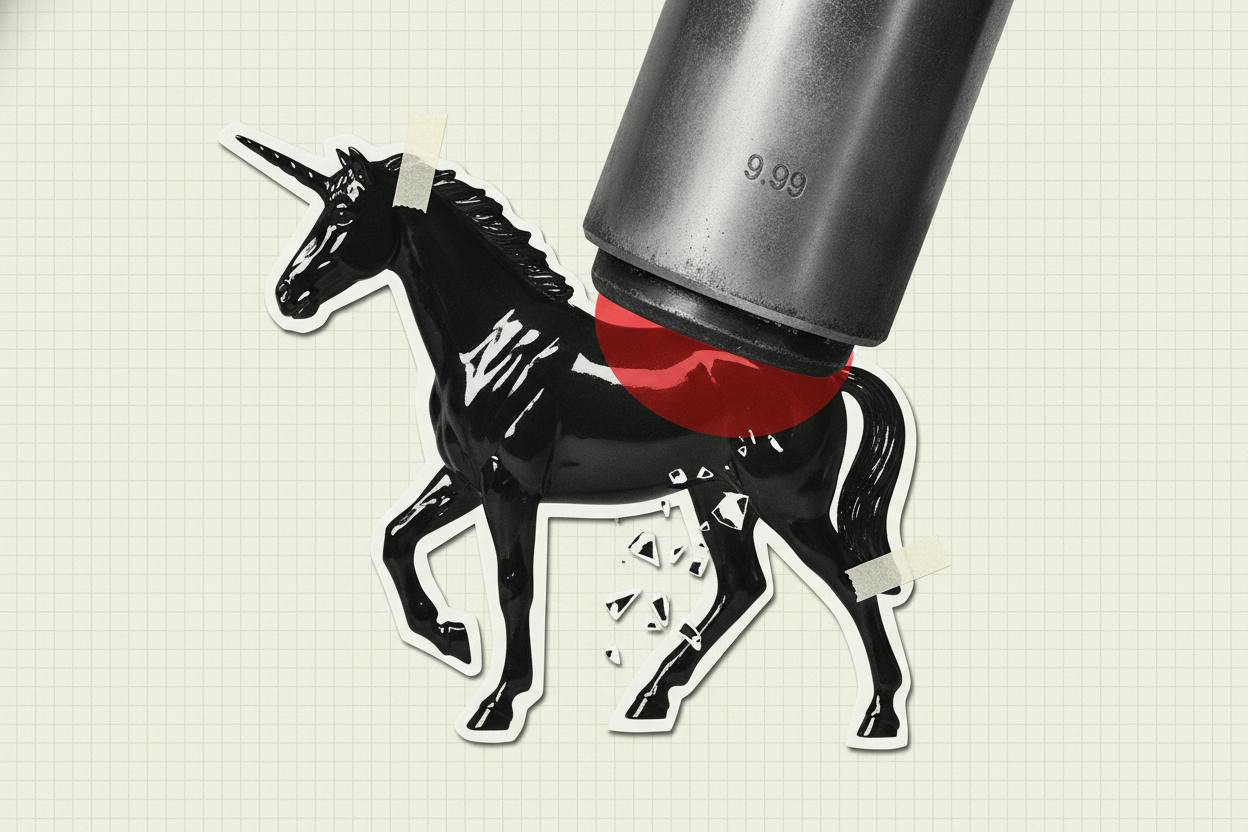
Private company valuations have been on a tear, but the real test may come when those companies try to go public. That's the warning from Rohan Oza, co-founder of CAVU Consumer Partners, who told Bloomberg that the public markets could rein in lofty private equity pricing.
Oza's comments come as a handful of private giants—like SpaceX and Anthropic—continue to command eye-popping valuations. But for the broader universe of private companies, the path to an IPO or direct listing could be far less forgiving.
Why private valuations can drift from reality
In the private markets, a company's value is set during occasional funding rounds, often led by venture capital or private equity investors. These rounds can be months or even years apart, and the price is negotiated between a small group of insiders. That process can keep valuations high, even when the underlying business is still proving its growth plan or path to profits.
"Private markets can go a long time without a true price test," Oza said. "Valuations get set in occasional funding rounds, often led by investors who feel pressure to put cash to work." That dynamic can inflate prices, especially in hot sectors like artificial intelligence and space.
But when a company goes public, its shares are priced by a much broader set of investors—mutual funds, pension funds, and everyday retail investors. That can be a rude awakening. Public investors tend to demand clearer evidence of profitability and sustainable growth, and they can punish companies that don't deliver.
Standouts like SpaceX and Anthropic pull ahead
Not all private companies face the same scrutiny. Oza noted that a few standouts—like SpaceX and Anthropic—are pulling ahead, commanding valuations that even public market skeptics might find hard to dismiss. These companies operate in sectors with massive long-term potential and have demonstrated strong revenue growth or strategic importance.
SpaceX, for example, has become a dominant player in commercial spaceflight, while Anthropic is a leading AI lab. Their valuations reflect not just current performance but also the belief that they will define their industries for years to come.
But for every SpaceX or Anthropic, there are many private companies whose valuations are built on optimism rather than fundamentals. When those companies attempt to go public, they may find that public investors are less willing to pay up.
What it means for investors
For everyday investors, the gap between private and public valuations matters in a few ways. First, it affects the returns of venture capital and private equity funds, which are increasingly accessible through institutional channels and some retail products. If private valuations come down, those funds could see markdowns.
Second, it influences the IPO market. When private companies finally go public, their debut prices can be volatile. Investors who buy into an IPO are essentially betting that the public market will validate the private valuation—or exceed it. If the private price was too high, the stock could fall on day one.
Oza's comments also highlight a broader trend: the lines between private and public markets are blurring. Companies are staying private longer, and the public markets are becoming a final arbiter of value. That means the discipline of public market pricing is being delayed, not avoided.
For investors, the takeaway is to be cautious about assuming that private valuations are accurate. They are often the product of a negotiation between a few parties, not a broad market consensus. When the public test comes, the results can be surprising.
Related reading: Tech's outsized earnings role shows how a few big companies can sway the entire market, a dynamic that also applies to private giants. And for a look at how private equity deals are still happening, see KKR's $2.9B railcar sale.
As the market evolves, investors should keep an eye on the private-to-public pipeline. The next few years could bring a wave of IPOs from companies that have been valued in a vacuum. Whether those valuations hold up will be one of the key questions for markets.