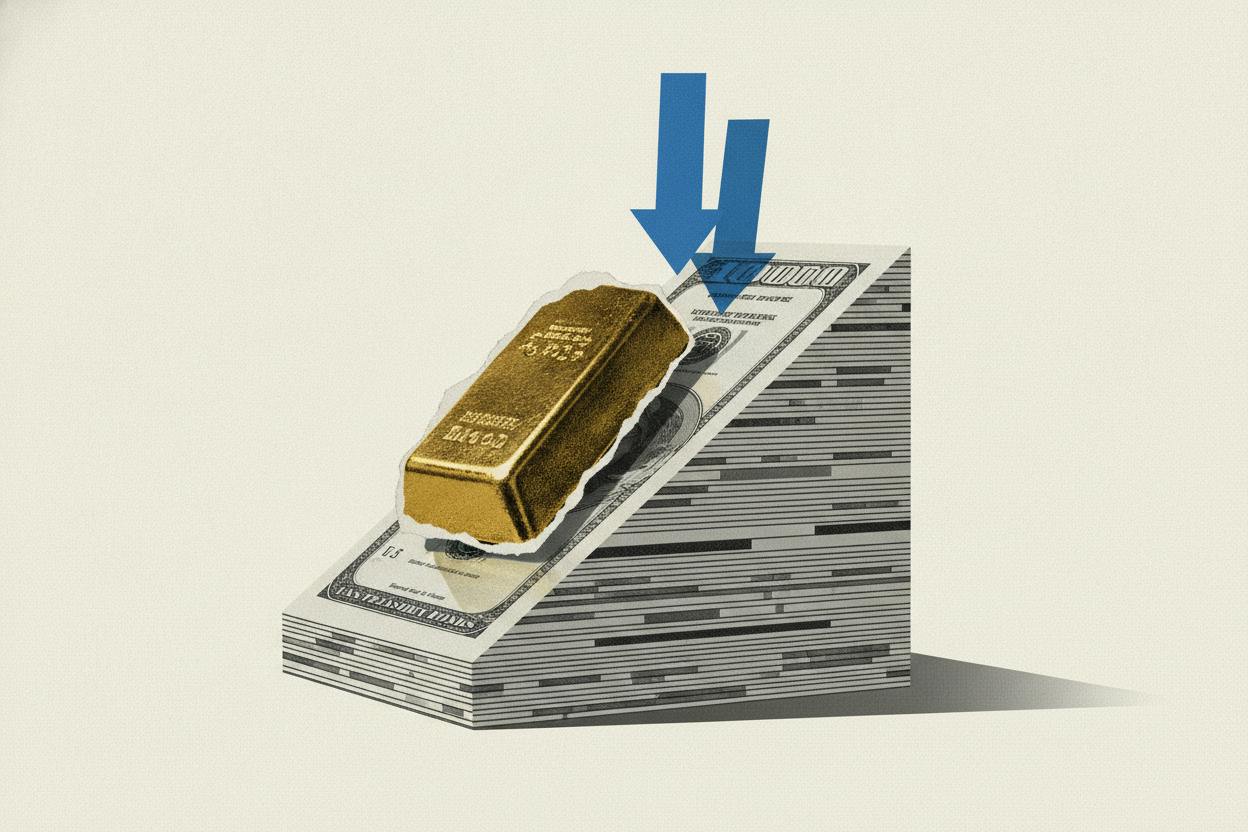
Gold prices edged lower on Tuesday, with spot gold slipping 0.4% to around $4,148 an ounce, as a firmer US dollar and higher Treasury yields weighed on the non-yielding metal. The move comes as investors look past this month's Federal Reserve policy decision and toward the central bank's forward guidance and fresh inflation data.
Why gold is under pressure
Gold is priced in dollars, so when the greenback strengthens, the metal becomes more expensive for buyers using other currencies, which tends to dampen demand. At the same time, rising Treasury yields increase the "opportunity cost" of holding gold, which pays no interest. When yields on bonds climb, investors can earn more from fixed-income assets, making gold relatively less attractive.
These two forces have been the main drivers of gold's recent moves, and they remain in focus as traders await the Fed's next signal.
The Fed decision: what's already priced in
According to CME Group's FedWatch Tool, markets currently assign roughly an 83% probability that the Fed will hold interest rates steady at its upcoming meeting. That means the decision itself is unlikely to surprise. Instead, the market's attention has shifted to the Fed's statement and press conference for hints about the path of rates beyond this month.
Also on the radar is next week's release of the personal consumption expenditures (PCE) price index, the Fed's preferred inflation gauge. A hotter-than-expected reading could reinforce expectations that rates will stay higher for longer, while a cooler number might fuel bets on earlier cuts.
What it means for investors
For everyday investors, the key takeaway is that gold's direction may hinge more on the Fed's tone and the inflation data than on the rate decision itself. If the Fed sounds more concerned about inflation, or if PCE comes in hot, traders may push rate expectations higher, which could lift the dollar and real yields—both headwinds for gold. Conversely, a dovish message or soft inflation data could ease those pressures and support gold.
Technical levels also matter. Analysts point to resistance around $4,235 and support below $4,100, with the next meaningful move likely to be driven by these macro signals rather than a one-day reaction to a widely expected "no change."
For those with gold exposure, this means staying alert to the Fed's language and the PCE report. As always, gold can be volatile around central bank events, and this week is no exception.
Broader market context
The moves in gold come alongside broader shifts in bond markets. Treasury yields have been edging up recently, partly as AI stock jitters fade and investors refocus on economic data. Meanwhile, other central banks are also in focus—for instance, hawkish talk from the Bank of Canada has kept the Canadian dollar firm, and cooler inflation in Canada has trimmed odds of an October hike. These cross-currents can influence the dollar and, by extension, gold.
For now, gold investors are in a waiting game. The Fed's message and the PCE data will likely set the tone for the metal in the coming weeks.



