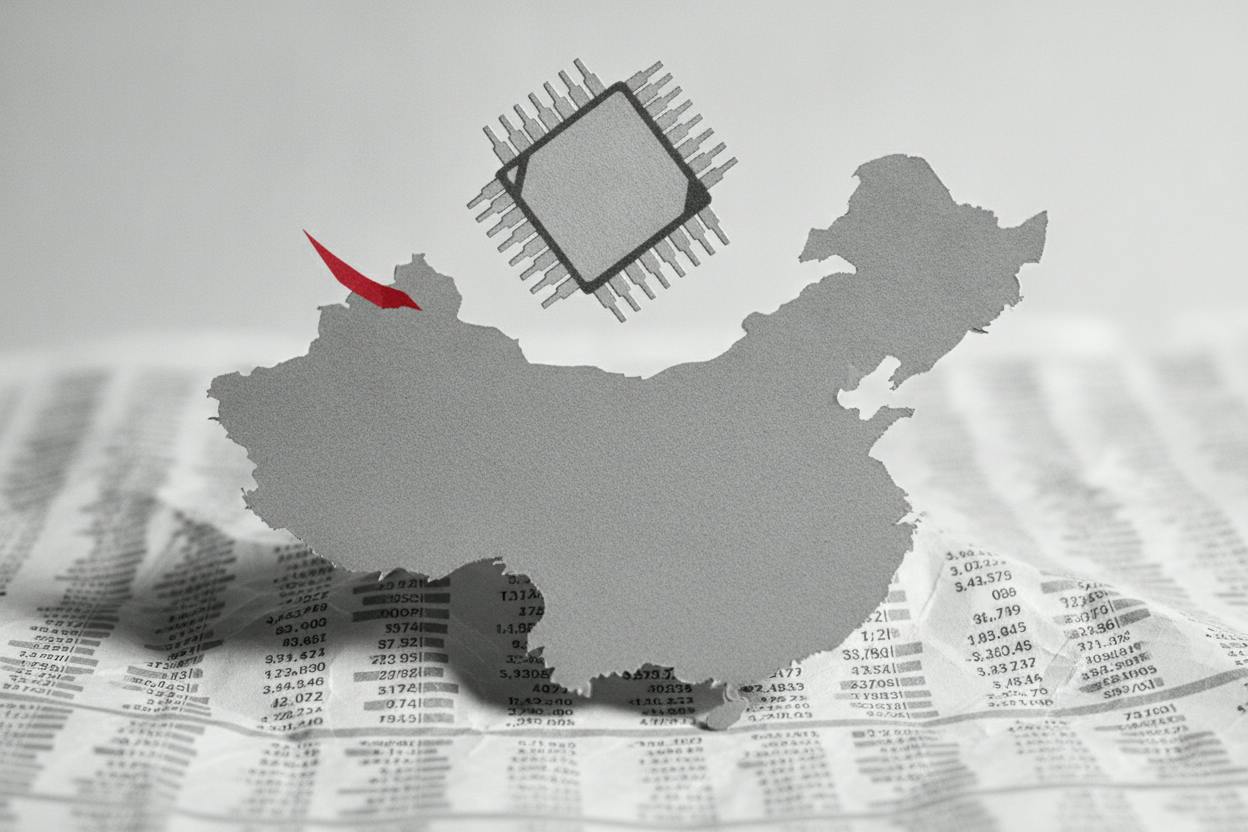
Chinese stocks slipped on Tuesday as the International Monetary Fund (IMF) slightly lowered its growth forecast for the world's second-largest economy, adding to a global tech-led selloff. The Shanghai Composite fell 0.9%, while the tech-heavy STAR 50 index—which tracks Shanghai-listed science and technology leaders—dropped a much steeper 3.3%.
The IMF now expects China's economy to grow 4.5% in 2026, a tenth of a percentage point less than its July projection. It also trimmed its 2027 outlook to 4%. While the adjustment is small, it chips away at the long-term growth narrative that underpins many investment decisions.
Why the IMF's tweak matters
Forecast cuts of this size rarely move markets on their own, but they feed into how investors value companies. When analysts build models to estimate what a business is worth, they project future earnings and then discount them back to today's dollars. A slightly lower growth outlook can reduce those future earnings expectations, particularly for companies whose profits are expected to arrive many years down the road.
That's why growth and technology stocks tend to be more sensitive to changes in long-run forecasts. A large portion of a tech company's value rests on cash flows expected far in the future—what finance professionals call the "terminal value." When the long-term growth picture dims even a little, that distant value shrinks, and the stock price can react sharply.
In contrast, broader indexes like the Shanghai Composite include a wider mix of industries—banks, manufacturers, and consumer firms—whose earnings are more tied to the here and now. That helps explain why the STAR 50 fell more than three times as much as the broader benchmark.
Trade surplus offers some support
Not all the news was gloomy. China's September trade surplus widened to $133.53 billion, a sign that exports remain resilient and demand for Chinese-made goods is holding up. A wider surplus can also cushion the economy against domestic weaknesses, as overseas sales bring in revenue and support factory activity.
However, the surplus didn't do much to lift sentiment on Tuesday. The global mood was already cautious, with technology shares under pressure across Asia. Chip stocks elsewhere in the region have been volatile as investors weigh the pace of AI spending against rising bond yields. That backdrop spilled over into China, where tech names led the decline.
The IMF's revised outlook also fits a broader pattern. The fund has been highlighting a divergence in Asia, with China's growth slowing while other economies in the region pick up. That split could influence where global investors choose to put their money next.
What it means for investors
For everyday investors, the key takeaway is that small forecast tweaks can have outsized effects on certain parts of the market. If you hold broad China-focused funds, a 0.1 percentage point cut to GDP growth may not change your strategy much. But if you're invested in growth or tech-heavy portfolios, you might see more volatility when international bodies adjust their long-term outlooks.
It's also worth remembering that trade data can be a mixed signal. A record surplus might sound positive, but it can also reignite trade tensions with partners who see it as evidence of unfair practices. China's trade surplus recently hit a 20-month high, and that kind of imbalance often draws scrutiny.
Looking ahead, investors will likely keep an eye on whether the IMF's forecast is a one-off tweak or the start of a trend. If growth expectations continue to drift lower, tech-heavy indexes could remain under pressure. On the other hand, if exports stay strong and domestic policy support kicks in, the broader market might hold up better than the growth-sensitive corners.
For now, the message is one of caution: even small changes to the long-run story can move markets, especially for stocks that depend on future growth.