Indian importers are continuing to buy dollar forward contracts to protect themselves against currency swings, even after the Reserve Bank of India (RBI) introduced rules that make this hedging more expensive. The central bank now requires banks to set aside cash equal to 20% of the notional value of the dollar forwards they sell, a cost that lenders have passed on to customers. That has added roughly 11-14 paisa per month to the price of hedging, according to bankers.
Despite the higher cost, demand for these contracts has not dried up. Bankers told Reuters that importers are still booking forwards, partly because the rupee has firmed recently. The currency strengthened to 94.72 per dollar on Wednesday, up from around 96.70 last week. A stronger rupee makes the cost of hedging relatively less painful, even as the extra charge grows with the length of the contract.
What are dollar forwards and why do importers use them?
Dollar forwards are financial contracts that allow a company to lock in an exchange rate for a future date. For an Indian importer that needs to pay for goods in dollars, buying a forward means they know exactly how many rupees they will need to pay, regardless of what happens to the currency in the meantime. This removes the uncertainty of currency fluctuations, which can otherwise eat into profit margins.
The RBI's new rule, introduced as part of its efforts to manage the rupee's volatility, forces banks to hold cash against the notional value of these contracts. The notional value is the face amount used to calculate the trade, not the actual cash that changes hands. By requiring banks to park 20% of that amount, the RBI aims to discourage speculative trading and reduce pressure on the rupee. But it also raises the cost of legitimate hedging for businesses.
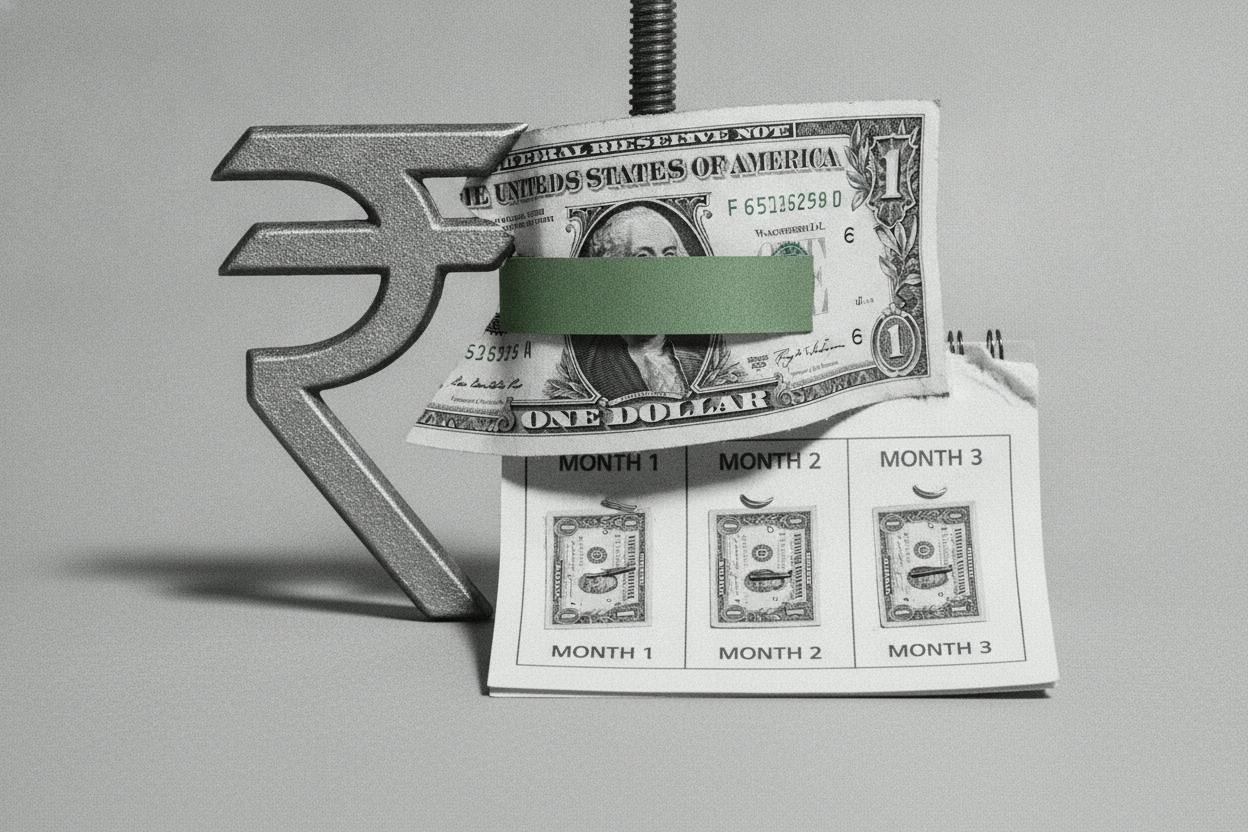
Banks have responded by charging importers more for these contracts. The extra cost is measured in paisa, with 100 paisa making one rupee. The increase of 11-14 paisa per month means that a three-month forward contract could cost an importer roughly 33-42 paisa more per dollar than before the rule change.
Why demand is holding up
Even with the added cost, importers are not abandoning their hedging strategies. The recent firmness of the rupee is a key factor. When the rupee is strengthening, the cost of buying a dollar forward is lower in rupee terms, because the forward rate reflects the expected future spot rate. A firmer rupee also reduces the urgency to hedge, but for many businesses, the certainty of a locked-in rate is worth the premium.
Bankers note that the demand is particularly strong for short-term contracts, where the extra cost is smaller. Longer-dated forwards, which carry higher cumulative charges, are seeing less interest. This suggests that importers are willing to pay for protection over the near term but are more cautious about committing to longer horizons.
The broader context is also important. India's economy is heavily dependent on imports, from crude oil to electronics and machinery. For these businesses, currency swings can have a significant impact on costs. The RBI's move is part of a wider effort to manage the rupee's stability, but it comes at a time when global markets are volatile, with the dollar's strength being a major theme. As the dollar slips ahead of US inflation data, the rupee's recent gains could be short-lived, making hedging even more critical for importers.
What it means for investors
For everyday investors, this story matters because it affects the earnings of Indian companies that rely on imports. When hedging costs rise, those companies may see their profit margins shrink, which could weigh on their stock prices. Conversely, a firmer rupee can help offset some of that pressure, as it makes imports cheaper in rupee terms.
Investors should also watch how the RBI's policy evolves. If the central bank tightens further, hedging costs could climb even more, potentially hitting sectors like consumer goods, which are already facing margin pressure from rising input costs. On the other hand, if the rupee continues to strengthen, the impact of the new rule may be muted.
The RBI's move is also part of a broader global trend of central banks trying to manage currency volatility. In the US, the Federal Reserve's interest rate decisions have a direct impact on the dollar's value, which in turn affects currencies like the rupee. As traders await US inflation data and Fed signals, the direction of the dollar will be a key factor for Indian importers and investors alike.
For now, the message is clear: Indian importers are adapting to the higher cost of hedging, but they are not giving up on protection. The rupee's recent strength has made the added expense more bearable, but the longer-term outlook remains uncertain. Investors should keep an eye on currency movements and RBI policy, as they will continue to shape the fortunes of India's import-dependent companies.