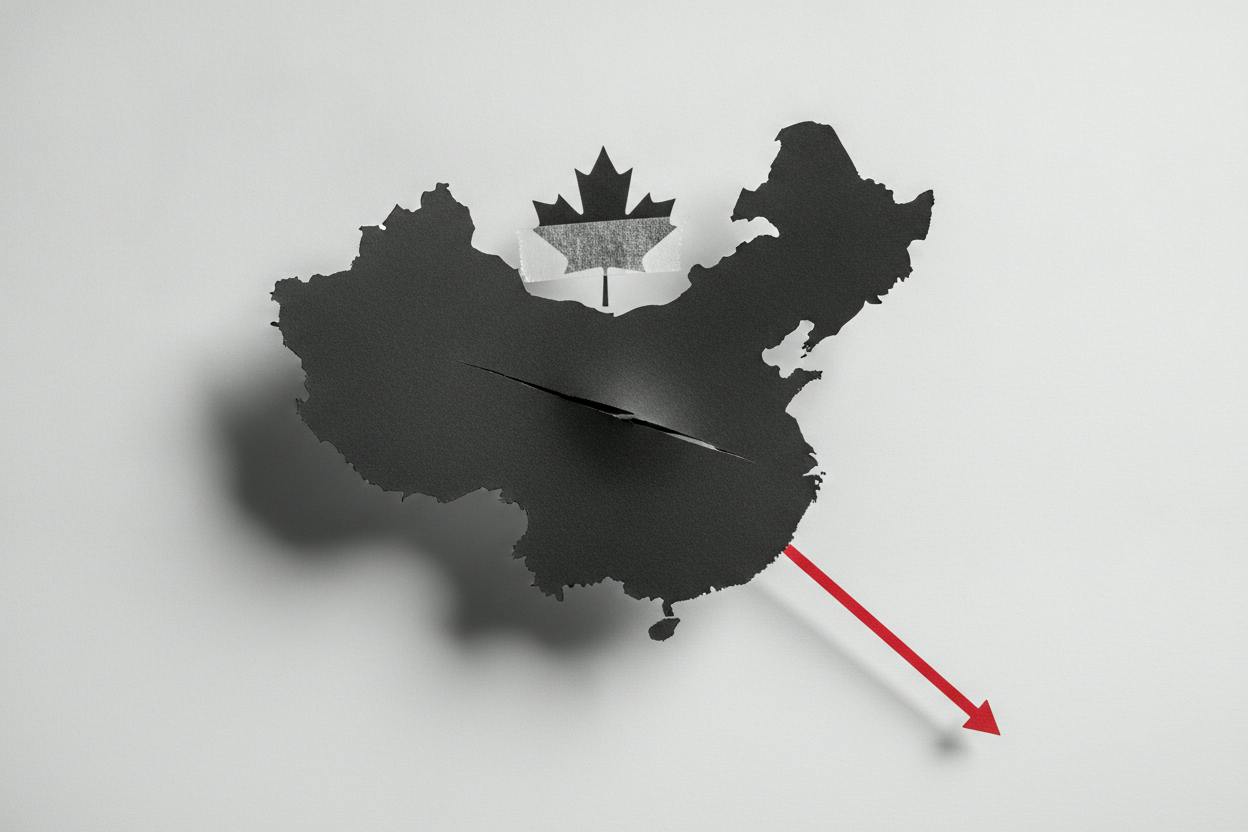
China's stock market closed lower on Wednesday, with the Shanghai Composite slipping 0.5% to 3,584.58 and the Shenzhen Component falling 0.5% to 10,638.52. The decline came even as China and Canada announced an expansion of tariff relief for each other's goods, a move that might normally be expected to lift sentiment.
The muted reaction underscores a key reality for investors: trade headlines can help specific exporters, but they rarely move a broad index when the domestic economy looks shaky.
What happened
Following a meeting in Shenzhen between Chinese President Xi Jinping and Canadian Prime Minister Mark Carney, China said it would offer up to C$400 million in additional tariff relief for Canadian meat and seafood exports. In return, Canada extended tariff exemptions for Chinese steel and aluminum beyond their planned end-2026 expiry.
The deal is a positive for companies directly involved in those sectors. Canadian beef and pork producers, as well as Chinese steelmakers, could see improved export volumes and better profit margins. But the overall market response was tepid, with investors choosing to focus on more fundamental concerns.
Why the market shrugged
Analysts point to two main drags: weak manufacturing activity and soft consumer demand. Recent data have shown factory output slowing and shoppers remaining cautious, which raises questions about the sustainability of corporate earnings growth.
Tariff carve-outs like this mostly work through a narrow channel. They can support export volumes and profit margins for the companies directly shipping those goods. But broad benchmarks usually follow the earnings revision cycle—when analysts raise or cut their forecasts for economy-wide profits—because that's what changes how much investors are willing to pay for stocks overall.
With manufacturing and consumer demand still looking soft, many investors are treating the Canada-China tariff easing as a sideshow. Until there are clearer signs of improving domestic momentum, China's major indexes are likely to remain more sensitive to growth data and profit expectations than to incremental trade relief.
What it means for investors
For everyday investors, the takeaway is that trade deals, while newsworthy, are often not enough to move the needle on a whole market. The performance of a stock index is driven by the collective earnings power of its companies, and that depends on the broader economy.
In China's case, the focus remains on whether policymakers can stimulate domestic demand and stabilize the property sector. Until those fundamentals improve, even positive trade headlines may have limited impact on stock prices.
Investors should also keep an eye on global trade dynamics. The Canada-China agreement comes amid a broader backdrop of trade tensions and shifting supply chains. For context, US chip export curbs have hit Southeast Asian data center stocks, and Asia's AI stocks have slid on similar concerns. These developments highlight how interconnected markets are, and how trade policy can ripple across regions.
For now, China's stock market appears to be in a wait-and-see mode. Investors are likely to watch upcoming economic data, including manufacturing PMIs and retail sales, for signs of a turnaround. Until then, the market may continue to trade on the health of the domestic economy rather than on trade deals.