Chinese and Hong Kong tech stocks slid on [day], as a selloff in US artificial intelligence shares spilled into Asia and new signs of chip constraints added to the gloom. By midday, mainland benchmarks were at multi-month lows: the Shanghai Composite fell 1.6% and the CSI 300 dropped 1.7%, while growth-heavy gauges like ChiNext and Shanghai's STAR50 slid 2.1% and 2.7%.
The mood soured after US AI-linked stocks weakened following Anthropic's IPO, which failed to hold an early pop. That suggested investors are becoming less willing to pay premium prices for the AI theme, a shift that quickly rippled across global markets. OCBC, a Singapore bank, noted that stretched valuations and heavy capital expenditure (capex) plans are making it tougher for AI-focused firms to prove near-term profits.
TSMC's tighter limits on China orders
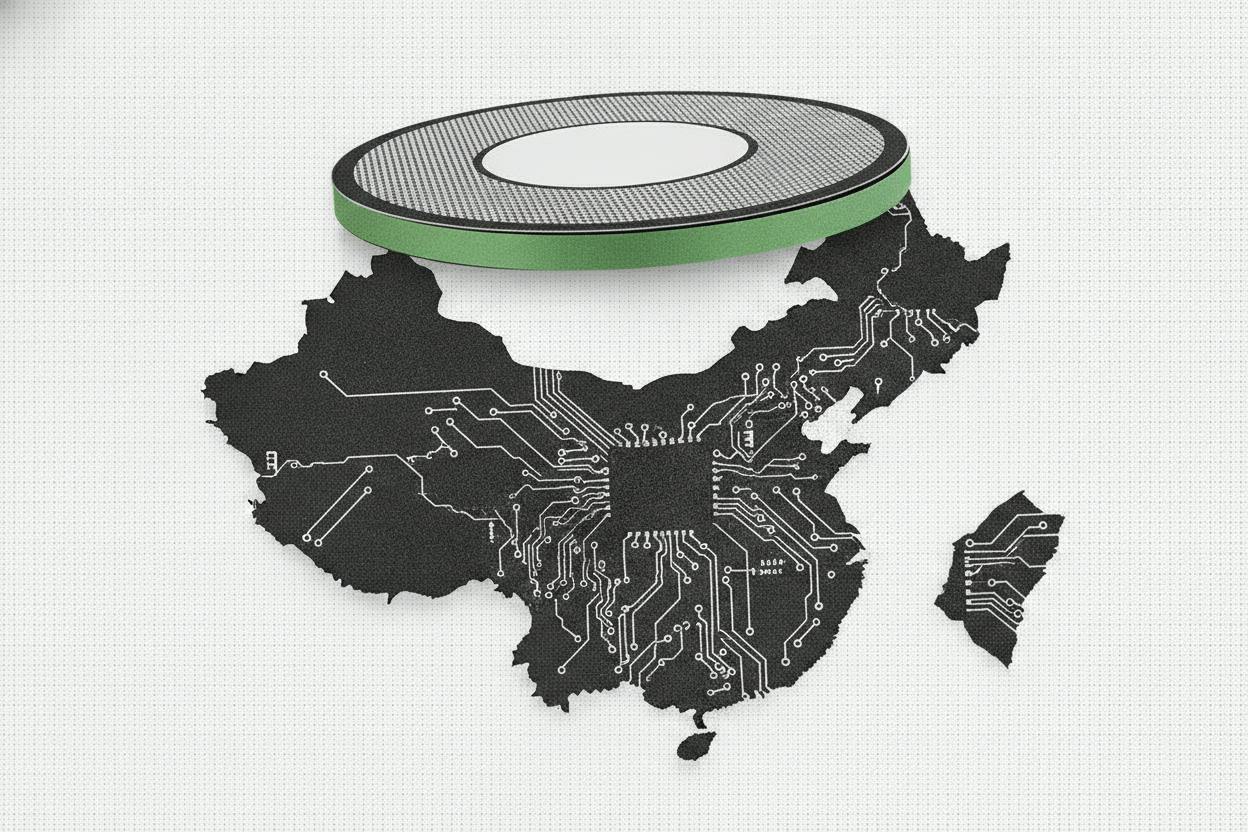
Reuters reported another pressure point: Taiwan Semiconductor Manufacturing Company (TSMC), the world's top contract chipmaker, has tightened limits for some Chinese chip designers. TSMC has suspended certain advanced manufacturing orders and is steering affected customers toward older chipmaking processes. That helped pull chipmakers and Hong Kong's Hang Seng Tech index lower, hitting "compute-hungry" areas like cloud computing and large-model developers such as Minimax and Z.AI.
TSMC's move is not a complete ban but a restriction on the most advanced nodes for some Chinese clients. For those designers, being pushed from leading-edge production to older processes means their chips will be less efficient. Training and running AI models can take longer or cost more per unit of output because the hardware is less powerful. That raises the cost of doing business for Chinese AI startups and could slow their progress.
What it means for investors
Fading AI optimism is often about price, but chip access makes it about physics, too. When investors worry about valuations, they tend to pay fewer dollars for each dollar of expected future earnings—a process known as "multiple compression." That is exactly what appears to be happening across China and Hong Kong's growth-heavy tech baskets, rather than a problem isolated to one company or one trading day.
OCBC's capex worry adds another layer. Investors are already watching how much cash AI projects burn before they generate revenue. If compute costs rise because of less efficient chips, the profit hurdle gets higher. Even if long-term demand for AI keeps growing, share prices can fall in the short term as the market recalibrates expectations.
For everyday investors, this is a reminder that AI-related stocks are not just about the technology—they are also about the economics. The recent slide in Chinese tech shares is a direct response to two forces: a global reassessment of AI valuations and a supply-side constraint that could make AI development more expensive for Chinese firms.
The broader context is also important. This is not the first time Chinese tech has been hit by a combination of valuation concerns and geopolitical tensions. Earlier this year, Chinese tech shares slid as the global AI trade cooled and the central bank held rates steady. Similarly, Asia stocks slid as the AI trade cooled and the dollar stayed strong, showing how interconnected these moves are.
Investors will likely watch two things next: whether TSMC's restrictions expand to more Chinese clients, and whether AI companies can show progress toward profitability despite higher costs. Any signs that capex is translating into revenue could help restore confidence, but for now, the market is in a risk-off mood.
For those with exposure to Chinese tech through index funds or individual stocks, the key takeaway is that volatility is likely to continue. The AI trade is no longer a one-way bet, and the combination of valuation concerns and chip constraints means that even good news about AI demand may not be enough to lift share prices in the near term.