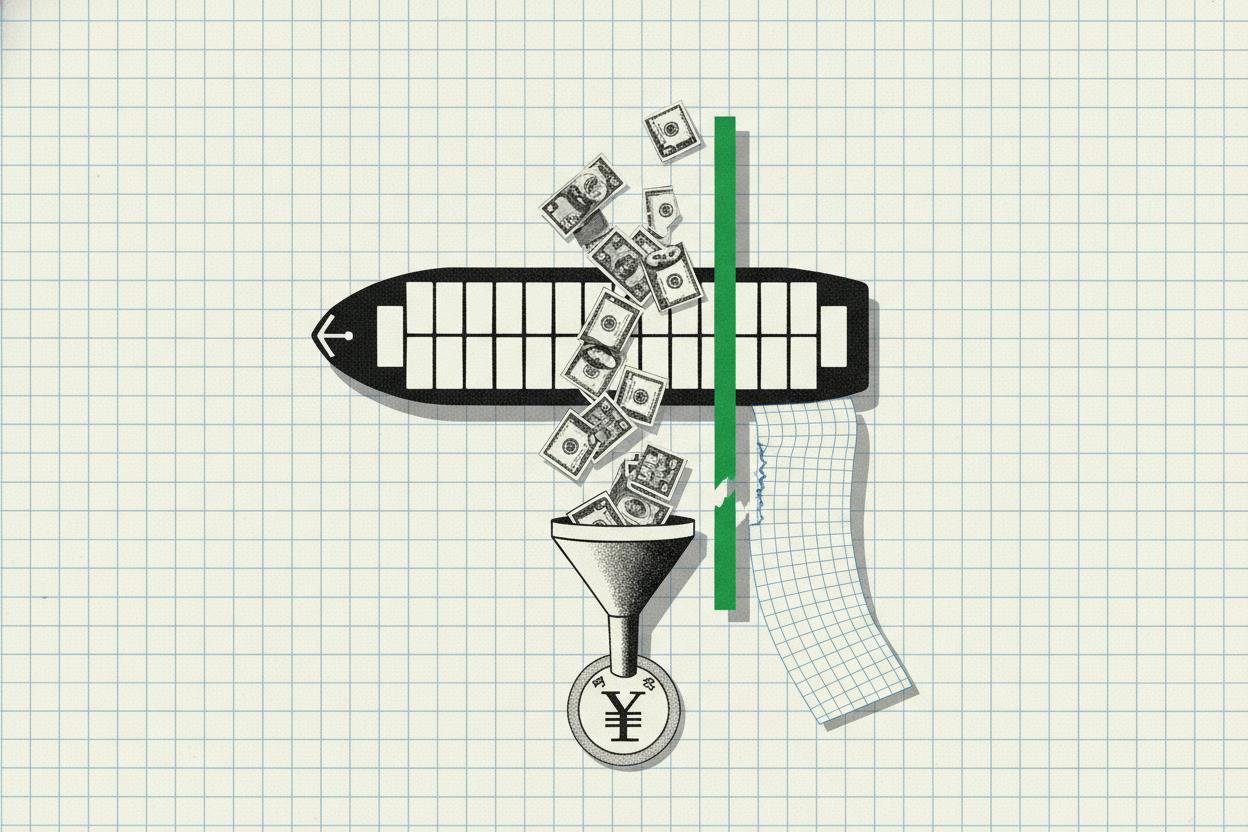
Chinese exporters continued to sell their dollar earnings for yuan in August, but they pulled back from locking in future exchange rates, according to data from the country's foreign exchange regulator reported by Reuters.
The data showed that net foreign currency sales—where companies sell more dollars than they buy—extended to a 16th straight month. That steady selling has been a consistent source of demand for the yuan, as exporters convert their overseas receipts into the domestic currency.
However, forward FX settlement, a measure of how much companies use forward contracts to set exchange rates for future transactions, dropped to a six-month low in August. This suggests that fewer firms are committing today to selling dollars at a predetermined rate down the line.
What are forward contracts and why do they matter?
Forward contracts are financial tools that let a company agree today on an exchange rate for a transaction that will happen in the future. For example, a Chinese exporter expecting to receive dollars in three months can sign a forward contract now to sell those dollars for yuan at a fixed rate, protecting itself from swings in the currency market.
When forward settlement falls, it means companies are doing less of this kind of hedging. Instead, they may be choosing to sell dollars in the spot market—immediately at the current rate—or waiting to see how the currency moves before committing.
This shift matters because forwards help smooth currency management over time. If fewer exporters are hedging, it could signal that they expect the yuan to stay stable or even appreciate, making them less worried about future exchange rate moves. Alternatively, it could reflect a preference for flexibility in a volatile global environment.
What does this mean for the yuan and investors?
The continued net selling of dollars by exporters is a supportive factor for the yuan, as it creates steady demand for the Chinese currency. But the drop in forward settlement introduces a note of caution. If exporters are less willing to lock in rates, it might indicate that they are uncertain about the direction of the currency or that they see less need for protection.
For everyday investors, the key takeaway is that currency movements can affect the value of international investments and the competitiveness of Chinese goods abroad. A stronger yuan makes Chinese exports more expensive for foreign buyers, which could weigh on export-oriented companies. Conversely, a weaker yuan can boost exporters' profits when they convert dollar earnings.
The data also comes amid broader shifts in global currency markets. For instance, the Australian and New Zealand dollars have slipped as traders position for potential interest rate decisions, and the Bank of Japan is reportedly set to raise rates, which could influence the dollar's strength and, in turn, the yuan.
What to watch next
Investors will be watching whether this trend continues in the coming months. If exporters resume heavier hedging, it could signal confidence in the yuan's stability. If the decline in forward settlement persists, it might suggest that companies are becoming more comfortable with currency risk or that they expect the yuan to move in their favor.
Also worth noting is that Chinese banks have been attracting dollar deposits to buy US Treasuries, which could affect the supply and demand dynamics for dollars in the market. Additionally, South Korea's national pension fund has paused its FX hedging as the won hit a 2024 high, showing that currency management decisions are not unique to China.
For now, the data paints a picture of Chinese exporters who are still converting their dollar earnings but are less eager to lock in future rates. That could be a sign of confidence in the yuan, or simply a reflection of the uncertain global economic environment. Either way, it's a development that investors in Chinese assets and global currencies will want to keep an eye on.