Oil prices slipped on Tuesday after industry data showed a surprise jump in US crude stockpiles, but the decline was tempered by ongoing Middle East supply disruptions that have kept traders on edge.
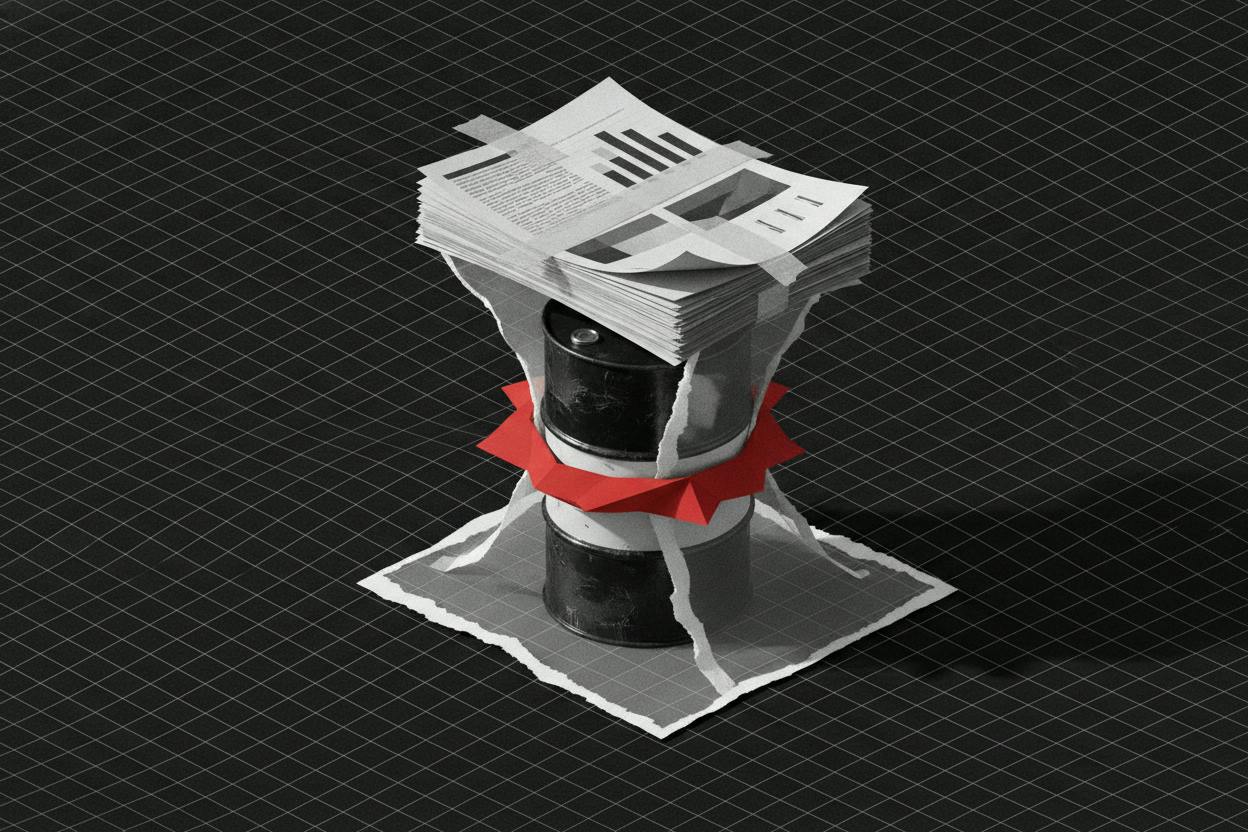
Brent crude, the international benchmark, fell to $107.53 a barrel after the American Petroleum Institute (API), an industry group, estimated that US crude inventories rose by 7.1 million barrels last week. That was a sharp contrast to analysts' expectations for a draw of about 1.6 million barrels.
A build in inventories typically pressures prices because it suggests that refineries and end-users needed less oil than traders had assumed. But the bearish signal from the US data was offset by news that loadings at Saudi Arabia's Yanbu port had been suspended after the kingdom shut its East-West pipeline following an attack.
What's behind the mixed signals?
The oil market is currently caught between two opposing forces. On one hand, ample supplies in the US—the world's largest consumer—point to softer demand. On the other, geopolitical tensions in the Middle East, a region that accounts for a significant share of global oil exports, threaten to disrupt supply at any moment.
The API data, while not as authoritative as the official figures from the US Energy Information Administration (EIA), is closely watched by traders as an early indicator of inventory trends. A 7.1 million-barrel build is a substantial move, and it suggests that the market may be better supplied than many had thought.
However, the suspension of loadings at Yanbu, one of Saudi Arabia's key export terminals, underscores how fragile supply chains remain. The East-West pipeline, which carries crude from the kingdom's eastern oil fields to the Red Sea coast, is a critical artery for Saudi exports. Any prolonged disruption could tighten global supplies and push prices higher.
What it means for investors
For everyday investors, the tug-of-war between supply and demand in the oil market has broader implications. Oil prices influence everything from the cost of gasoline at the pump to the inflation rate, which in turn affects interest rates and stock market valuations.
When oil prices rise, energy companies tend to benefit, but sectors like airlines, shipping, and consumer goods can see their margins squeezed. Conversely, when prices fall, the opposite dynamic plays out. For those with diversified portfolios, the net effect is often muted, but it's worth keeping an eye on oil's direction.
The current situation is particularly tricky because the market is being pulled in opposite directions. On the demand side, rising US inventories suggest that consumption may be cooling. On the supply side, geopolitical risks remain elevated, and any escalation could quickly reverse the price decline.
Investors should also note that oil prices have been volatile in recent weeks, with Red Sea shipping risks lifting tanker costs and pushing Brent above $107 earlier. That volatility is likely to continue as traders weigh the latest inventory data against headlines from the Middle East.
Looking ahead
The market will be watching the EIA's official inventory report, due later this week, for confirmation of the API's estimate. A large build could reinforce the bearish case, while a smaller build or a draw could signal that the API data was an outlier.
At the same time, any developments in the Middle East—whether diplomatic progress or further attacks—will be closely monitored. The situation remains fluid, and oil prices are likely to react sharply to any news.
For now, the oil market is a reminder that commodity prices are driven by a complex mix of fundamentals and geopolitics. For investors, the key takeaway is to stay informed and avoid making hasty decisions based on a single day's price move.
As always, diversification remains a prudent strategy. While energy stocks may offer opportunities in a high-price environment, they also carry significant risk if prices reverse. A balanced portfolio can help cushion against the volatility that oil markets often bring.