Brent crude oil climbed back above $107 a barrel on Monday, as renewed threats from Houthi militants near the Bab el-Mandeb strait — a critical chokepoint for global oil shipments — pushed up the risk and cost of moving crude by sea. The move comes just as investors turn their attention to this week's Federal Reserve rate decision, adding another layer of uncertainty to already jittery markets.
What's happening in the Red Sea?
The Bab el-Mandeb strait, located between Yemen and Djibouti, is one of the world's most important oil transit routes. Roughly 12% of global seaborne oil passes through it, heading toward the Suez Canal and then on to Europe and North America. When that route is threatened, the entire oil market feels it.
Houthi forces, who control large parts of Yemen, have been attacking ships in the area. While some vessels are still transiting the strait, the threat of attacks raises the likelihood that more cargoes will be rerouted away from the Red Sea entirely. That's exactly what happened in recent weeks, and the effects are now showing up in shipping costs.
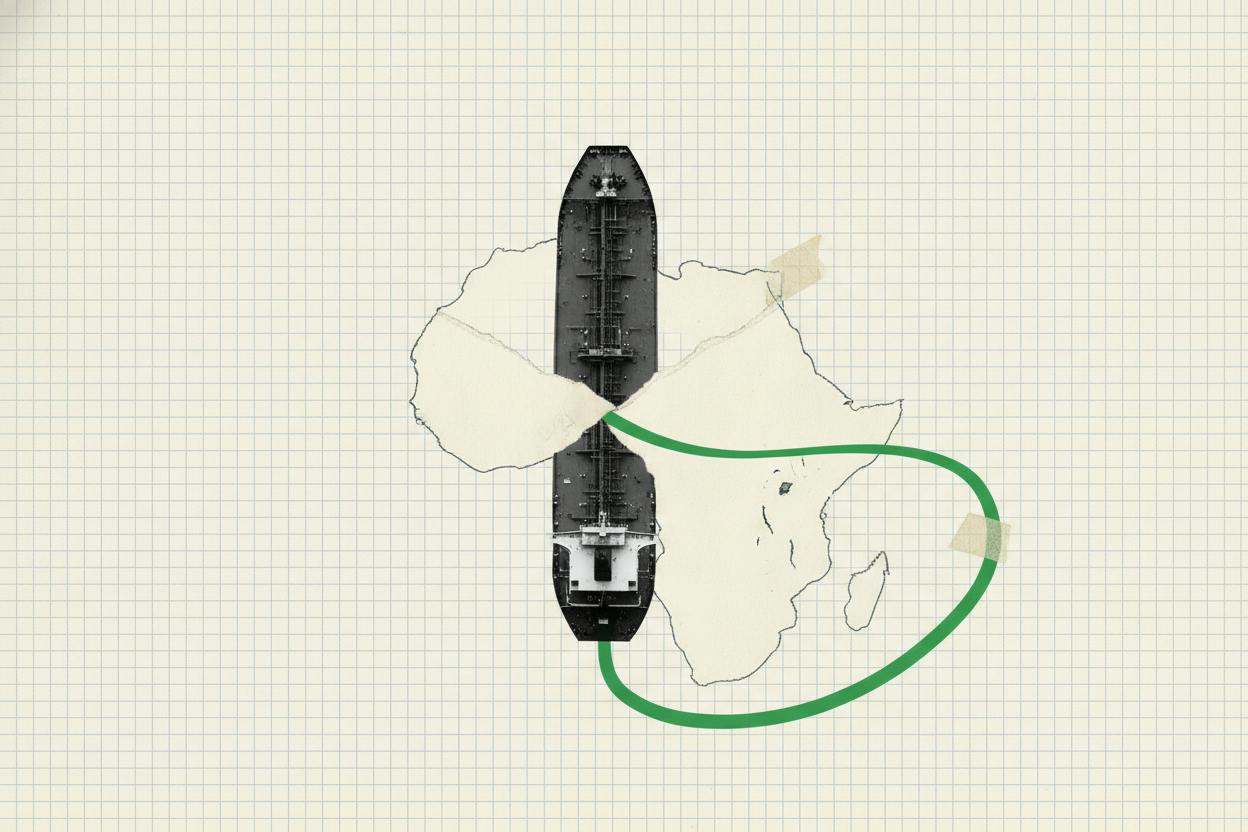
The main workaround is a much longer journey: tankers that would normally pass through the Suez Canal and then head south toward Asia must instead go around the southern tip of Africa. That detour adds roughly 22 days to a typical voyage, meaning more charter time, more fuel burn, and more wear and tear on the vessels.
Why tanker costs are spiking
This longer route is landing on an already tight shipping market. Tanker rates hit record highs last week, and bunker fuel — the heavy fuel oil that powers ships — has been hard to source in some ports. The combination of higher demand for tankers and limited supply of both ships and fuel is pushing freight costs sharply higher.
For oil traders, higher shipping costs can quickly translate into higher prices at the pump, because the cost of getting crude from producer to refinery is a direct input into the final price. When shipping becomes more expensive and slower, it also tightens the physical supply of oil in the market, because cargoes are tied up at sea for longer.
This is not the first time this year that Red Sea disruptions have rattled the oil market. Earlier, a Houthi capture of a Yemeni port sent oil prices jumping 5.7% in a single day. The current situation is a reminder that the region remains a flashpoint for energy supply.
What it means for investors
For everyday investors, the immediate takeaway is that oil prices are likely to stay elevated as long as shipping risks persist. Higher oil prices feed into inflation, which in turn influences central bank policy. That's why this week's Fed meeting is so closely watched: if the Fed signals it will keep interest rates higher for longer to fight inflation, that could weigh on stocks and bonds.
Oil's climb above $100 has already been putting pressure on markets around the world. South Korean stocks slid 1.8% as the KOSPI fell for a fifth week, and Hong Kong stocks also slipped as investors worried about the combination of high oil and US inflation data. Bond markets have been on edge as well, since higher oil can push up inflation expectations and yields.
For investors holding energy stocks, the news is generally positive, as higher oil prices tend to boost the revenues of oil producers and shippers. But for the broader market, the picture is more mixed. Higher energy costs squeeze consumer spending and corporate profit margins, and they complicate the Fed's job of bringing inflation down without tipping the economy into recession.
It's also worth noting that the shipping disruption is not just about oil. Many other goods, from consumer electronics to food, travel through the Red Sea. Longer transit times and higher freight costs can ripple through global supply chains, potentially showing up in higher prices for a wide range of products.
What to watch next
Investors will be watching several things in the coming days. First, the Fed's rate decision and its accompanying statement will give clues about how policymakers view the inflation outlook. Second, any further escalation or de-escalation in the Red Sea will move oil prices. Third, tanker rates and bunker fuel availability will signal how long the shipping squeeze might last.
If the Houthi threats persist, more shippers may choose the longer route around Africa, which would keep tanker rates high and oil prices supported. If tensions ease, some of the risk premium could come out of prices, but the market is likely to remain sensitive to headlines from the region.
For now, the message for ordinary investors is to expect continued volatility in oil and, by extension, in the broader markets. Keeping an eye on shipping news and central bank signals can help you understand the forces moving your portfolio.