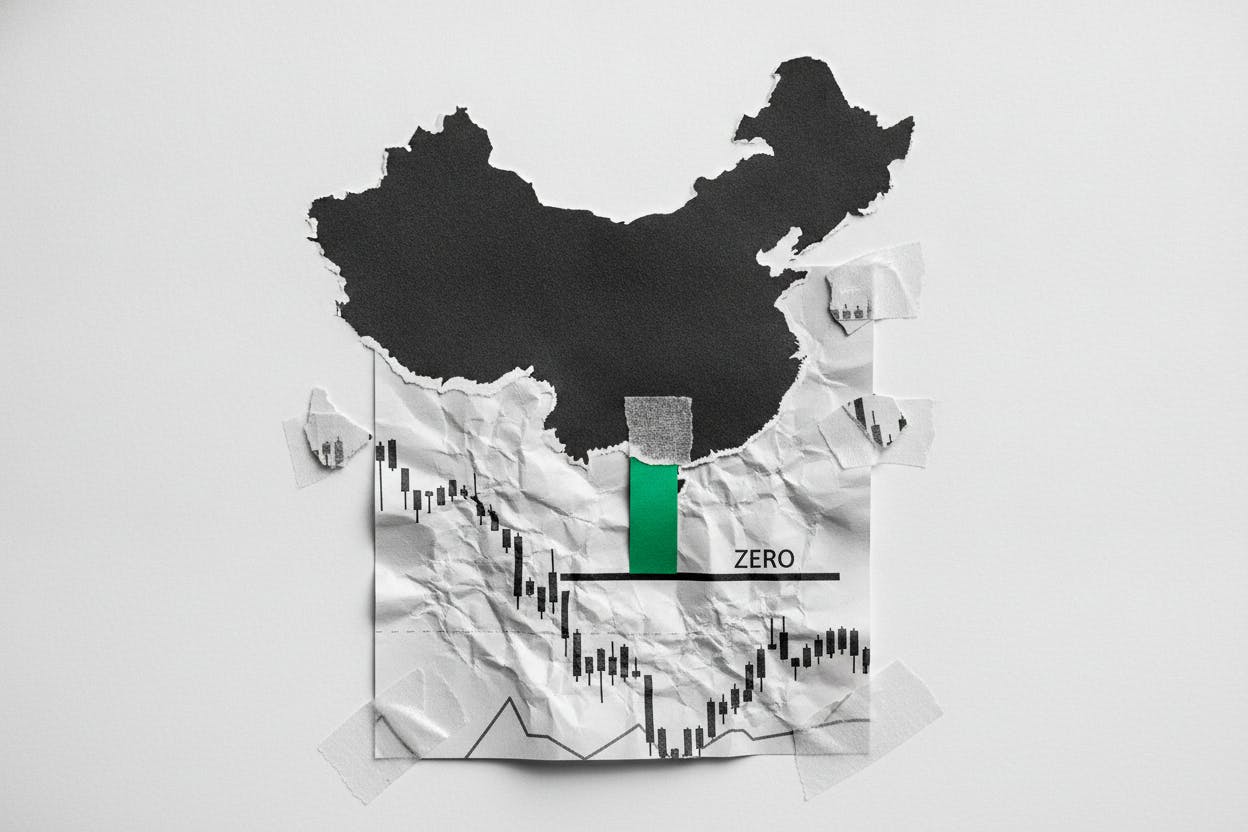
Chinese A-shares started the week in the red, with the Shanghai Composite falling 0.8% and the Shenzhen Component dropping 0.9%. Despite the dip, a growing number of strategists believe the broader selloff that began in May is close to running its course.
What's Behind the Pullback?
China's stock market has been undergoing what analysts describe as a "structural adjustment" since May, as investors digest a mix of economic headwinds and policy uncertainty. The recent weakness reflects forced selling and cautious sentiment, but some market watchers argue the worst may be over.
According to analysts quoted by The Paper, the correction looks increasingly complete. They point to ample liquidity in the financial system as a key support. When liquidity is high, it typically provides a cushion for asset prices, making sharp declines less likely to persist.
The GDP Deflator: A Key Signal
The macro data point drawing the most attention is China's GDP deflator, a broad measure of price changes across all domestically produced goods and services. After 12 consecutive quarters of contraction, the deflator stood at 0.1% in the first quarter of 2026. Executives and analysts told The Paper it could turn positive in the second quarter.
A move above zero would be significant. It would hint that economy-wide pricing pressure is easing, which typically makes it easier for companies to grow revenues in dollar terms rather than relying solely on higher sales volumes. For investors, a positive deflator reading could signal that deflation fears—which have weighed on Chinese equities—are starting to fade.
Regulatory Oversight Remains Tight
Separately, the China Securities Regulatory Commission and Hong Kong's Securities and Futures Commission held a high-level enforcement meeting. The meeting underscores that cross-border market oversight remains tight as money flows between the mainland and Hong Kong. For investors, this is a reminder that regulatory risks are still present, even as the broader market environment shows signs of improvement.
What It Means for Investors
For everyday investors, the key takeaway is that a positive Q2 GDP deflator could matter more than a one-day dip in stocks. If the deflator turns positive, it suggests companies may be regaining some pricing power instead of competing mainly by cutting prices. That can lift profits faster than sales because many costs don't rise as quickly in the short run, so even a small improvement in pricing can have an outsized effect on earnings.
That combination often stabilizes earnings-per-share forecasts and reduces the extra "deflation fear" discount that markets can place on equities. The biggest sensitivity tends to be in margin-thin, domestically focused industries, where even modest price relief can change the profit outlook.
For context, similar dynamics have played out in other markets. For instance, Swiss stocks edged higher recently as the KOF indicator signaled firmer global growth, showing how macro data can shift sentiment. Meanwhile, German stocks dipped as oil neared $80, highlighting how commodity prices and central bank expectations can influence markets.
Investors should also watch for signs of a broader rotation. As noted in recent analysis, calm markets can hide big shifts, and a turn in Chinese macro data could accelerate sector rotation within the region.
Looking Ahead
In the near term, the focus will be on whether the GDP deflator confirms a positive reading in Q2 and whether forced selling continues to ease. If both conditions align, Chinese stocks could find a floor, offering a potential entry point for long-term investors. However, regulatory developments and global economic conditions—such as geopolitical tensions affecting oil prices—will remain important factors to monitor.