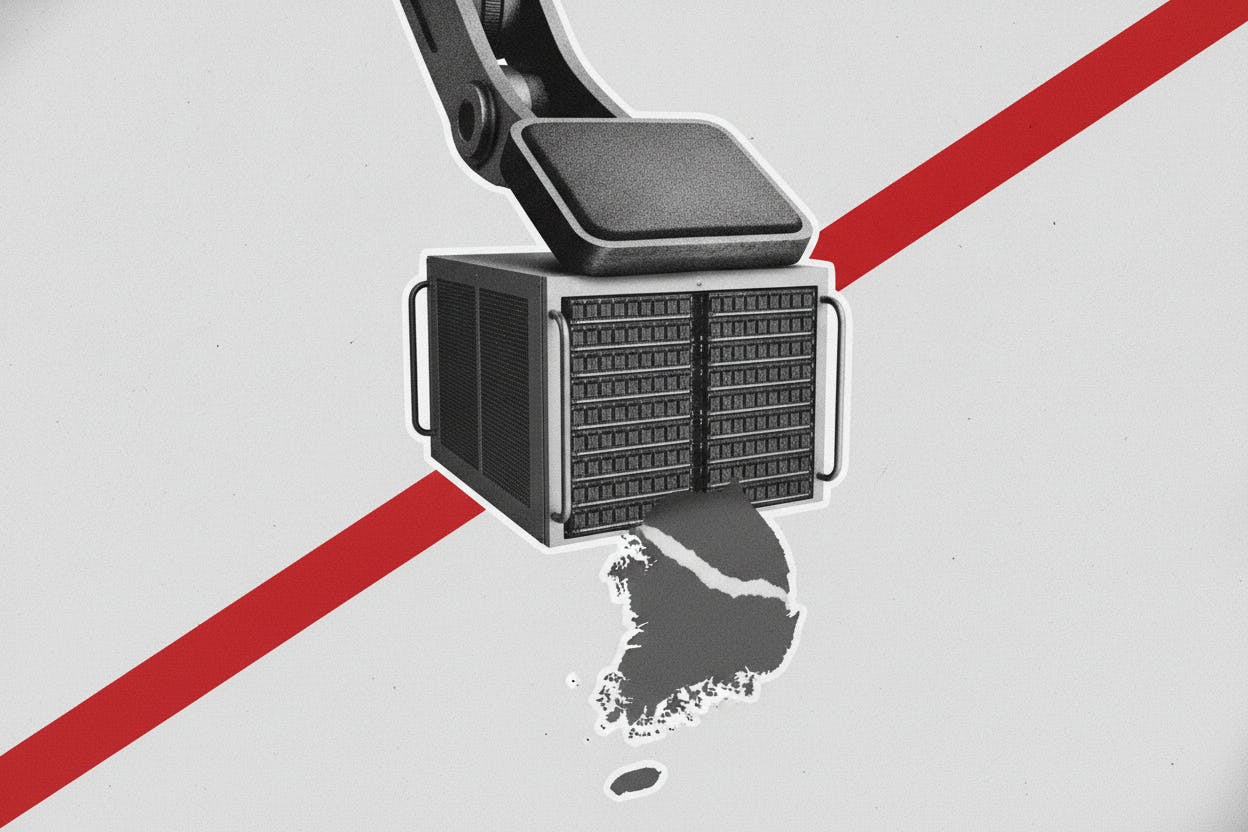
South Korean stocks suffered their worst day in months on Monday, with the benchmark KOSPI index tumbling 5.14% as investors fled the country's dominant semiconductor sector. The selloff was so sharp that it briefly triggered a 'sidecar' mechanism, a circuit breaker that pauses algorithmic program trading when market moves become too extreme.
The main culprits were the two giants of South Korea's chip industry. SK Hynix, the world's second-largest memory chipmaker, plunged more than 10%, while Samsung Electronics, the country's largest company by market value, fell over 6%. Together, they account for a huge chunk of the KOSPI's weighting, so their declines dragged the entire market down.
Why the sudden selloff?
The immediate trigger appears to be profit-taking and a reassessment of the memory chip cycle. For much of the past year, shares of SK Hynix and Samsung have been on a tear, fueled by explosive demand for high-bandwidth memory (HBM) chips used in AI data centers. But some investors are now questioning whether that demand has peaked.
Memory chips are a cyclical business. Prices swing wildly between boom and bust as supply and demand shift. The current upswing has been unusually strong because of the AI boom, but there are growing signs that the cycle may be turning. Recent earnings reports from some chip companies have shown slowing growth, and analysts have begun to warn that the inventory buildup by AI server makers could lead to a correction.
The 'sidecar' mechanism that kicked in is a rule designed to cool down markets during periods of extreme volatility. It temporarily halts program trading—automated buy and sell orders executed by computers—to give human traders a chance to catch their breath. It's a relatively rare event, and its activation underscores just how panicked the selling was.
What it means for investors
For everyday investors, this selloff is a reminder that even the hottest sectors can cool off quickly. The AI trade has been one of the most profitable themes of the past year, but it's also one of the most crowded. When sentiment shifts, the exits can get crowded fast.
The decline in South Korean stocks also echoes a broader rotation happening in global markets. As we've noted in our coverage of Calm Markets Hide a Big Shift: Investors Are Rotating Out of Tech Stocks, money is flowing out of high-flying tech names and into more defensive sectors like energy and consumer staples. That same dynamic appears to be playing out in Seoul, where chip stocks had become a one-way bet for many investors.
It's also worth watching how this affects other markets. South Korea is a bellwether for global tech demand, and a sustained slide in its chip stocks could spill over into other Asian markets. For example, Chinese Stocks Dip as Analysts See Correction Nearing End on Liquidity and Deflator Hopes shows that China's tech-heavy markets are also under pressure, though for different reasons.
The bigger picture
Memory chips are the building blocks of the digital economy. They go into everything from smartphones and laptops to AI servers and data centers. So when the memory cycle turns, it sends ripples through the entire tech supply chain.
The key question now is whether this is just a healthy pullback in an otherwise strong uptrend, or the beginning of a more serious downturn. History suggests that memory chip cycles can be brutal. The last downturn, in 2022, saw SK Hynix's shares fall by more than 40% as demand collapsed. But the current cycle is different because it's being driven by AI, which many believe is a structural, long-term trend rather than a temporary fad.
Investors will be watching for clues from the companies themselves. SK Hynix and Samsung are both due to report earnings in the coming weeks, and their guidance on future demand will be critical. If they signal that orders from AI customers are slowing, the selloff could deepen. If they reaffirm strong demand, the panic may prove short-lived.
For now, the message from the market is clear: the easy money in AI chips has been made, and the next leg of the cycle will require more caution. As always, diversification is key. No single sector, no matter how promising, should dominate a portfolio.