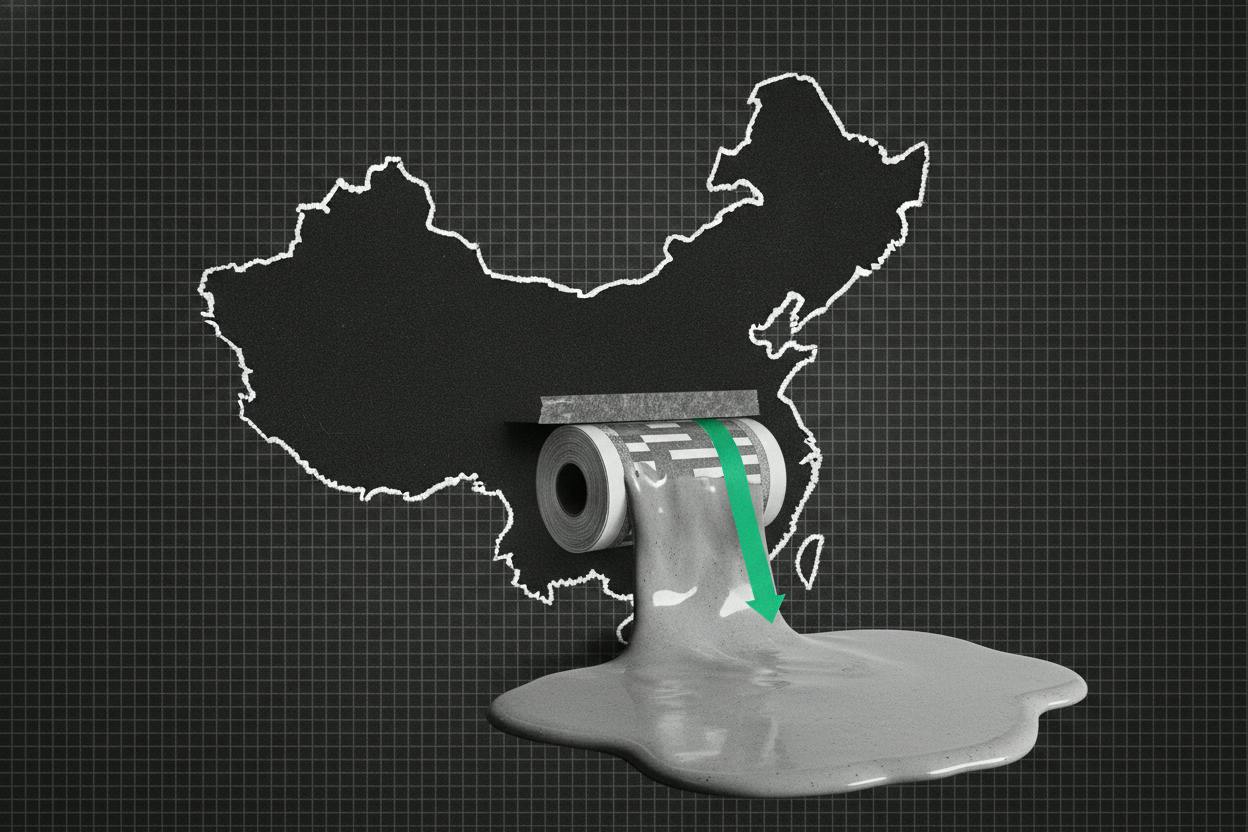
Chinese stocks managed to close higher on [day], reversing early losses after Beijing signaled it stands ready to provide more economic support. The Shanghai Composite finished up 0.2% at 3,830.45, according to MT Newswires, as investors took heart from fresh promises of policy help.
The move followed a State Council meeting chaired by Premier Li Qiang, who pledged to use "counter-cyclical" policy measures to keep the economy on track for a 2026 growth target of 4.5%-5%. Counter-cyclical policy is essentially extra support deployed when growth looks wobbly—such as interest rate cuts, increased government spending, or other stimulus—to smooth out the ups and downs of the economic cycle.
What the policy signal means
The more concrete tell for markets was officials' call to accelerate bond issuance. That suggests Beijing is preparing to front-load government spending, likely on infrastructure and other projects, to give the economy a near-term boost. For investors, faster bond issuance often translates into more liquidity in the financial system, which can support asset prices.
The pledge comes at a time when China's economy faces headwinds from a property sector slump, weak consumer confidence, and soft external demand. The 4.5%-5% growth target for 2026 is ambitious, and markets have been watching for signs that policymakers will act decisively to meet it.
"The fact that they're explicitly talking about accelerating bond issuance is a signal that they're not just paying lip service to support," said a market analyst. "They're preparing to put money to work."
Broader market context
The modest gain in Shanghai came amid a mixed session for Asian markets. Elsewhere, Asia stocks and bonds wobbled as oil prices and Treasury yields climbed, keeping investors cautious. Rising yields in the US have been a persistent drag on global equities, as they raise the opportunity cost of holding stocks and can pressure valuations.
In China, however, the policy signal helped offset those external pressures. The Shanghai Composite's rise, though small, was notable because it came after an early dip—suggesting that buyers stepped in once the government's intentions became clear.
For everyday investors, the key takeaway is that Chinese policymakers are actively trying to support growth, which could be positive for companies with exposure to the Chinese economy. However, the actual impact will depend on how quickly and effectively the promised measures are implemented.
What it means for investors
For investors with holdings in Chinese equities or funds that track Chinese markets, this development is a reminder that policy support can act as a floor under prices. But it's also a cautionary tale: the market's reaction was muted, reflecting skepticism about whether the measures will be enough to overcome structural challenges.
"Policy announcements can give a short-term lift, but the real test is whether they translate into stronger economic data," said another strategist. "Investors should watch for signs of improvement in areas like retail sales, industrial output, and credit growth."
Those looking to add exposure to China might consider diversified vehicles, such as exchange-traded funds (ETFs) that track broad Chinese indices, rather than picking individual stocks. This spreads risk across many companies and sectors.
It's also worth noting that Chinese stocks have been volatile in recent years, influenced by regulatory crackdowns, geopolitical tensions, and the property market's troubles. While the government's support is welcome, it doesn't eliminate those risks.
For now, the market's modest gain suggests investors are cautiously optimistic but not yet convinced. The coming weeks will show whether Beijing follows through with concrete steps, and whether those steps are enough to move the needle on growth.
As always, it's wise to keep a long-term perspective and not overreact to daily market moves. Policy signals are just one factor among many that drive investment returns.