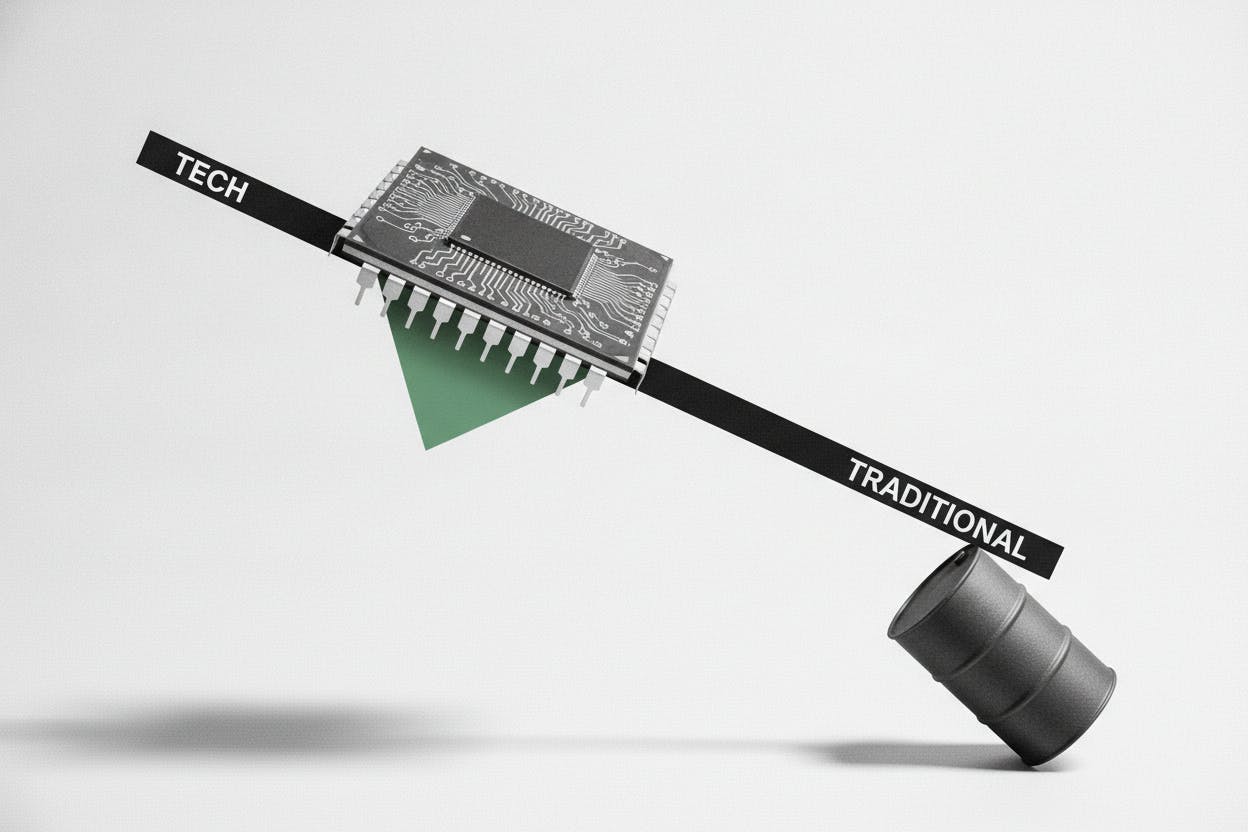
US stock indexes ended Tuesday on a mixed note, with technology shares powering the Nasdaq Composite to a 1.2% gain while energy stocks dragged on the Dow and S&P 500. The divergence highlights a market increasingly driven by a narrow set of megacap chipmakers, even as crude oil prices eased.
Advanced Micro Devices (AMD) surged 7.1%, leading a broad rally in semiconductor stocks. The move came without a single company-specific catalyst, suggesting investors are rotating into chip names amid optimism about artificial intelligence demand and a potential bottom in the semiconductor cycle. The Philadelphia Semiconductor Index also rose sharply.
Meanwhile, oil prices drifted lower. Brent crude, the global benchmark, slipped to $73.01 a barrel, extending recent declines on concerns about global demand and the prospect of higher supply from OPEC+ producers. The drop weighed on energy sector stocks, which were among the worst performers in the S&P 500.
Narrow Leadership, Broad Implications
The session was a textbook example of how cap-weighted indexes can mask what is happening beneath the surface. The Nasdaq and S&P 500 are weighted by market capitalization, meaning the largest companies have the biggest impact on the index level. According to data from Finviz cited by MT Newswires, 17 of the 20 US stocks worth more than $200 billion are technology names, and many are tied to semiconductors — either chipmakers themselves or the firms that supply the tools and materials they need.
When a handful of those giants rally, they can pull the entire index higher even if the typical stock is flat or falling. That kind of narrow leadership often shows up as weaker market breadth — meaning fewer stocks are participating in the advance — and bigger performance gaps between winners and losers. In other words, a strong index day can be driven by a small slice of the market rather than broad optimism.
This dynamic has been a recurring theme in 2024. The S&P 500 and Nasdaq have both headed for their best quarters in six years, but much of that gain has come from a handful of AI-linked tech stocks. The same pattern has played out globally, with the STOXX 600 surging 10% in its best quarter since 2020, led by AI tech stocks.
What It Means for Investors
For everyday investors, Tuesday's action is a reminder that index-level returns can be deceiving. If gains are being delivered mostly by semiconductor-linked megacaps, index-level strength may not translate into broad stock performance. Strategies that track equal-weight indexes — where each stock has the same influence — or focus on measures like the advance-decline line can lag even when the Nasdaq looks healthy.
The flip side is that volatility in a few chip giants can matter more to overall index returns than the day's headline move suggests. If AMD or other chip leaders stumble, the Nasdaq could fall disproportionately, even if most stocks are holding steady.
Investors should also keep an eye on the broader economic backdrop. US job openings edged up in recent data, but hiring slipped, keeping the Federal Reserve on hold. That mixed labor market picture, combined with still-elevated inflation, means interest rate cuts are not imminent. Meanwhile, AI stocks have lifted global markets even as rate hike bets resurface, creating a tug-of-war between tech optimism and monetary policy uncertainty.
Oil's decline adds another layer. Lower crude prices can help ease inflationary pressures, which would be supportive for stocks broadly. But they also signal weaker demand, which could be a headwind for the global economy. For now, the market is betting that AI-driven productivity gains will outweigh those risks, but that bet remains concentrated in a small number of stocks.
The Bottom Line
Tuesday's session was a reminder that the market is not a monolith. The Nasdaq's 1.2% gain was real, but it was powered by a narrow slice of the tech sector. For investors, understanding that concentration risk is key to making sense of daily market moves — and to building a portfolio that can weather the inevitable shifts in leadership.