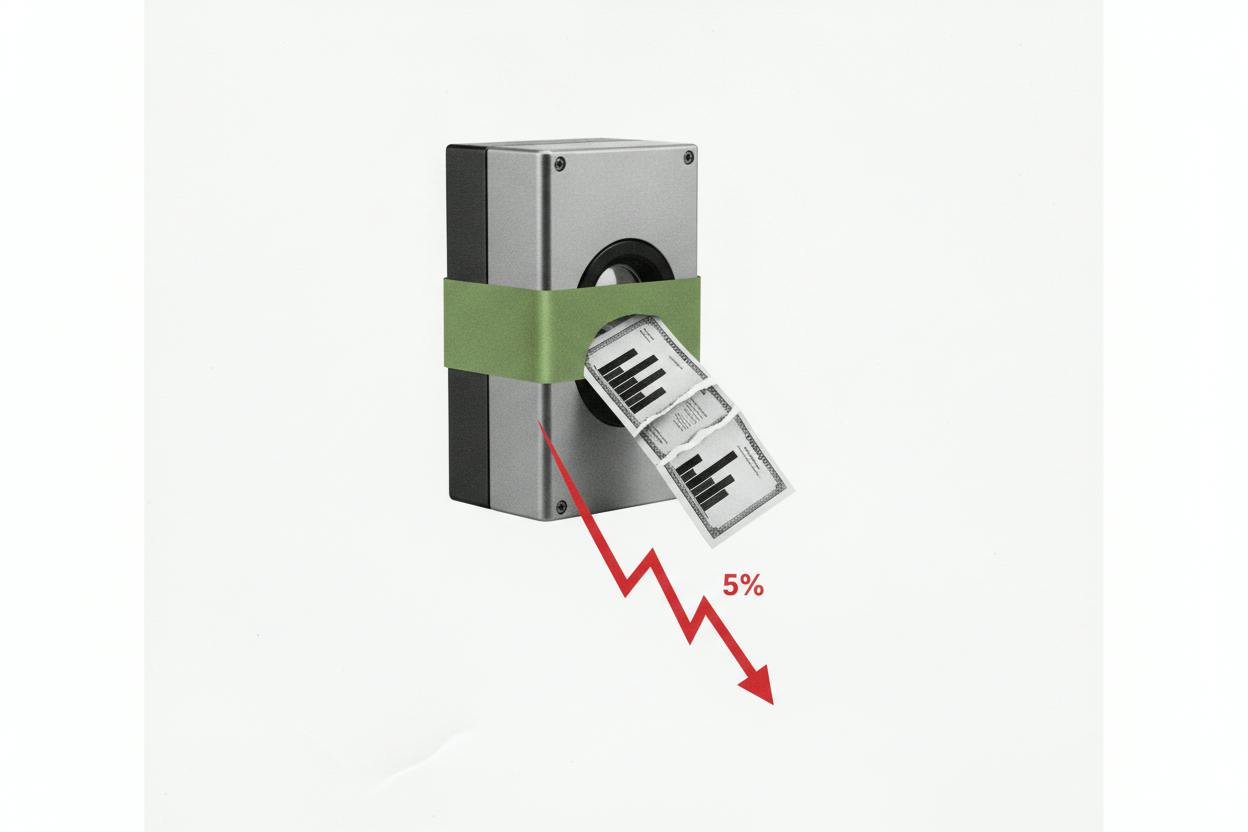
Hong Kong-listed CIG Shanghai, a maker of edge computing hardware and optical modules, said it plans to raise up to HK$6.54 billion through a combination of a share placement and zero-coupon convertible bonds. The announcement came as the company's stock fell 5% on Thursday, reflecting investor concerns about dilution and the timing of the fundraising.
In a filing to the Hong Kong Stock Exchange, the company said it will place 18.4 million new shares at HK$105.16 each, which is expected to raise about HK$1.93 billion in net proceeds. In addition, it plans to issue zero-coupon convertible bonds that could raise approximately HK$4.61 billion net. These bonds can later be converted into more than 35.9 million shares at a conversion price of HK$128.82 per share.
Zero-coupon convertible bonds are debt instruments that pay no regular interest. Instead, investors receive the return through the option to convert the bonds into shares at a set price. If the share price rises above the conversion price, bondholders can convert and profit. For the company, this is a way to raise money without paying interest upfront, but it also means potential dilution if the bonds are converted.
Why the company is raising cash
CIG Shanghai said it will use the funds to scale up production of its photonics products and for strategic investments. Photonics, which involves the use of light to transmit data, is a key technology in high-speed communications and data centers. The company's optical modules are used in networking equipment, and demand has been growing with the expansion of cloud computing and artificial intelligence infrastructure.
The fundraising comes at a time when many tech companies are seeking capital to expand capacity and fund research. The edge computing market, which involves processing data closer to where it is generated rather than in centralized data centers, is also seeing increased investment as the Internet of Things and autonomous systems grow.
However, the market reaction was negative. The 5% drop on Thursday suggests that some investors are worried about the dilutive effect of issuing new shares and potential conversion of the bonds. When a company issues new shares, existing shareholders own a smaller percentage of the company, which can lower the value of their holdings.
What it means for investors
For everyday investors, this type of capital raise is a double-edged sword. On one hand, it provides the company with funds to grow its business, which could lead to higher future profits. On the other hand, it can dilute existing shareholders' stakes and put downward pressure on the stock price in the short term.
The fact that the stock fell despite the positive use of funds suggests that investors are focused on the near-term dilution rather than the long-term potential. This is a common pattern when companies announce equity or convertible bond offerings.
Investors should also note that the conversion price of HK$128.82 is significantly higher than the placement price of HK$105.16. This means that the bonds will only be converted if the stock rises substantially from current levels. If the stock stays below the conversion price, the bonds will likely be redeemed at maturity, and the dilution may not occur.
The company's move is part of a broader trend in the tech sector, where companies are raising capital to fund expansion amid growing demand for AI and data infrastructure. Similar stories have been seen elsewhere, such as Micron's recent patent deal and BKV's power project backing.
For investors, the key is to watch how the company executes its expansion plans and whether the new investments generate returns. The success of this capital raise will depend on the company's ability to grow its photonics business and compete in the fast-moving edge computing market.
As always, it's important to consider the risks. The company's stock has been volatile, and the success of the fundraising is not guaranteed. Investors should do their own research and consider their own financial situation before making any decisions.