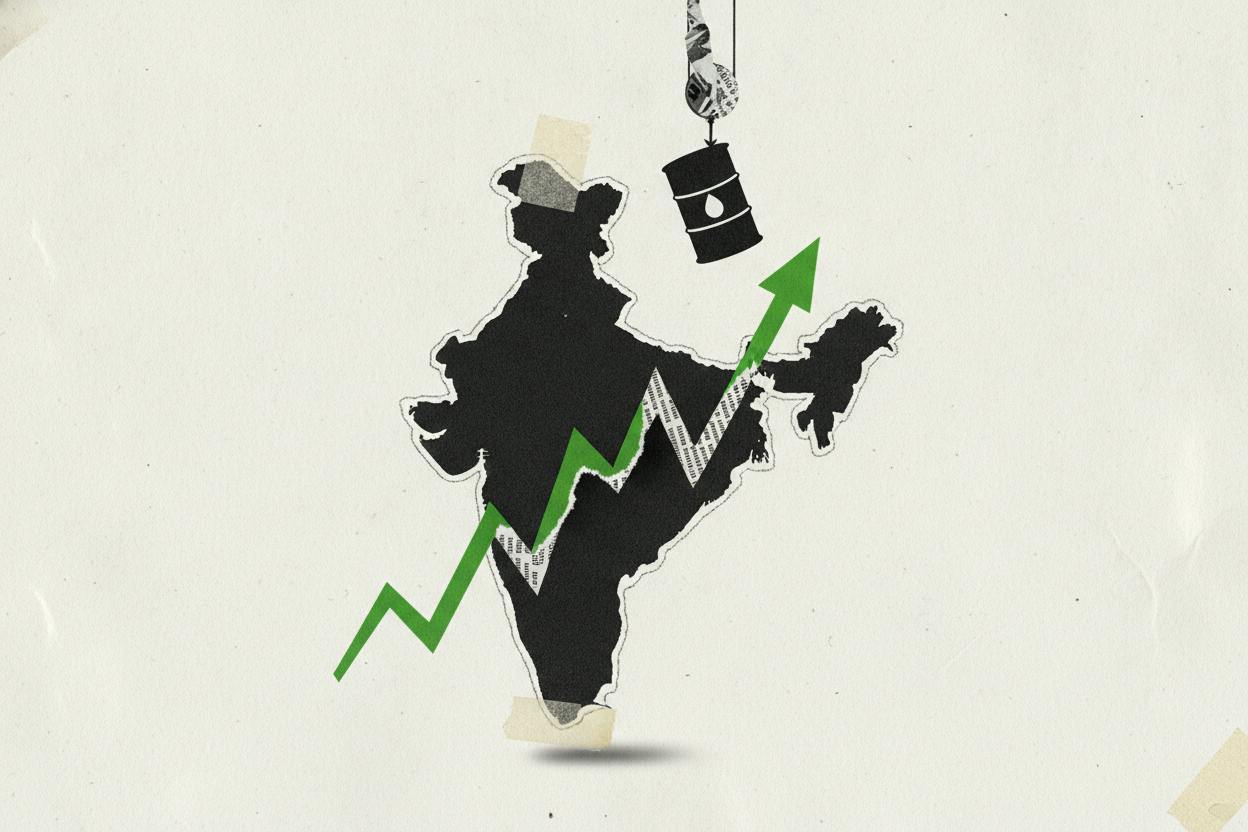
India's benchmark stock index could climb to 28,000 by the end of 2027, according to a new forecast from Citi Research. The target, raised from a previous level, implies roughly 12% upside from the Nifty 50's last close near 24,986. The bank's optimism rests on two pillars: cooling oil prices and a shift in global investor attention away from artificial intelligence stocks.
The Nifty has already rallied more than 10% over seven sessions as overseas investors returned to Indian equities and crude prices eased. Foreign portfolio investors have bought over $4.1 billion of Indian shares so far in November, a sharp reversal from earlier outflows.
Why oil matters for India
India is the world's third-largest oil importer, so the price of crude has an outsized effect on its economy. When oil is expensive, it raises the cost of imported energy, which can push up inflation and widen the current account deficit—the gap between what the country earns from exports and pays for imports. That combination often pressures the rupee and forces policymakers to keep interest rates higher for longer.
Citi estimates that a $10-per-barrel drop in oil prices could cut inflation by 0.5 percentage points and narrow the current account deficit by 0.3 to 0.4 percentage points. Cheaper energy, in turn, reduces the need for foreign funding and eases pressure on the currency. Lower inflation also gives the central bank more room to cut rates, which tends to lift the value investors place on future corporate earnings.
The bank's revised target is not just about companies growing profits. It also assumes investors will be willing to pay a higher multiple for those earnings. Citi raised its expected valuation for the Nifty to 18 times forward earnings, up from 17. That re-rating is directly tied to the oil outlook: if crude stays friendly, the index can sustain a richer valuation.
The AI trade rotation
Citi also points to a shift in global money flows. Over the past year, a wave of investment has poured into AI-related stocks, pulling capital away from other markets, including India. In a November 8 strategy note, the bank said AI has “crowded out almost everything else.” As those trades become crowded and returns fade, some investors are looking for alternatives.
India, with its large domestic market and corporate earnings growth, appears to be a beneficiary. Citi estimates that a one-percentage-point increase in India's share of active emerging-market portfolios could translate into around $12 billion of inflows. The recent buying spree suggests that rotation is already underway.
This dynamic is not unique to India. Emerging market stocks have wobbled as the AI trade cools, but India has held up relatively well. Similarly, other markets have felt the chill from fading AI enthusiasm, underscoring how global sentiment shifts can move money across borders.
What it means for investors
For everyday investors, Citi's target is a signal, not a guarantee. The 28,000 level is a forecast based on assumptions about oil, corporate earnings, and investor behavior. If any of those change—say, oil spikes again or the AI trade reignites—the path could look different.
The key takeaway is that India's market performance is increasingly tied to global energy prices and the ebb and flow of foreign capital. Investors should watch crude oil trends and the pace of foreign inflows as indicators of whether the rally has legs.
It's also worth noting that the Nifty's recent surge has already priced in some good news. The index is up more than 10% in just over a week, so some of the optimism may be reflected in current prices. Even strong rallies can pause, as seen during the Diwali session when the index slipped despite the broader uptrend.
For those with exposure to Indian equities, the Citi report offers a constructive backdrop but also highlights the importance of diversification. No single forecast should drive a portfolio decision. Instead, investors might use such targets as a reference point while keeping an eye on the underlying fundamentals—oil, inflation, and corporate earnings—that will ultimately determine where the market goes.
As always, past performance is not a guarantee of future results. The Nifty could exceed 28,000 or fall short, depending on how global conditions evolve. What matters is understanding the forces at play and staying informed.