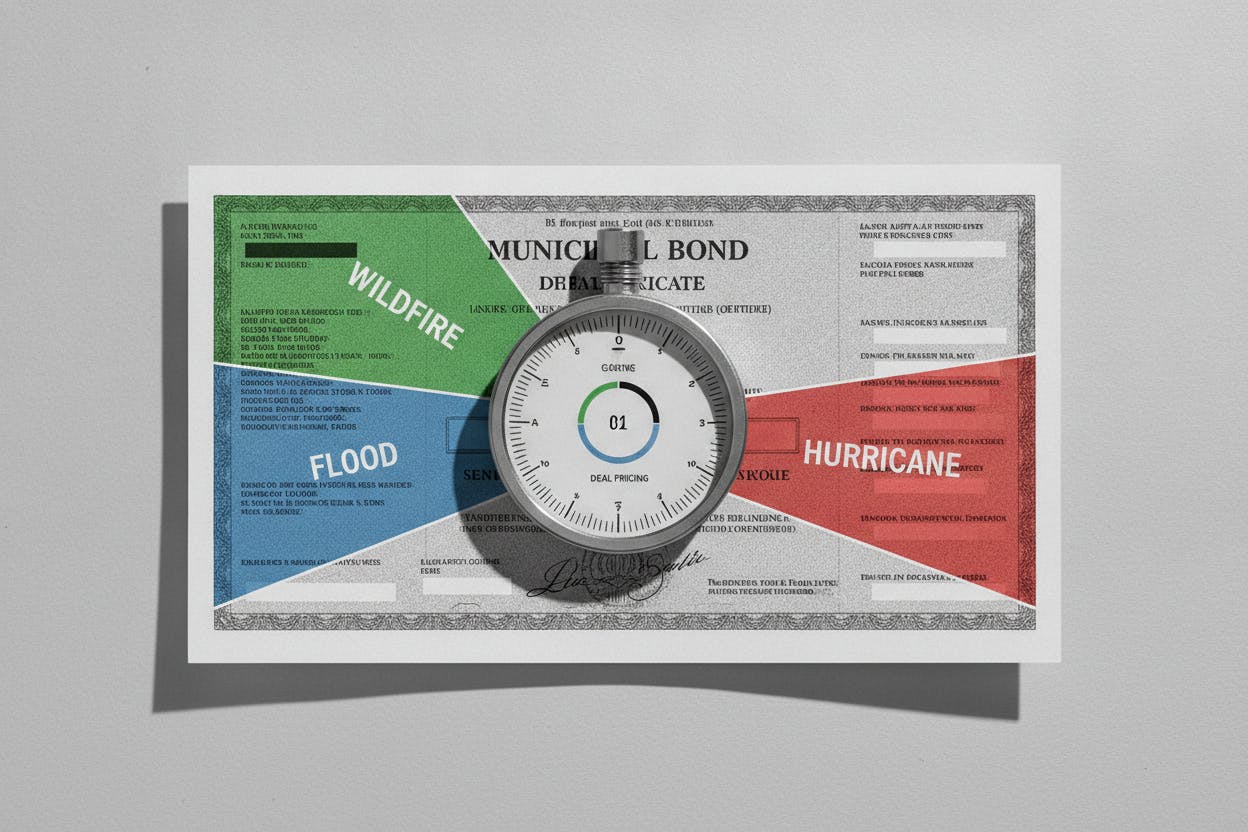
Municipal bonds have long been seen as one of the safest corners of the investment world—a place where retirees and conservative portfolios go to earn steady, tax-free income. But this week, a new kind of label is showing up on some of those bonds: climate risk scores that, in a few cases, hit the top of the scale.
ICE Climate Data, a unit of the Intercontinental Exchange that provides environmental risk analytics, flagged this week's municipal bond deals with wildfire, flood, and hurricane scores as high as 5.0 out of 5.0. That's the highest possible risk rating on ICE's scale, and it's a stark reminder that even the most traditional investments are not immune to the physical impacts of a changing climate.
What are climate risk scores?
Climate risk scores are numerical ratings that attempt to quantify how exposed a particular asset—in this case, a municipal bond—is to climate-related hazards. ICE's scores range from 0.0 (minimal risk) to 5.0 (extreme risk) and are broken down by specific perils: wildfire, flood, and hurricane, among others. A score of 5.0 doesn't mean a disaster is imminent; rather, it signals that the location and infrastructure backing the bond face a high likelihood of experiencing a severe climate event over time.
For municipal bonds, these scores are particularly relevant because the bonds are often used to fund public infrastructure—roads, bridges, water systems, schools, and utilities—that is directly exposed to weather and climate. A bond issued by a coastal city to build a new seawall, for example, might carry a high hurricane score. A bond for a mountain community's water treatment plant could come with a high wildfire score.
This week's flagged deals span multiple issuers and regions, but the common thread is that they all carry elevated risk in at least one of the three categories. While ICE has been providing climate data for several years, the fact that these scores are now being attached to new deals in real time suggests that climate risk is becoming a standard part of the due diligence process for municipal bonds.
Why this matters for investors
For everyday investors, the arrival of climate risk scores on municipal bonds is more than a curiosity—it's a potential game-changer for how they evaluate risk and return. Traditionally, muni investors focused on credit ratings (like AAA or AA) and the financial health of the issuer. Climate risk adds a new layer of analysis that can affect both the safety of the investment and its yield.
If a bond is issued by a community that is highly exposed to hurricanes, for example, there's a greater chance that the issuer could face unexpected costs—repairing damaged infrastructure, providing emergency services, or losing tax revenue from destroyed property. In a worst-case scenario, that could strain the issuer's ability to make interest payments or repay the principal. That's why some investors are starting to demand higher yields for bonds with high climate risk scores, a trend that could widen the gap between 'safe' and 'risky' munis.
But it's not all doom and gloom. High climate risk doesn't automatically mean a bond is a bad investment. Many issuers in high-risk areas are taking proactive steps to harden infrastructure, improve building codes, and build up reserve funds. A high score might simply reflect the geographic reality of the location, not the quality of the issuer's management. Still, the scores provide a useful starting point for asking tougher questions.
What to watch next
As climate risk scoring becomes more common in the municipal bond market, investors should expect to see it influence pricing and demand. Some institutional investors, like pension funds and insurance companies, are already incorporating climate data into their fixed-income strategies. If that trend spreads, bonds with high climate risk scores could become harder to sell, forcing issuers to offer higher interest rates to attract buyers.
For individual investors, the key takeaway is to be aware of the climate exposure in any muni bond fund or individual bond you own. While the scores are not yet a standard part of every bond's offering document, they are increasingly available through data providers like ICE. If you're considering a muni bond, it's worth asking your broker or financial advisor whether climate risk data is available for that specific issue.
This development also fits into a broader theme we've been tracking: the growing intersection of climate and finance. From oil stocks reacting to geopolitical tensions to Blackstone's AI-driven deals, investors are increasingly having to factor in risks that weren't on the radar a decade ago. Climate risk is just the latest example.
For now, the fact that ICE is flagging this week's deals with scores as high as 5.0 is a clear signal that climate risk is no longer a niche concern. It's becoming a mainstream part of how municipal bonds are evaluated—and that's a reality check every investor should take seriously.