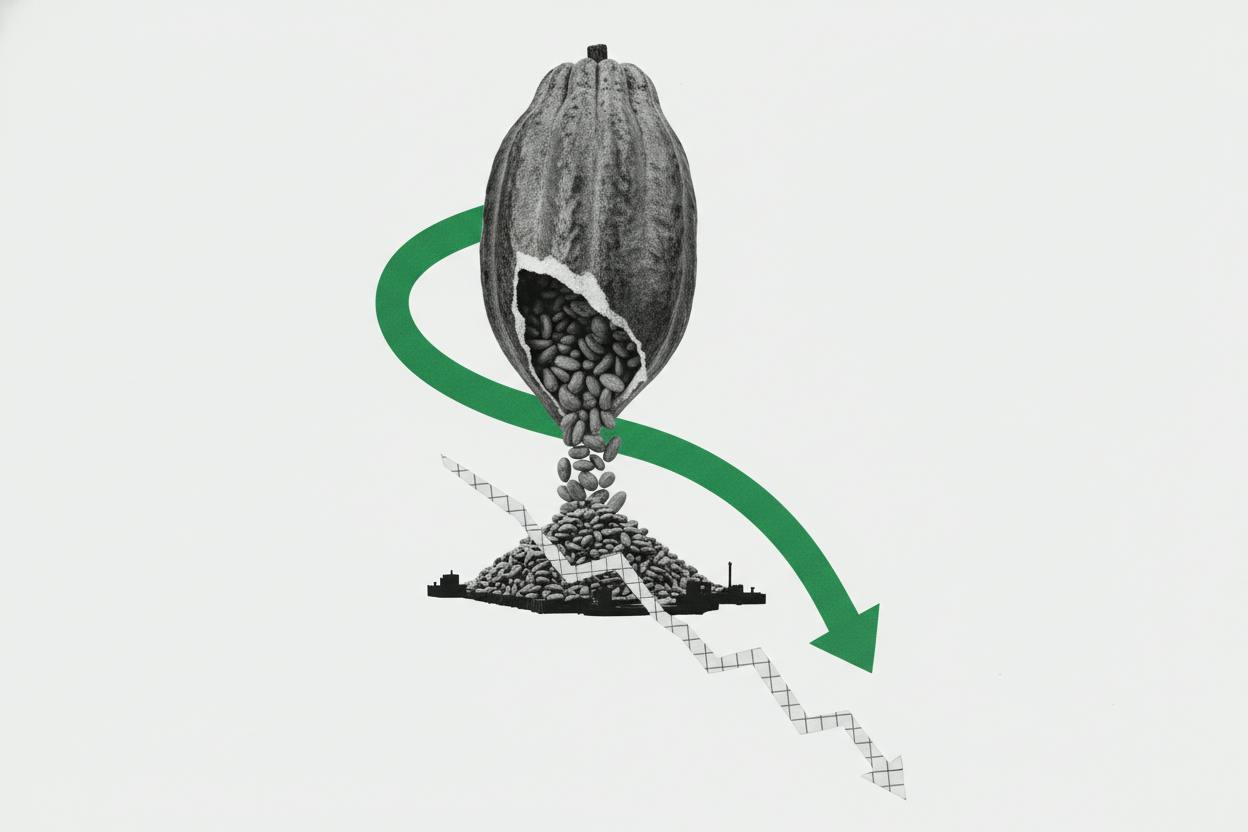
Cocoa futures tumbled about 5% on Tuesday, extending their weekly decline as traders weighed signs of a growing seasonal surplus. The trigger: stronger-than-expected port arrivals in Ivory Coast, the world's top cocoa producer, as the new marketing season gets underway.
The move reflects a shift in market sentiment. After months of tight supplies and record-high prices, the focus is now turning to the prospect of more cocoa hitting the market. A commodities dealer told Reuters that the market is starting to price in a surplus for the season, a sharp reversal from the deficit-driven rally that dominated much of the past year.
Why port arrivals matter
Ivory Coast accounts for roughly 40% of global cocoa output, so its port arrival data is closely watched by traders as an early indicator of supply. Stronger arrivals suggest that farmers are delivering more beans to export hubs, which can signal a healthier crop and a potential buildup of inventories.
In the previous season, poor weather and disease in West Africa slashed output, sending cocoa prices to historic highs. That squeeze prompted chocolate makers and other buyers to scramble for supplies, and consumers felt the pinch in higher chocolate prices. Now, with arrivals picking up, the market is betting that the supply crunch is easing.
The new marketing season, which began in October, is off to a more promising start. If the trend continues, it could mark the beginning of a rebuilding phase for global cocoa stocks, which have been depleted over the past two years.
Demand may be cooling
The price drop isn't just about supply. High prices earlier in the year may have also dampened demand, particularly in the third quarter. When cocoa costs soar, chocolate makers often reduce their purchases, adjust recipes, or pass costs to consumers, which can lead to softer consumption.
A trader noted that the market is now factoring in both a supply surplus and weaker demand, creating a double headwind for prices. This combination has pushed futures down sharply from their peaks, though prices remain elevated compared with historical averages.
What it means for investors
For everyday investors, the slide in cocoa prices is a reminder that commodity markets can turn quickly. While the recent rally was driven by scarcity, the current decline shows how quickly expectations can shift when supply signals improve.
Investors with exposure to cocoa through exchange-traded funds (ETFs) or futures should be prepared for continued volatility. The market is highly sensitive to weather forecasts, crop reports, and political developments in West Africa. Any setback to the harvest could reignite the rally, while sustained strong arrivals could push prices lower.
For those who own shares in chocolate makers or food companies that use cocoa as an ingredient, lower cocoa prices could be a positive. It may ease input costs and protect profit margins, though the effect is often delayed because companies typically hedge their cocoa purchases months in advance.
On the flip side, cocoa-producing nations and companies that rely on high cocoa prices could see their revenues come under pressure if the surplus materializes.
Broader market context
The cocoa market's moves come amid a busy week for commodities and global markets. Copper prices have climbed as Chinese buyers return to the physical market, while rubber prices are split as a weak yen lifts Osaka but oil drags Shanghai. Meanwhile, stocks have rebounded as traders question the Federal Reserve's hawkish signal, and the dollar wavers as traders await US jobs and housing data.
These cross-asset moves highlight how interconnected global markets are, with shifts in one commodity often rippling through others.
Looking ahead
Traders will be watching weekly port arrival data from Ivory Coast and Ghana, the second-largest producer, for further clues. Any signs of a slowdown in arrivals could quickly reverse the bearish sentiment. Additionally, weather forecasts for West Africa will be key, as dry or excessively wet conditions could threaten the crop.
For now, the market's mood is cautious but increasingly tilted toward the view that the worst of the supply crisis is over. Whether that proves correct will depend on the data in the coming weeks.