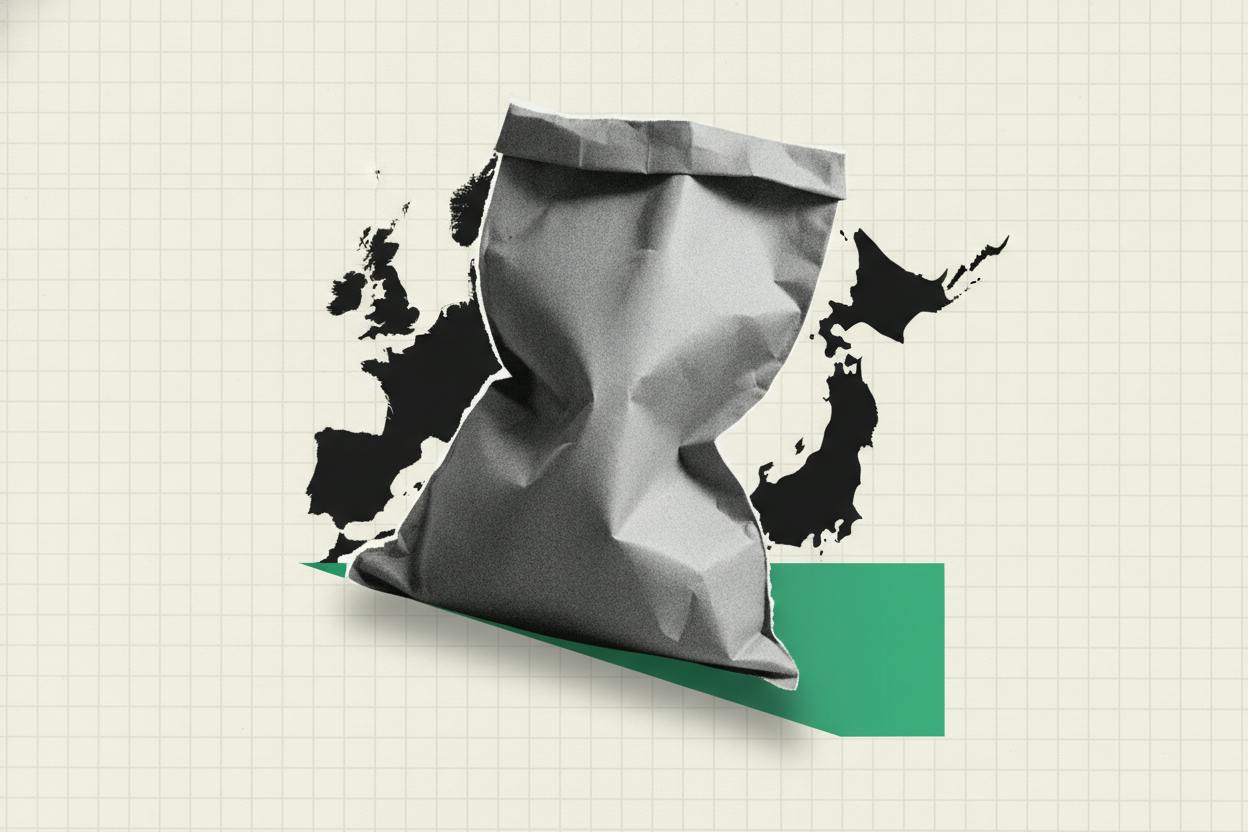
Coffee roasters in Japan and Europe are holding less backup inventory than usual, according to new data, a sign that the global coffee market's safety cushion is wearing thin. The figures, compiled by the Coffee Trading Academy, show that August green coffee inventories fell sharply from a year earlier, leaving the supply chain with less room to absorb disruptions.
Japan's green coffee inventories stood at 1.99 million 60-kilogram bags in August, down 12.4% from the same month last year and roughly 27% below the five-year August average of 2.73 million bags. Europe's overall stocks were 7.14 million bags, down 16.8% year-on-year and below typical seasonal levels. The most striking decline was in natural arabica beans, which fell to 1.69 million bags, a drop of 25.6% and the third straight monthly decline.
Why stockpiles are shrinking
The trend of lower inventories in consuming countries is not new. For years, high coffee prices have made it expensive for importers and roasters to hold large stocks. At the same time, weather-related supply problems in major growing regions have made the flow of beans less predictable. When prices are high and supply is uncertain, companies tend to keep less in storage, preferring to buy closer to when they actually need the beans.
That strategy works fine when everything goes smoothly. But it leaves the supply chain with a thinner buffer. In the past, when a shipment was delayed or a harvest came in smaller than expected, roasters could dip into their warehouses to smooth things over. With inventories now well below normal, that shock absorber is much weaker.
As a result, importers and roasters have to purchase coffee closer to delivery, which means they are more exposed to whatever the spot market is charging at that moment. Any disruption—a port delay, a crop downgrade, a shipping snag—can show up more quickly in wholesale coffee costs and in contract renegotiations.
What it means for your coffee bill
Retail coffee prices don't move in lockstep with commodity prices. Companies often use their inventories to smooth out cost swings, so a jump in wholesale prices doesn't immediately translate into higher supermarket prices or cafe menu changes. But when stocks are as thin as they are now, there is less room to absorb surprises.
Japan's inventory shortfall of roughly 27% versus its five-year August average is a clear example. With less coffee in storage, buyers are more likely to make last-minute purchases, which increases their exposure to spot prices. Over time, that can lead to more frequent and less predictable changes in retail prices across Europe and Japan. Discounts may become shorter-lived, and price increases could come in smaller but more regular steps.
For everyday investors, this is a reminder that commodity markets can have a direct impact on consumer prices. Coffee is one of the most traded agricultural commodities in the world, and its price movements can ripple through the economy. If you hold shares in coffee roasters, retailers, or even supermarket chains, thinner inventories could mean tighter margins or more volatile earnings. But it's also worth noting that many large companies hedge their coffee purchases in advance, which can protect them—and their customers—from short-term swings.
What to watch next
Investors will be keeping an eye on the next few months of inventory data to see whether the decline continues. The key question is whether roasters and importers will rebuild their stocks, or whether high prices and supply uncertainty keep them running lean. Also important is the outlook for the next harvest in major producing countries like Brazil and Vietnam, which will determine whether supply can catch up with demand.
For now, the message from the data is clear: the coffee supply chain has less room for error. That doesn't mean prices will spike tomorrow, but it does mean that any unexpected news—a frost in Brazil, a drought in Vietnam, a shipping disruption—could have a faster and bigger impact on wholesale costs, and eventually on what you pay for your morning cup.
As always, it's wise to keep an eye on broader market trends. For more on how commodity moves affect European markets, you can read about copper prices getting a boost from US stockpiles or European shares slipping on other worries. And if you're tracking the broader economy, Europe's earnings season opening with analysts lifting profit forecasts offers a useful backdrop.