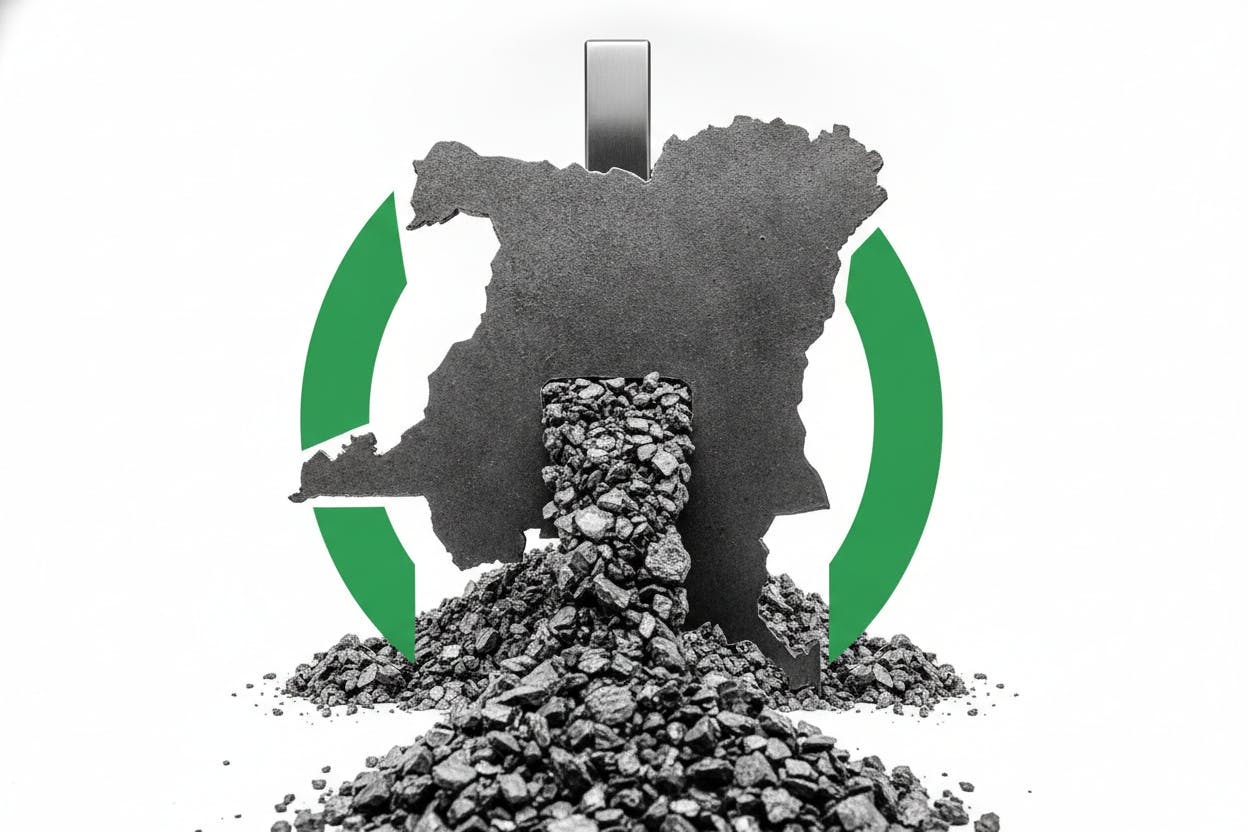
The Democratic Republic of Congo has moved to block exports of copper and cobalt concentrates, a semi-processed form of these critical minerals, in a bid to force more of the value-added processing to happen within its borders. The order, seen by Reuters and dated June 29th, takes effect immediately, though it allows for one-year waivers and introduces a new by-product tax that will phase in over three months.
Concentrates are the result of the first stage of mineral processing—ore is crushed and ground, and the valuable metal is separated from waste rock to produce a powder-like mix that typically contains 20-40% metal. This concentrate is usually shipped to smelters and refiners abroad, where it is further processed into pure metal. By shutting that export route, Congo is trying to capture more of that downstream activity domestically.
Why Congo is doing this
The Democratic Republic of Congo is the world's largest producer of cobalt—a key ingredient in electric vehicle batteries—and a major supplier of copper, which is essential for everything from wiring to renewable energy infrastructure. For years, the country has exported most of its concentrate for processing in places like China, which dominates global smelting and refining capacity.
This export ban is the latest in a series of policy moves by resource-rich nations to move up the value chain. By requiring that smelting and refining happen at home, Congo hopes to create local jobs, build industrial capacity, and capture a larger share of the economic value from its mineral wealth. The new by-product tax, which will be phased in over three months, is another tool to encourage companies to invest in domestic processing.
The move comes at a time when copper prices have been strong, partly driven by demand from the AI data center boom and the global energy transition. As copper prices have held above $14,000 on shrinking inventories, the stakes for securing supply chains are higher than ever.
The catch: local capacity
The immediate challenge is whether Congo's existing smelting and refining infrastructure can absorb the volumes that were previously exported. If local processing capacity is insufficient, miners may be forced to slow production, accept lower prices for their concentrate, or seek one-year waivers to continue exporting while they adjust.
This uncertainty could ripple through global markets. Copper and cobalt are critical inputs for many industries, and any disruption to supply can affect prices and the operations of companies that rely on these metals. For investors, the ban adds a new layer of risk to mining companies with operations in Congo, as well as to the broader supply chain for batteries and electronics.
Some miners may already have contingency plans. Larger companies with diversified operations might be better positioned to adapt, while smaller players could face more significant challenges. The one-year waiver provision offers some flexibility, but it's not a permanent solution.
What it means for investors
For everyday investors, this news underscores the importance of geopolitical and regulatory risk in commodity markets. Mining stocks, particularly those with exposure to Congo, could see increased volatility as the market digests the implications. The ban could also affect the prices of copper and cobalt, which are already sensitive to supply disruptions.
Investors should watch how miners respond—whether they invest in local processing, seek waivers, or reduce output. The three-month phase-in of the by-product tax gives some time for adjustment, but the immediate ban on concentrate exports is a stark reminder that resource nationalism is on the rise.
This is not an isolated event. Other countries have taken similar steps to retain more value from their natural resources, and the trend could continue. For those with exposure to mining or battery supply chains, staying informed about policy changes in key producing countries is essential.
As the situation develops, the focus will be on how quickly Congo can expand its domestic processing capacity and whether the ban achieves its intended goals without causing undue disruption. For now, the message is clear: Congo wants a bigger slice of the pie, and it's willing to use export controls to get it.