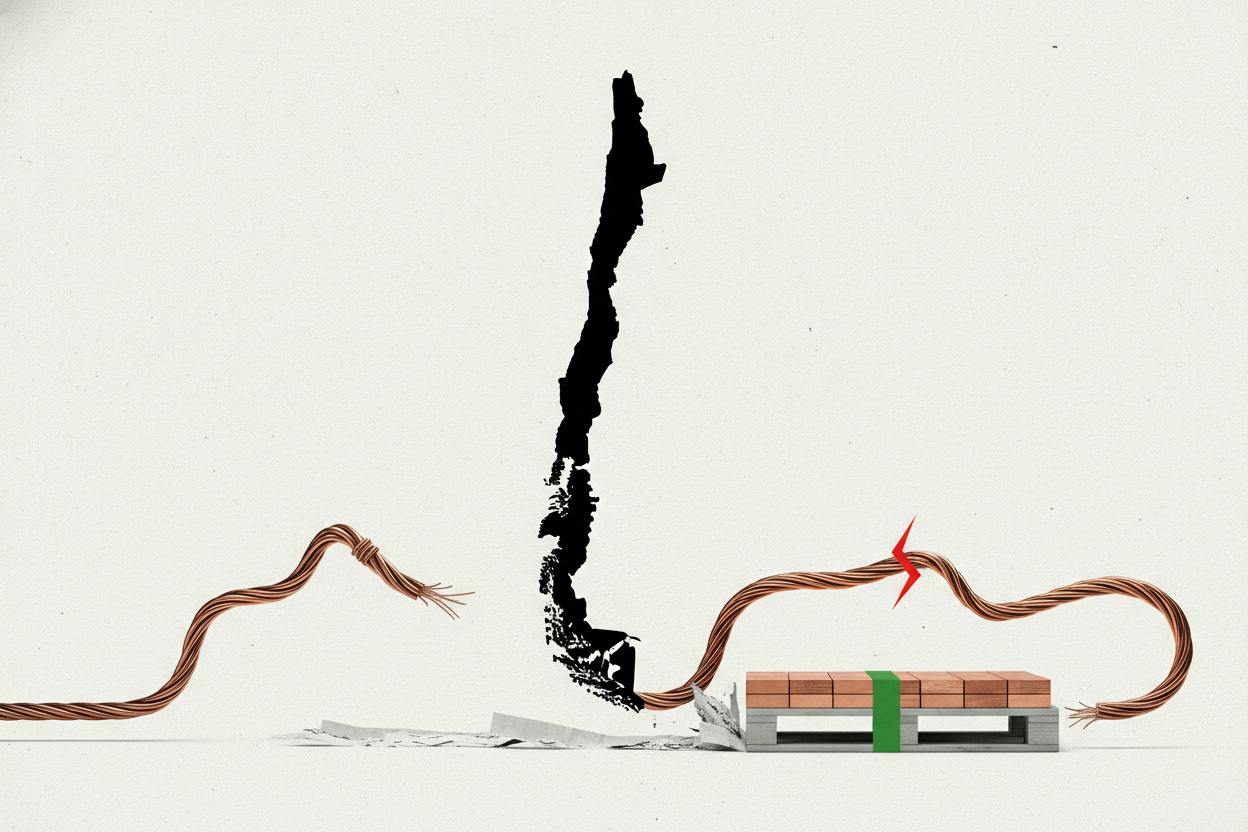
Copper prices were little changed on Wednesday, as traders weighed labor unrest at some of the world's largest mines against a murky demand outlook shaped by higher oil prices and tariff uncertainty. The metal's stability, however, masks a market being pulled in opposite directions.
On the supply side, the supervisors' union at BHP's Escondida mine—the world's largest copper operation—said it would begin a strike after contract negotiations broke down. Separately, state-owned miner Codelco partially suspended work at its El Teniente mine following a fatal landslide. Other Chilean operations have also been juggling contract talks and restarts, adding to a backdrop of operational disruptions in the country that produces more copper than any other.
Analysts at TD Securities noted that the cluster of strike votes and operational headlines could keep a near-term "supply-risk premium" embedded in copper prices. That premium reflects the market's willingness to pay extra for metal today, given the possibility that supply could tighten further.
Tariffs and the Inventory Shuffle
But there's another twist. Reuters reported that copper inventories outside the United States have tightened as metal has been shipped into the country ahead of potential tariffs. This rerouting doesn't necessarily mean the world is using more copper—it can simply mean the same metal is sitting in a different location, making the usual inventory signals harder to read.
For investors, this is an important distinction. When traders rush metal into the US to get ahead of possible import duties, available stockpiles can look tighter elsewhere, even without a clear improvement in end-demand. Because London Metal Exchange (LME) pricing is sensitive to what's readily deliverable, those visible drawdowns can keep prices firmer—and more jumpy—than the broader growth story might suggest.
Three-month copper on the LME was steady at $14,571.50 a ton. That stability, however, belies the tug-of-war between supply disruptions in Chile and a macro backdrop that could cool industrial demand. Higher oil prices can raise input costs for manufacturers and potentially dampen economic activity, while tariff uncertainty adds another layer of caution for businesses that rely on copper-intensive goods.
What It Means for Investors
For everyday investors, copper is often seen as a barometer for global economic health. The metal is used in everything from construction and electronics to electric vehicles and power grids. When prices rise, it can signal strong industrial demand; when they fall, it may point to economic weakness.
In this case, the flat price masks a market that is being driven by two opposing forces. On one hand, supply disruptions in Chile—which accounts for roughly a quarter of global copper output—could push prices higher if they persist. On the other hand, tariff uncertainty and higher energy costs could weigh on demand, especially if they slow global growth.
Investors should also be aware that the inventory shuffle tied to tariffs can distort the usual signals. A drop in visible stockpiles outside the US might look bullish, but it could simply reflect metal being moved to American warehouses rather than a genuine increase in consumption. That means price movements could be more volatile than the underlying fundamentals suggest.
For those with exposure to copper through mining stocks or exchange-traded funds, the key is to watch how the situation in Chile evolves. If strikes spread or last longer than expected, the supply-risk premium could grow. Conversely, if tariff concerns escalate and demand weakens, that premium could quickly evaporate.
Related reading: Glencore's copper pitch to Australian investors highlights the metal's long-term appeal, while the nickel outlook flipping to surplus shows how supply dynamics can shift in other metals. For broader market context, Asian stocks steadied as investors awaited inflation data, and the dollar slipped on similar concerns.
As always, copper's path will depend on a mix of supply disruptions, trade policy, and global growth. For now, the market is holding its breath—and so should investors.