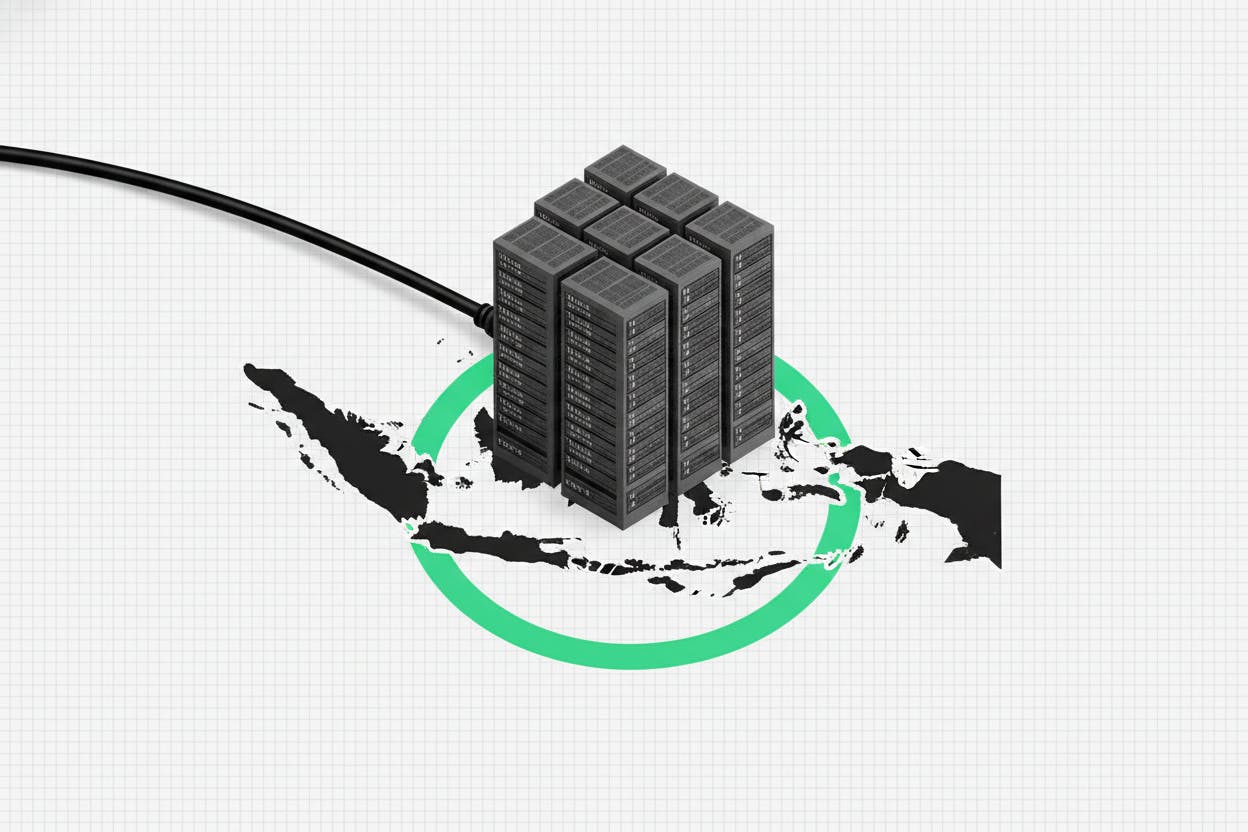
CoreWeave, a cloud provider focused on artificial intelligence, announced plans to build three data centers in Indonesia. The company says this marks its first expansion into the Asia Pacific region, with the facilities backed by 360 megawatts of contracted power.
The move underscores a shift in the AI industry: computing power is increasingly seen as a geographic challenge, not just a supply-and-demand one. CoreWeave said companies and governments in Asia want "compute"—the processing power used to run and train AI models—located closer to their data and end users. That proximity helps reduce lag for time-sensitive tasks and helps organizations comply with data-locality rules, which require certain data to stay within a country's borders.
Why Indonesia?
Indonesia is Southeast Asia's largest economy and has a fast-growing digital sector. For AI cloud providers, the country offers a strategic location for serving both domestic demand and the broader region. By establishing a local presence, CoreWeave can offer lower latency for customers in Asia and address regulatory requirements that may otherwise make it difficult to serve them from data centers in the United States or Europe.
The company's move also reflects a broader trend among AI infrastructure providers. As demand for AI services explodes, firms are racing to build data centers in new markets. This isn't just about having enough chips; it's about having them in the right places. Infrastructure investors are pouring record sums into AI data centers, and geography is a key part of the calculus.
What does this mean for investors?
For everyday investors, CoreWeave's expansion is a signal that the AI boom is becoming more global. While much of the early AI infrastructure spending has been concentrated in the United States, providers are now looking to serve demand in Asia and other regions. This could mean more opportunities for companies that supply the components, construction, and power needed for these data centers.
It also highlights the importance of energy. Data centers are massive consumers of electricity, and securing power is often a bigger challenge than securing land or permits. CoreWeave's 360 megawatts of contracted power is a substantial commitment—enough to power a mid-sized city. Investors should watch how companies manage their energy needs, as power availability can be a bottleneck for growth.
CoreWeave itself is a private company, but it has been in the news for its rapid growth and its relationships with major AI players. The company has been projected to report strong revenue growth, and its expansion into Asia could be a key driver of future performance. However, investors should note that CoreWeave is not publicly traded, so direct exposure is limited to private markets or through investment funds that hold stakes in the company.
Broader market context
The announcement comes at a time when AI cloud growth is lifting tech stocks, even as interest rates remain elevated. The demand for AI services has been a bright spot for major cloud providers like Amazon, Microsoft, and Google, and it's also creating opportunities for specialized players like CoreWeave.
For investors, the key takeaway is that AI infrastructure is becoming a global story. As more countries seek to develop their own AI capabilities, they will need data centers, power, and the expertise to run them. Companies that can deliver these services across borders may be well-positioned for long-term growth.
That said, international expansion comes with risks. Building data centers in a new country involves navigating local regulations, securing reliable power, and managing construction timelines. There's also the question of whether demand will materialize as quickly as expected. But for now, CoreWeave's move into Indonesia is a clear sign that the AI cloud race is going global.
For the average investor, this story is less about a specific stock tip and more about understanding the forces shaping the tech sector. The AI boom isn't just a U.S. phenomenon—it's spreading across the world, and that could create opportunities and risks for years to come.