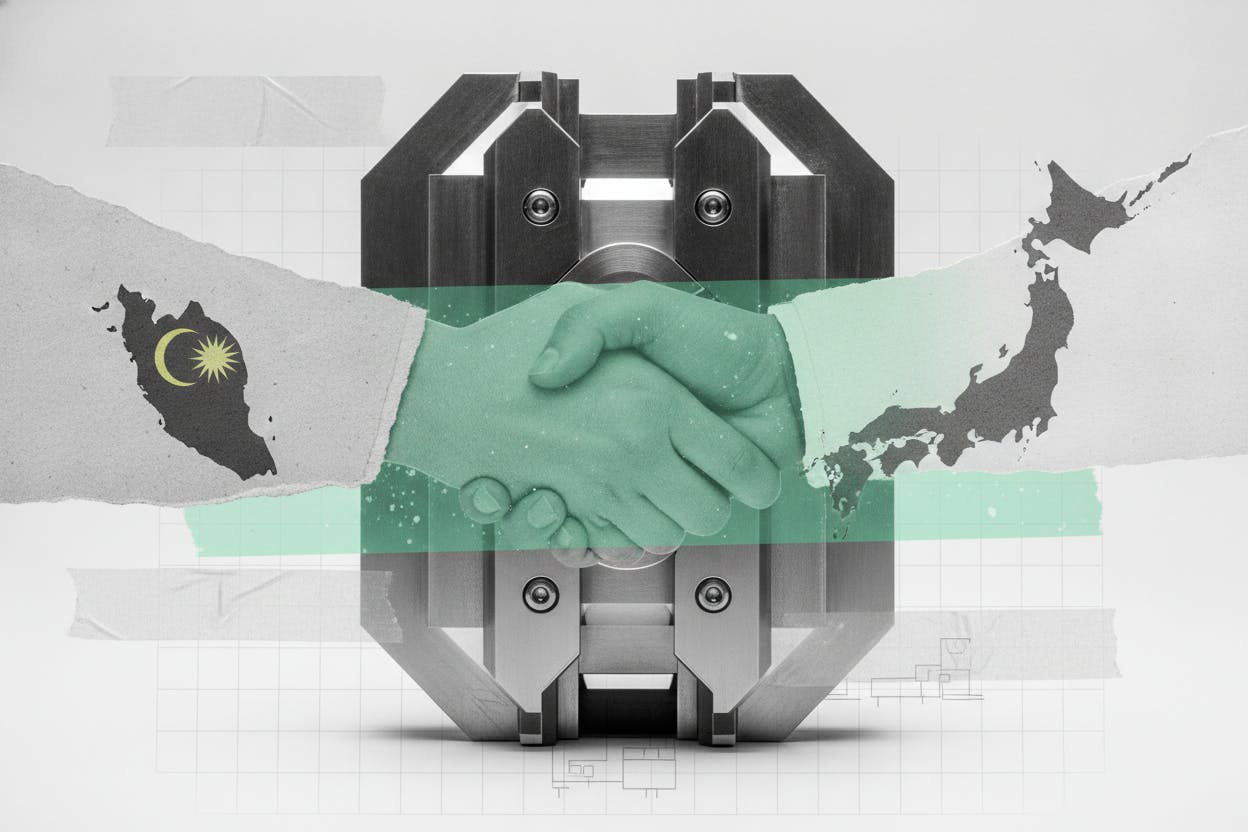
Malaysian manufacturing firm CPE Technology has announced a joint venture with Japan's Kanekita to produce components used in semiconductor manufacturing equipment. The news sent CPE shares down more than 5% in Friday trading, as investors weighed the long timeline before revenue materializes.
Joint Venture Details
CPE, a Malaysian company listed on Bursa Malaysia, will hold a 50.5% stake in the new venture, while Kanekita, a Japanese industrial firm, will own the remaining 49.5%. The partnership leverages Kanekita's proprietary surface-treatment process known as passivation—a coating step that helps protect metal parts from corrosion and wear—combined with CPE's manufacturing facilities to scale production.
The venture is expected to be incorporated within 60 days from July 14th. After that, the companies plan to install and test a production line within 12 months. CPE will contribute approximately 2 to 3 million Malaysian ringgit upfront for site preparation and setup. However, actual manufacturing and sales are not anticipated to begin until the third quarter of the financial year ending 2027.
Why the Market Reacted
For investors, the joint venture represents a bet on future demand for semiconductor equipment components, but with a significant delay before any revenue flows. The modest upfront investment of 2-3 million ringgit is relatively small for a company like CPE, but the long wait for production—more than two years away—introduces execution risk. Investors often apply a discount to valuations when a project's payoff is distant and depends on multiple technical and operational handoffs going smoothly.
The 5% share price drop reflects this uncertainty. From here, CPE's stock is likely to react more to milestones being met—such as incorporation within 60 days and line installation within 12 months—than to near-term earnings changes. Each cleared milestone reduces uncertainty and could support the share price.
Broader Context: Semiconductor Equipment Demand
The joint venture taps into the growing demand for semiconductor manufacturing equipment, driven by the global chip shortage and increased investment in advanced chips for artificial intelligence, data centers, and consumer electronics. Companies like Atlas Copco have reported surging orders for chip equipment, highlighting the robust demand in this sector.
Japan has been actively investing in advanced manufacturing technologies, including humanoid robots and AI, to regain a competitive edge. However, the country also faces challenges such as rising costs for rare earth materials, which squeeze margins for Japanese manufacturers. These dynamics could affect the joint venture's cost structure and competitiveness.
What It Means for Investors
For everyday investors, this story underscores the importance of understanding the timeline and risks associated with joint ventures in the semiconductor supply chain. While the partnership could position CPE to benefit from long-term demand for chip equipment components, the near-term financial impact is minimal. Investors should watch for progress on incorporation and production line installation as key indicators of whether the venture is on track.
The broader semiconductor equipment market remains strong, but competition is intense. The success of this venture will depend on Kanekita's passivation technology proving reliable at scale and CPE's ability to integrate it efficiently. For now, the market has priced in a degree of skepticism, as reflected in the share price decline.