European stocks opened the week essentially flat, with the broad STOXX Europe 600 barely moving as investors continued to digest last week's sharp selloff in chip and AI-linked names. The calm masked a notable exception in Milan, where Banco BPM shares jumped 9.4% after France's Credit Agricole said it had proposed merging its Italian subsidiary with the Italian lender.
The proposed tie-up would create Italy's third-largest bank, a significant consolidation in a sector that has seen renewed merger activity across Europe. Credit Agricole's shares fell 1.4%, a typical pattern in deal news: the acquirer often sees its stock dip as investors weigh integration risks and the cost of the transaction.
What's behind the deal?
Credit Agricole, one of France's biggest banks, already has a presence in Italy through its subsidiary. A merger with Banco BPM would deepen that footprint, giving the combined entity a stronger position in Italy's retail and corporate banking markets. For Banco BPM, the proposal offers a potential exit for shareholders who have watched the bank navigate a challenging interest-rate environment.
The move comes as European banks have been under pressure from shifting rate expectations. Central banks, including the European Central Bank, have signaled that the era of ultra-low rates may be ending, but the pace of hikes remains uncertain. Banks generally benefit from higher rates, as they can charge more for loans, but they also face higher funding costs and potential loan losses if economic growth slows.
The deal also echoes a broader trend of consolidation in European banking, as lenders seek scale to compete with larger global rivals and invest in digital transformation. UniCredit's recent moves to raise its profit target as its Commerzbank deal nears completion highlight this dynamic.
AI jitters linger
Despite the merger buzz, the broader market remained cautious. Last week's selloff in technology stocks, particularly those tied to artificial intelligence, has left investors questioning whether valuations had run too far, too fast. The STOXX Europe 600's flat open suggests that many are waiting for more clarity before committing new capital.
The AI trade has been a major driver of equity markets globally, with companies in the semiconductor and software sectors seeing outsized gains. But recent volatility has reminded investors that these stocks can fall as quickly as they rise. Taiwan's market backstop sparked a 6% rebound in its index, but doubts about AI sustainability persist.
For everyday investors, the lesson is that diversification matters. While AI and tech stocks have been the stars, they also carry higher risk. A portfolio that includes banks, miners, and other sectors can help cushion against sector-specific swings.
What it means for investors
The Credit Agricole-Banco BPM proposal is a reminder that corporate deal-making can create opportunities, but also risks. For Banco BPM shareholders, the 9.4% jump reflects the premium typically offered in acquisitions. But such gains can be fleeting if the deal falls through or faces regulatory hurdles.
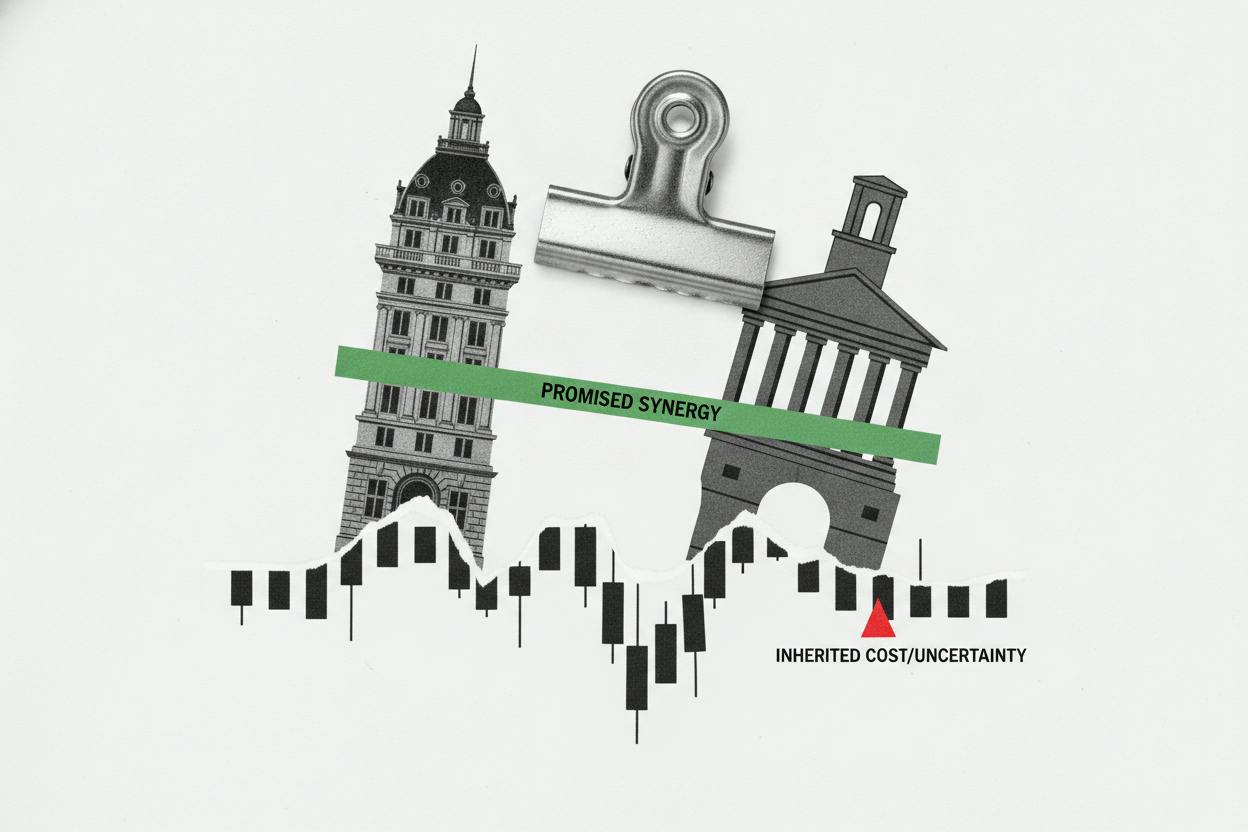
Credit Agricole's 1.4% decline shows that investors are not always enthusiastic about the acquirer's prospects. Mergers can be complex, and integrating two banks with different cultures and systems is no easy task. Historically, many bank mergers have failed to deliver the promised cost savings or revenue synergies.
For those watching European banking, the deal also signals that consolidation is likely to continue. The proposed merger could prompt other banks to explore similar moves, potentially reshaping the competitive landscape.
Meanwhile, the broader market's flatness suggests that investors are still recalibrating after the AI-led wobble. European ADRs slipped again Friday, capping a rough week for US investors with exposure to European stocks. That volatility may continue as earnings season progresses and central banks make their next moves.
For the average investor, the key takeaway is to stay focused on long-term goals rather than short-term market noise. Whether it's a bank merger or an AI selloff, these events are part of the normal ebb and flow of markets. A diversified portfolio, regular contributions, and a clear investment plan remain the most reliable path to building wealth over time.