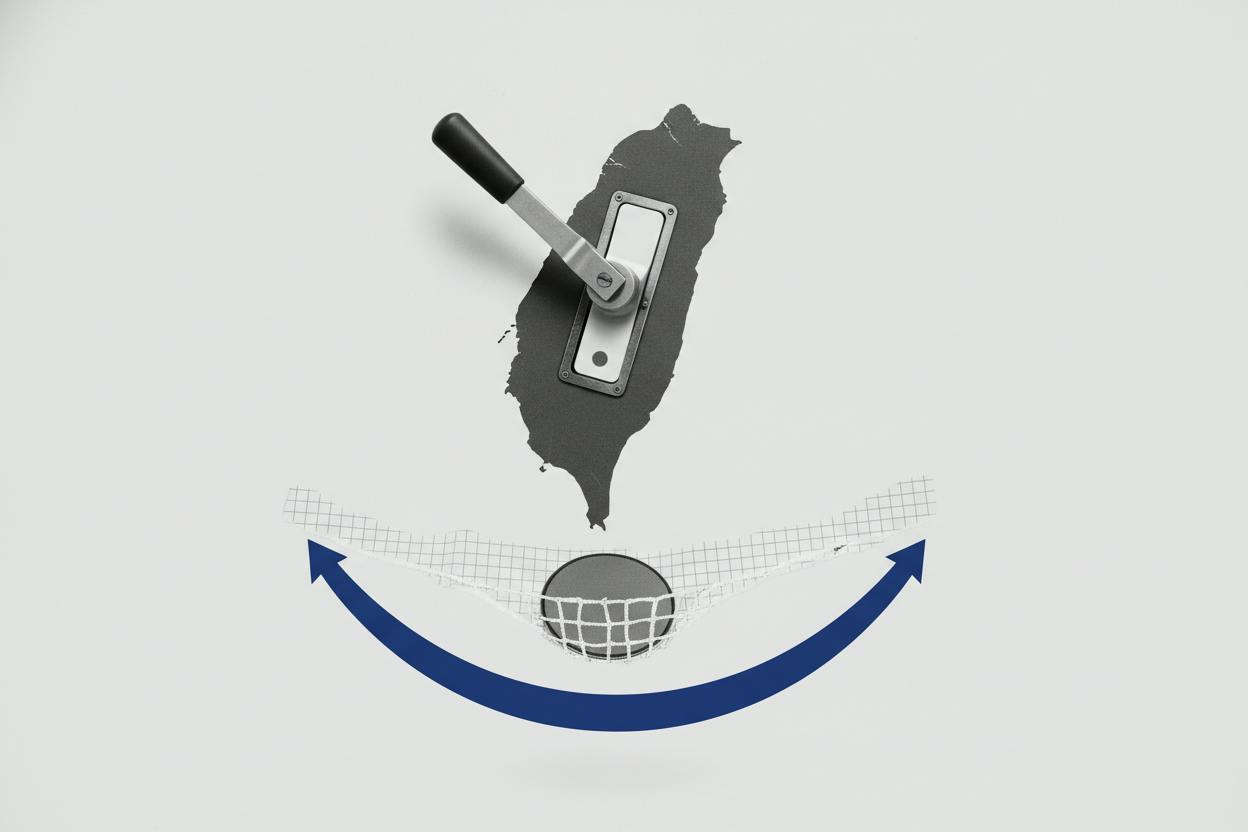
Taiwan's stock market staged a sharp rebound on Monday, jumping more than 6% after officials activated the National Financial Stabilization Fund in response to a brutal tech-led selloff. The benchmark index climbed as much as 6.6%, according to Reuters, recovering some ground after its worst weekly drop since 2001.
The bounce was led by Taiwan Semiconductor Manufacturing Co (TSMC), the world's largest contract chipmaker and a stock that carries enormous weight in the local index. TSMC rose 7.3% in the session, providing a powerful lift to the entire market.
What is the National Financial Stabilization Fund?
The fund is essentially an emergency brake for Taiwan's markets. When investor panic threatens to spiral, the government can authorize the fund to step in as a buyer of stocks, providing a backstop that helps steady prices. At the same time, authorities can impose short-selling curbs, making it harder for traders to bet against shares.
These measures are designed to reduce the near-term "risk premium"—the extra return investors demand for holding stocks instead of safer assets. By adding a large, price-insensitive buyer and limiting bearish bets, the fund can calm nerves and slow a downward spiral.
But as Anna Wu, founder of research firm Floodlines Research, noted, a backstop can steady prices without creating "a decisive lift in AI sentiment." In other words, the rally may be more about liquidity than a genuine improvement in the outlook for artificial intelligence, which has been the main driver of chip valuations.
Why TSMC matters so much
TSMC is not just any chipmaker. It produces advanced semiconductors for the world's biggest tech companies, including Apple and Nvidia. Its near-40% weight in Taiwan's benchmark means that when TSMC moves, the entire index moves with it.
That concentration also has global implications. Taiwan and South Korea are major components of MSCI's emerging-markets index, a benchmark tracked by many international funds. When Taiwanese and Korean tech stocks swing, they can mechanically move passive emerging-markets funds, even if the underlying economic or AI fundamentals haven't changed.
The rebound spilled into the region on Monday, with South Korea's KOSPI rising 1.4%. That helped lift the MSCI emerging-markets index by more than 2%.
What it means for investors
For everyday investors, the key takeaway is that government intervention can change market dynamics quickly, but it doesn't necessarily change the long-term story.
When a stabilization fund steps in, it can create a short-term rally that feels reassuring. But as Wu points out, that doesn't mean AI sentiment has turned decisively positive. Higher valuations for chipmakers like TSMC ultimately depend on sustained demand for AI infrastructure and data centers, not just government buying.
Investors should also be aware of the ripple effects. Because Taiwan and South Korea are so heavily weighted in emerging-markets benchmarks, a tech rally there can lift a broad range of emerging-market funds, even those not specifically focused on tech. Conversely, a tech selloff can drag those same funds down.
Currency markets can also feel the impact. MUFG has flagged the Korean won as particularly sensitive to semiconductor equity swings, a reminder that Asia's chip cycle can show up in foreign exchange as well as stock prices.
What to watch next
The immediate question is whether the stabilization fund's support can hold. Markets often test such backstops, and the rebound could fade if AI sentiment continues to sour. Investors will be watching for any signs that chip demand is weakening, as well as upcoming earnings reports and inflation data that could influence the broader tech trade.
Related coverage: Asia stocks steady as AI trade faces earnings and CPI tests and KOSPI rebounds on chip stock recovery.
For now, Taiwan's backstop has provided a floor, but the ceiling depends on whether the AI boom can justify the valuations that have built up. As always, government support can buy time, but it can't replace earnings growth.