In a symbolic changing of the guard, memory-chip maker CXMT has become China's largest company by market value, overtaking internet giant Tencent. With a valuation north of $500 billion, CXMT's rise marks a decisive shift in where Chinese tech—and investor money—is heading.
For years, consumer internet platforms like Tencent and Alibaba dominated China's stock market, riding a wave of rapid digital adoption and a booming domestic consumer economy. But that era has faded. Beijing's regulatory crackdown on private-sector tech, combined with a sluggish consumer economy, has knocked these giants off their perch. Meanwhile, hardware companies, particularly those tied to semiconductors, have surged.
From apps to chips: a structural shift
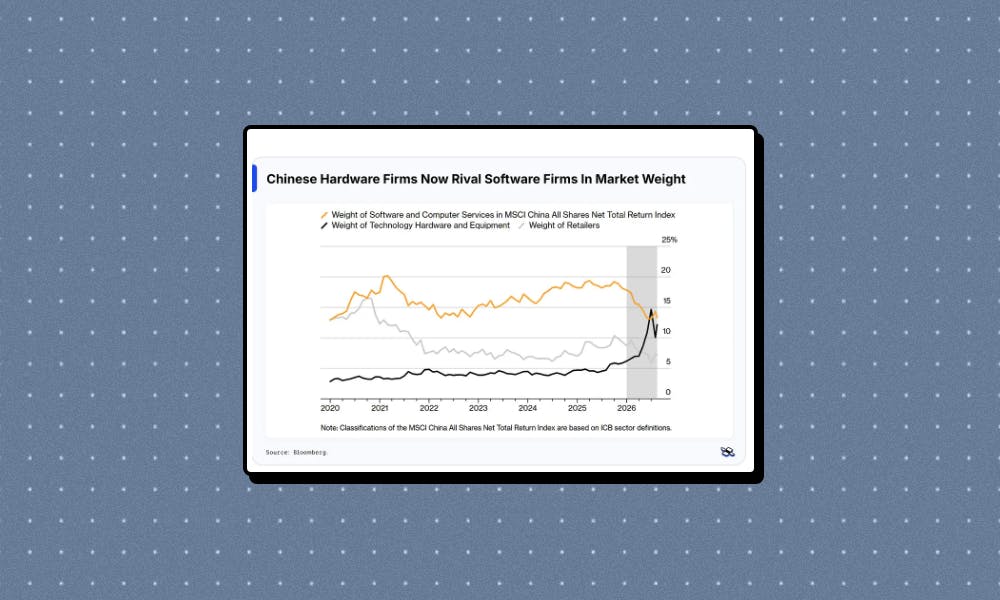
The shift is visible in index data. Hardware's weighting in a broad MSCI China index has climbed from under 3% in 2020 to more than 12% today. That's a dramatic reallocation of capital, reflecting both policy priorities and global demand for advanced technology.
CXMT, short for ChangXin Memory Technologies, is one of China's leading producers of DRAM memory chips—the kind used in smartphones, computers, and increasingly in AI data centers. The company has benefited from Beijing's push for semiconductor self-sufficiency, as well as a global boom in AI-related hardware. As chip stocks rally, investors have poured money into the sector, betting that China's hardware makers will play a larger role in the global supply chain.
The contrast with Tencent is stark. Tencent's core business—social media, gaming, and online advertising—depends heavily on consumer spending and a permissive regulatory environment. Both have been under pressure. Beijing's crackdown on private-sector tech, which began in 2021, targeted everything from gaming to fintech, and consumer confidence has remained weak as the property market struggles and youth unemployment stays high.
What this means for investors
For everyday investors, CXMT's ascent is more than a headline. It signals where the Chinese government is directing resources—and where growth is likely to come from. Semiconductors are a strategic priority, with Beijing pouring subsidies and policy support into domestic chipmakers. That makes the sector a focal point for both domestic and international investors looking for exposure to China's tech future.
But it also comes with risks. Chipmakers are capital-intensive and cyclical, and CXMT faces intense competition from global giants like Samsung and SK Hynix. Geopolitical tensions, including export controls and tariffs, could disrupt supply chains and limit growth. As companies build new plants to meet AI chip demand, the landscape is shifting quickly.
For those invested in Chinese equities, the changing of the guard means rethinking what "Chinese tech" stands for. The old guard—Tencent, Alibaba, and other internet platforms—still generate massive profits, but their growth has slowed. The new leaders are hardware makers, often less familiar to Western investors, but increasingly central to China's economic ambitions.
That said, the broader market remains mixed. While chip stocks have rallied, consumer shares have lagged, reflecting the uneven recovery. As recent data disappoints, Beijing has signaled more support, but the effects have yet to fully materialize. Investors should watch whether the hardware boom can sustain itself, and whether consumer demand eventually catches up.
The road ahead
CXMT's rise is a reminder that market leadership can change quickly, especially in a sector as dynamic as technology. For China, the shift from apps to chips is a strategic bet on self-reliance and advanced manufacturing. For investors, it's a signal to pay attention to the hardware names that are now driving the index.
As always, diversification matters. The concentration of gains in a few chipmakers means that a setback in the semiconductor cycle could hit portfolios hard. But for those willing to ride the wave, the story of Chinese tech is being rewritten—one chip at a time.