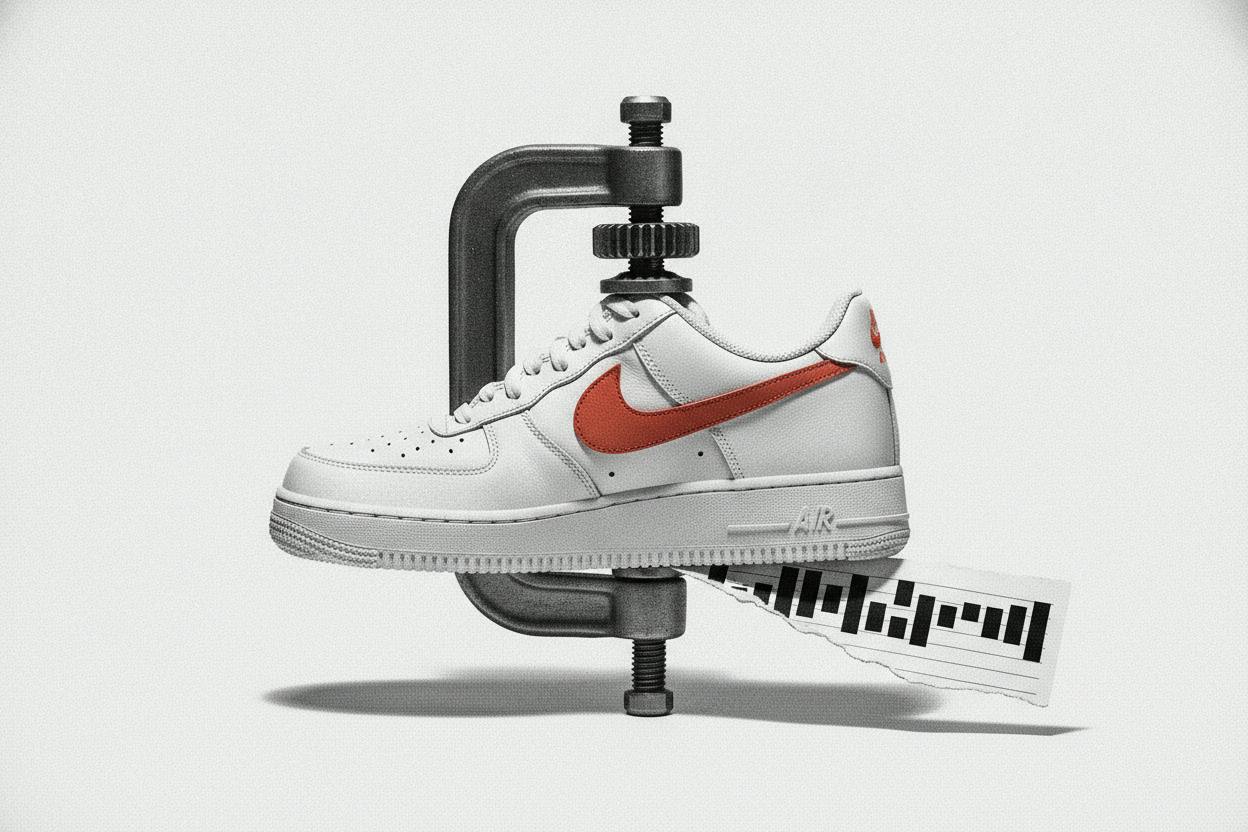
Nike is widening its turnaround effort after a quarterly sales miss, with CEO Elliott Hill overhauling how the company operates day to day and cutting additional roles. The athletic giant is aiming to save $2.5 billion through fiscal 2031, a multiyear push to keep profits steady even if consumer demand remains soft.
The company reported first-quarter revenue of $11.2 billion, slightly below the $11.32 billion analysts had expected, according to estimates compiled by LSEG. The stock fell about 4% in extended trading following the report. The miss reflects a consumer who is still watching every dollar amid persistent inflation, and a product lineup that analysts say has lacked must-have new items — a combination that has forced Nike to lean more heavily on promotions and discounts to move inventory.
Why Nike is cutting deeper
This is not Nike's first round of restructuring. The company had already been trimming costs and jobs as part of an earlier effort to streamline operations. The latest shake-up goes further, redesigning the operating model and modernizing the supply chain. The goal is to make the business leaner so that margins hold up even when sales growth is hard to come by.
Gross margin did improve in the quarter ended August 31, rising 0.6 percentage points to 42.8%, helped by lower warehousing and logistics costs. That suggests some of the earlier cost work is paying off. But the top line remains under pressure. Nike now expects revenue to decline by a high-single-digit percentage in fiscal 2027, with weakness in Greater China and added challenges in Europe, according to Reuters.
For context, a high-single-digit revenue decline is a meaningful contraction for a company of Nike's size. It implies that management sees a prolonged period of softer demand rather than a quick bounce. That is why the cost-cutting is being framed as a way to protect profitability, not just a one-time efficiency exercise.
What it means for investors
For everyday investors, the key takeaway is that Nike is trying to do two things at once: fix its product engine and shrink its cost base. If demand stays weak, the savings help keep earnings from falling as much as they otherwise would. If demand recovers, a leaner Nike could see profits expand faster. The risk is that repeated restructurings can distract management and disrupt the very product pipeline the company needs to reignite growth.
There is also a technical wrinkle that has nothing to do with sneakers or supply chains. S&P Dow Jones Indices removed Nike from the S&P 100 Index in September after 18 years in the benchmark. That matters because index-tracking funds and portfolios that must stay close to that benchmark typically have to rebalance when a company is dropped. Those rules can trigger mechanical selling or leave Nike with a persistent underweight, separate from any fundamental view on the turnaround.
When a slice of "set-and-forget" demand disappears, the stock can become more sensitive to earnings and guidance surprises around rebalance windows. In other words, near-term price moves may reflect index mechanics as much as business performance. Investors should be careful not to read every dip or pop as a signal about Nike's long-term prospects.
Nike is not alone in facing a cautious consumer. Other consumer-facing companies have reported similar pressure, from Conagra's cooling frozen food sales to GM's softer US sales. The common thread is that shoppers are prioritizing essentials and hunting for value, which makes full-price selling harder and discounting more necessary.
What to watch next
Investors will want to track a few things in the coming quarters. First, whether Nike's new product pipeline starts to generate genuine excitement — the kind that supports full-price sales rather than markdowns. Second, how quickly the operating model changes translate into measurable cost savings. Third, the trajectory of sales in Greater China and Europe, two regions management has flagged as challenging.
It is also worth watching the margin line. If gross margin continues to improve even as revenue declines, that would suggest the cost and supply-chain work is having the intended effect. If margins stall or reverse, the turnaround story gets harder to defend.
For now, Nike is asking investors to be patient through a multiyear reset. The company has the scale and brand recognition to weather a downturn, but it still needs to prove it can make products that consumers want to buy at full price. Until that happens, the stock is likely to stay sensitive to each quarterly update — and to the quieter, mechanical forces of index rebalancing.