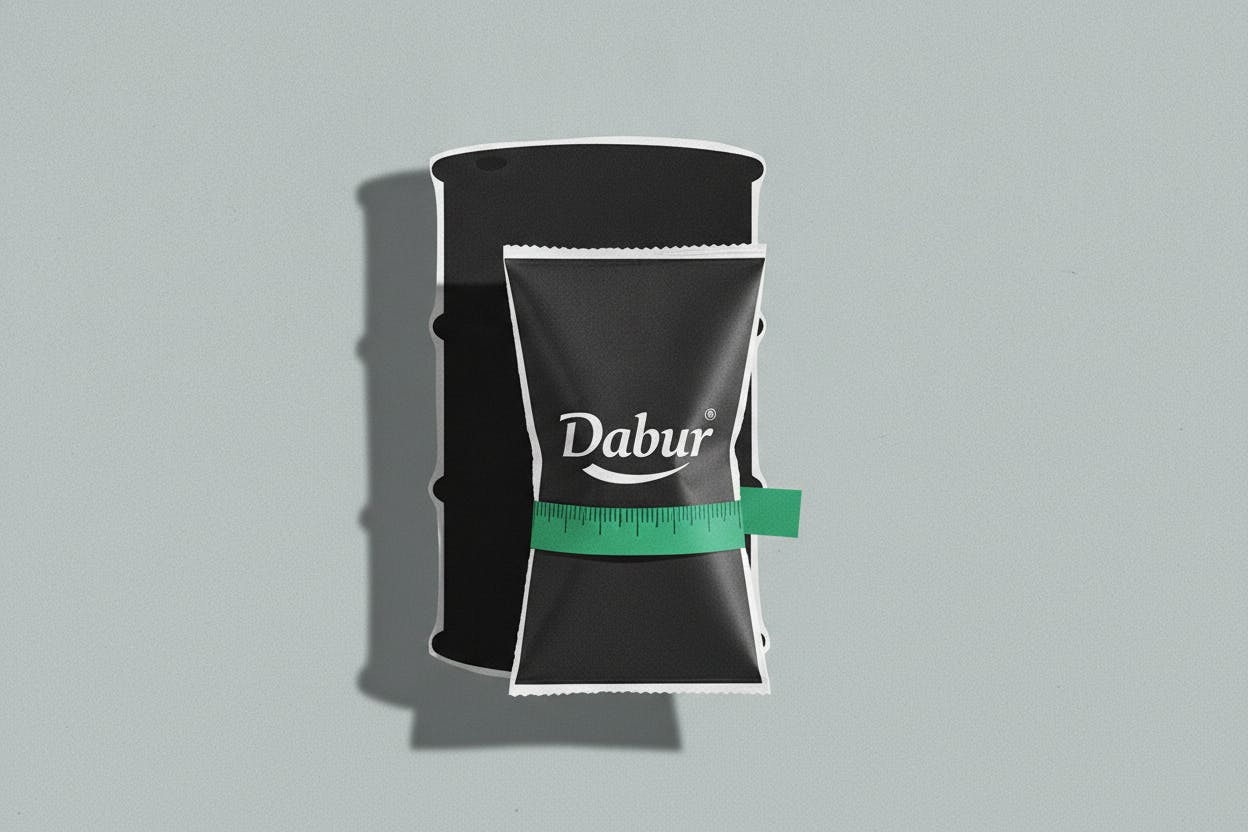
India's fast-moving consumer goods (FMCG) giant Dabur has signaled that its first-quarter profit after tax grew at a double-digit pace, even as packaging costs climbed. The company attributed the resilience to a familiar playbook: raising prices and, in some cases, selling smaller packs for the same sticker price—a tactic often called 'shrinkflation.'
Dabur's update, released ahead of its full quarterly results, offers an early look at how consumer-goods companies are navigating a landscape of elevated input costs and uneven demand. The company said it expects operating margins to hold up despite persistent inflation and geopolitical uncertainty, thanks in part to higher realized prices per unit.
How Dabur Protected Profits
The core challenge for FMCG firms like Dabur is that raw material costs—especially plastic packaging, which tracks crude oil prices—have remained elevated. To offset that, Dabur raised prices on some products and reduced pack sizes on others, a strategy that lifts the average price per unit even if shoppers buy the same number of packs.
This approach is not unique to Dabur. Across the Indian consumer-goods sector, companies have been using price hikes and pack-size adjustments to defend gross margins. The tradeoff, however, is that unit volumes can soften if consumers balk at higher effective prices. That tension is likely to be a central theme when Dabur reports its full quarterly numbers.
Dabur also noted that international sales grew in the high teens in rupee terms, with strong double-digit gains in markets including Egypt, Turkey, Bangladesh, and the United Kingdom. That geographic diversification helps cushion any slowdown in the domestic market.
Rural Demand Outshines Urban
Back in India, Dabur said rural demand continues to outpace urban demand—a positive sign for the broader economy, given that rural India accounts for a large share of consumer spending. The company also highlighted strong growth in newer sales channels: e-commerce, quick commerce, and modern trade are all expected to deliver double-digit gains.
This pattern mirrors what peer Marico, another major Indian FMCG group, has indicated. Marico recently guided to low-twenties consolidated revenue growth for the quarter, striking an upbeat tone similar to Dabur's.
What It Means for Investors
For investors, Dabur's profit guide puts the spotlight on unit volumes. When a company leans on price hikes and pack-size reductions, revenue and profits can rise even if the number of units sold stagnates or declines. That makes it harder to gauge whether underlying demand is truly growing.
"The question for Indian FMCG names like Dabur and Marico during results season is always the same: are companies getting real demand growth, or are they mostly leaning on pricing and pack changes?" said a markets analyst. Sustained investor confidence typically gets easier when volumes re-accelerate after input costs stabilize.
Dabur's update also comes against a backdrop of shifting global commodity prices. Oil prices have been volatile, which directly affects plastic packaging costs. Meanwhile, gold demand in India has softened as prices rebounded, but consumer staples like Dabur's products tend to be less discretionary.
The broader FMCG sector in India has been under pressure from inflation and a patchy recovery in rural incomes. However, companies that can manage costs and maintain margins are better positioned to weather the storm. Dabur's guidance suggests it is doing just that—for now.
Investors will be watching the full quarterly report for details on volume growth, margin trends, and any commentary on the outlook for input costs. If packaging costs ease, Dabur could shift from price hikes to volume-driven growth, which would be a more sustainable driver of long-term returns.