Daikin Industries, the world's largest air-conditioning maker, is selling more units than ever, but the profits from those sales aren't keeping pace. The company's latest quarterly results showed a familiar pattern: strong revenue growth at the top, but disappointing profitability at the bottom. Shares dropped about 11% over the past month as investors digested the news.
Sales up, but profits lag
For the quarter, Daikin reported sales of 1.43 trillion Japanese yen ($9.1 billion), an 18% increase from the same period last year. That top-line growth reflects robust demand for cooling systems, particularly in regions hit by intense heatwaves and in emerging markets where air conditioning penetration is still low.
However, operating profit came in at $833 million, roughly in line with what analysts had expected—but only after including a $37 million tariff refund. Strip out that one-time benefit, and profit would have missed expectations. This marks the second consecutive quarter of disappointing profit figures, a trend that has begun to weigh on investor sentiment.
The gap between sales growth and profit growth suggests Daikin is spending more to generate those sales—whether through higher raw material costs, increased marketing, or competitive pricing pressures. For a company that has long been a market leader in premium air conditioning, the margin squeeze is a red flag.
Why margins matter
For everyday investors, the distinction between revenue and profit is crucial. Revenue is the total amount of money coming in from sales, but profit is what's left after covering all costs. A company can grow its top line impressively while its bottom line stagnates or shrinks—a situation that often disappoints shareholders because profits ultimately drive stock prices and dividends.
Daikin's situation is not unique. Many manufacturers are facing higher input costs, from copper and aluminum to semiconductors and logistics. In the air conditioning industry, competition is intensifying, especially from Chinese rivals like BYD and Gree, which are expanding aggressively into global markets. This competitive pressure can force Daikin to hold prices down, even as its own costs rise.
The tariff refund is also worth understanding. Tariffs are taxes on imported goods, and companies sometimes receive refunds when they successfully challenge duties or when trade policies change. While a refund boosts profit in the quarter it's received, it's not a recurring source of income. Investors typically discount such one-time gains when assessing a company's underlying profitability.
What it means for investors
For those holding Daikin shares, the recent decline is a test of patience. The company's long-term growth story remains intact: global demand for air conditioning is expected to rise for decades as temperatures climb and living standards improve in developing nations. But the near-term profitability issues are real and could persist if cost pressures continue.
Investors should watch whether Daikin can pass on higher costs to customers through price increases, or whether it can improve efficiency in its manufacturing and supply chain. The company's ability to protect its margins will be key to restoring confidence.
It's also worth noting that Daikin's experience is part of a broader trend. Many companies are reporting strong sales but struggling to convert them into profits, as seen in the wider corporate profit picture. In the consumer sector, back-to-school sales surged but discretionary stocks slipped, highlighting the same disconnect between demand and profitability.
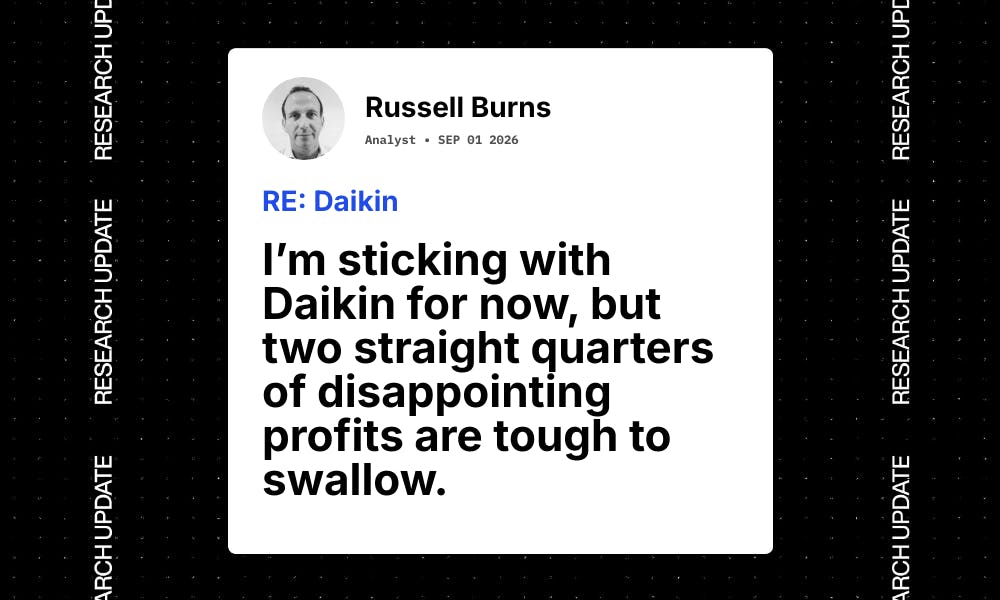
For now, the author of the original brief says they're sticking with their Daikin position, acknowledging that two straight quarters of disappointing profits are hard to swallow. That's a reasonable stance for long-term investors who believe in the company's fundamentals. But it's also a reminder that even strong companies can have rough patches, and that quarterly results can be noisy.
Looking ahead
The next few quarters will be telling. If Daikin can show that the profit shortfall was temporary—perhaps due to one-off costs or a delayed price increase—the stock could recover. If not, the market may start to question the company's pricing power and competitive position.
Investors should also keep an eye on the broader economic environment. Interest rates, currency fluctuations, and trade policies all affect Daikin's business. The yen's weakness has been a double-edged sword: it boosts the value of overseas sales when converted back to yen, but it also raises the cost of imported raw materials.
In the meantime, Daikin's story is a classic example of why investors need to look beyond the headline sales number. A company can be growing, but if it's not making more money on each sale, the growth may not translate into shareholder value. As always, diversification and a long-term perspective are your best defenses against the volatility of any single stock.