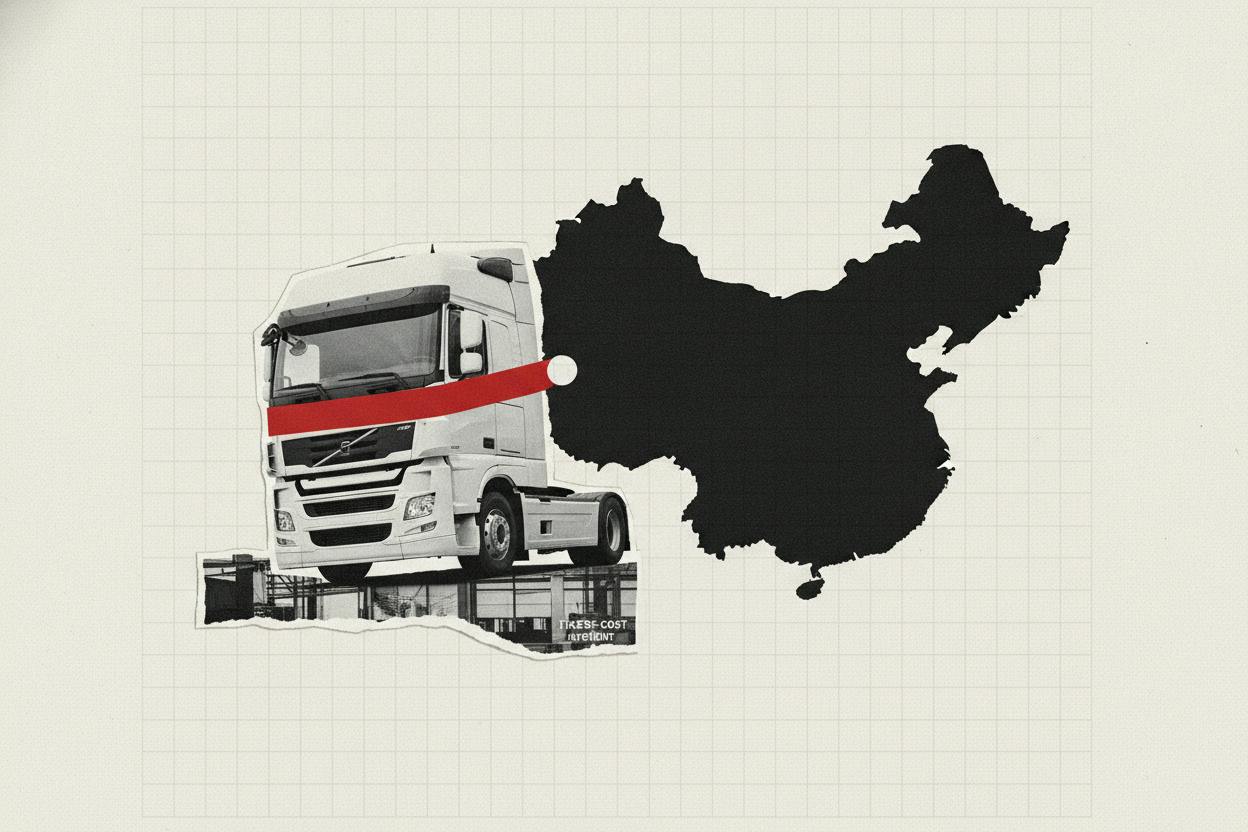
Daimler Truck is trying to convince investors it can lead the industry's shift to software-defined, zero-emission vehicles. But one analyst is pushing back, warning that the real battle will be fought on price — and that China may have the upper hand.
Mwb Research maintained its sell rating on the German truck maker after the IAA Transportation trade fair, saying that aggressively priced Chinese electric trucks could pressure European margins starting in 2027. The note underscores a growing concern across the European auto and trucking industry: how to compete with Chinese manufacturers that have mastered cost control and are now eyeing export markets.
What's behind the warning?
At IAA Transportation, Daimler Truck showcased its vision of a connected, software-driven fleet and a lineup of battery-electric and hydrogen-powered vehicles. The company has been positioning itself as a technology leader, betting that fleet operators will pay a premium for efficiency, uptime, and digital services.
But Mwb Research argues that the market may not reward that bet as much as the company hopes. Chinese EV truck makers, backed by a mature domestic supply chain and lower production costs, are expected to bring aggressively priced models to Europe. If those trucks arrive in volume by 2027, they could undercut European manufacturers on price, forcing them to either lower margins or lose market share.
The analyst's warning fits a broader pattern. European automakers have already felt the pinch from Chinese electric cars, and trucks are seen as the next front. The EU's recent request for China to cap hybrid exports shows how sensitive the trade balance has become. For trucks, the stakes are even higher because margins on commercial vehicles are often thinner than on passenger cars, leaving less room to absorb price competition.
Why 2027 matters
The 2027 timeline is not arbitrary. It reflects the expected ramp-up of Chinese truck exports to Europe, as well as the introduction of new European emissions regulations that could push fleet operators toward electric models. If Chinese trucks arrive with a significant price advantage, European manufacturers like Daimler Truck will have to respond — either by cutting prices, accelerating cost reductions, or relying on brand loyalty and service networks.
Daimler Truck has a strong position in Europe, with a well-established dealer network and a reputation for reliability. But that may not be enough if the price gap is wide. Fleet operators, especially those running large logistics businesses, are highly sensitive to total cost of ownership. A cheaper Chinese truck that meets basic needs could be tempting, even if it lacks the software features Daimler is touting.
The situation echoes what has happened in the passenger car market, where Chinese EV makers have gained share in Europe despite tariffs. The recent market volatility in China and the strength of the dollar add another layer of complexity, as currency movements can affect the competitiveness of Chinese exports.
What it means for investors
For investors, the analyst's caution is a reminder that a strong technology story does not always translate into pricing power. Daimler Truck's shares have been supported by its push into zero-emission vehicles and digital services, but if margins come under pressure from 2027, the earnings outlook could weaken.
Mwb Research's sell rating suggests that the current valuation already reflects optimistic assumptions about the company's ability to fend off Chinese competition. The analyst is essentially saying: the tech pitch is nice, but the pricing test is coming, and it may be tougher than the market expects.
Investors should watch for signs of how Daimler Truck plans to respond. Cost-cutting measures, partnerships, or a shift in production strategy could all be on the table. The company may also lean on its existing strengths, such as its growing presence in electric-truck charging infrastructure, to differentiate itself.
But the core question remains: can a premium brand survive in a market where the cheapest option is good enough? That is the test Daimler Truck faces, and it is one that will play out over the next few years.
For now, the analyst's warning is a useful counterpoint to the optimism surrounding the company's technology roadmap. It suggests that investors should not take margin stability for granted, and that the competitive landscape in trucks is about to get a lot more intense.