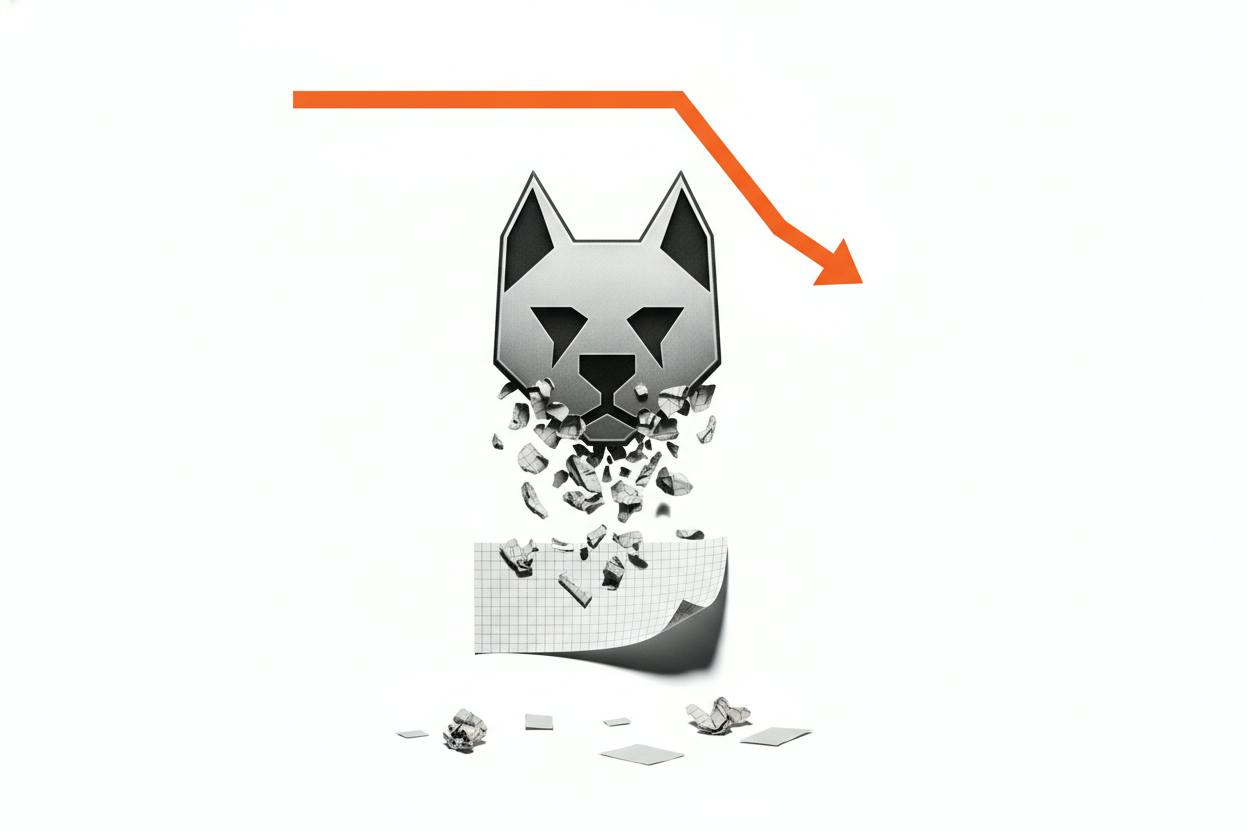
Datadog, a leading cloud monitoring and security company, saw its shares slide after the company reported better-than-expected third-quarter results but issued a fourth-quarter revenue forecast that suggested growth is cooling. The market's reaction underscores how sensitive investors are to any sign that the company's growth engine is losing steam.
Solid quarter, but the outlook matters more
For the third quarter, Datadog reported revenue of $1.20 billion, up 35% from the same period last year and ahead of Wall Street's expectations. On an adjusted basis, earnings came in at $0.81 per share, well above the $0.64 that analysts had forecast, according to FactSet.
But investors focused on what the company said about the current quarter. Datadog guided fourth-quarter revenue to a range of $1.19 billion to $1.20 billion, which is essentially flat compared with the third quarter and only roughly in line with consensus estimates. At the high end, that implies growth of about 26% year-over-year, a clear step down from the 35% pace seen in the third quarter.
That kind of sequential flattening is a red flag for a company that investors have come to expect rapid expansion from. When a growth stock's forward guidance disappoints, the market often punishes the shares, even if the past quarter was strong.
Why usage matters for Datadog
Datadog's business model is tied to how much customers use its software. The company charges based on usage, such as the volume of data monitored or the number of servers tracked. That means revenue can swing quickly if customers scale up or down their activity.
Truist Securities flagged a specific concern: management said the outlook reflects a "meaningful reduction in usage" from its largest AI-native customer. That is a significant detail because it shows that even a single large client can have an outsized impact on the company's near-term results.
CEO Olivier Pomel argued that artificial intelligence remains a long-term tailwind for the company, pointing to the growing need for observability and security in AI-driven applications. But the market read the guidance as evidence that usage is becoming more volatile, which makes future growth harder to predict.
What it means for investors
For everyday investors, the key takeaway is that Datadog's report highlights the risks of consumption-based software companies. When customers can dial back spending simply by running fewer workloads, revenue can become less predictable. If one large client is already cutting usage, investors often worry that others could follow, which can lead to lower valuation multiples across the sector.
This uncertainty matters more than a single quarter's beat. When the growth path looks less durable, the market tends to assign a lower price-to-earnings ratio to the stock. That can also spill over to other cloud-software companies, as investors become more cautious about the entire group.
Datadog's report could raise the bar for upcoming results from peers like Cloudflare, and later prints from Snowflake and MongoDB. In these companies, forward guidance and customer usage trends usually drive the biggest market reactions.
For those watching the broader tech sector, this is a reminder that even strong earnings can be overshadowed by cautious outlooks. The market is forward-looking, and it cares more about where growth is heading than where it has been.
As the AI boom continues, companies like Datadog are seen as key beneficiaries. But the recent guidance suggests that the path may not be a straight line. Investors should keep an eye on how usage trends evolve in the coming quarters, as that will likely determine whether the stock can regain its footing.