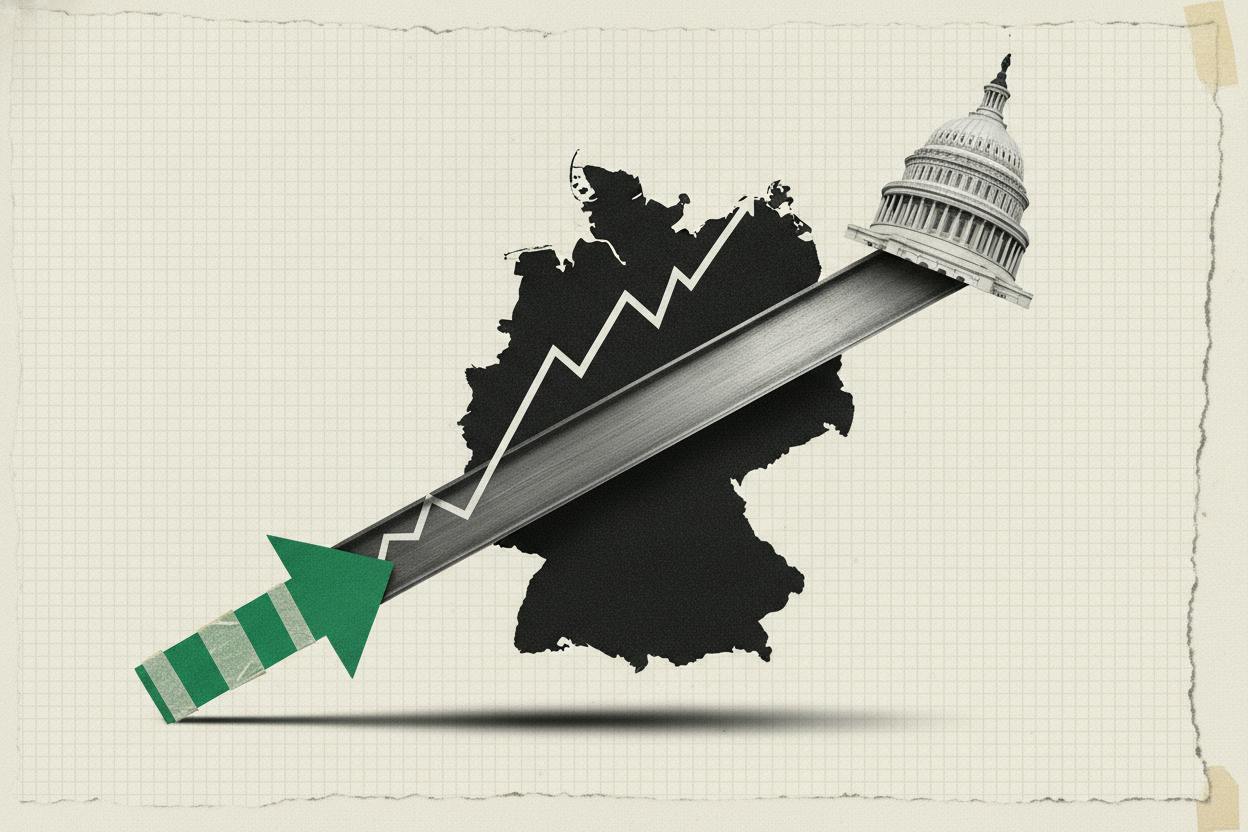
Germany's benchmark DAX index closed 2.38% higher on Wednesday, its best single-day gain in months, as investors welcomed a clearer US political landscape and cheered upbeat earnings from two of the country's industrial heavyweights. The move underscores how markets often blend political headlines and corporate fundamentals into a single 'risk-on' story.
US politics: a friendlier setup for global markets
The catalyst for the broad rally was the news that Democrats had secured control of both chambers of the US Congress. For global investors, a divided government—or in this case, a unified Democratic one—can signal different things. But the immediate read was that major policy shifts, such as sweeping tax changes or aggressive trade measures, could be harder to push through quickly. That reduces uncertainty for multinational companies, including those in Germany that rely heavily on US demand and trade.
As we noted in our earlier coverage of the dollar's slip after the Democratic sweep, currency markets also reacted to the political shift. A weaker dollar can be a tailwind for European exporters, making their goods cheaper for US buyers and boosting the value of dollar-denominated earnings when converted back to euros.
The political backdrop also raised questions about future regulation in areas like technology and crypto, as we highlighted in our piece on how the sweep could affect AI and crypto oversight. But for the DAX, the immediate effect was positive: less policy volatility often translates into higher risk appetite.
Earnings fuel the fire
While politics set the tone, company-specific news provided the spark. Heidelberg Materials, one of the world's largest building materials companies, saw its shares jump after reporting third-quarter results that beat expectations. Management pointed to steady momentum in its European operations, reassuring investors that demand remains resilient despite broader economic concerns.
Continental, the automotive supplier and tire maker, also climbed after raising its outlook for 2026. The company's improved guidance suggests that cost-cutting measures and a recovery in auto production are starting to pay off. For investors, such upgrades are often seen as a sign that management has confidence in the future, which can lift the entire sector.
These earnings beats are particularly notable because they come at a time when Germany's services sector has shown signs of cooling, as we reported in our analysis of October's slowdown in services growth. The fact that industrial giants are still performing well suggests that the manufacturing backbone of the German economy may be more resilient than some feared.
What it means for investors
For everyday investors, days like this are a reminder that markets are driven by a mix of macro forces and micro fundamentals. The DAX's rally shows that political clarity—even if it means a more active government—can be welcomed if it reduces uncertainty. At the same time, strong earnings from individual companies can provide a solid foundation for gains that might otherwise be fleeting.
Investors should note that a single day's move doesn't define a trend. While the DAX's 2.38% jump is impressive, it's important to look at the broader picture. The German economy faces headwinds from high energy costs, a slowdown in China, and the European Central Bank's ongoing fight against inflation. Yet, if companies like Heidelberg Materials and Continental continue to deliver, the market may find support.
For those with exposure to European equities, the key takeaway is to watch how political developments in the US translate into actual policy. A Democratic Congress could mean more fiscal stimulus, which might boost global growth but also raise concerns about inflation and interest rates. Similarly, earnings season will remain a critical driver, as we've seen with mid-cap banks benefiting from repricing and other sectors reacting to their own results.
Looking ahead
Investors will now turn their attention to upcoming economic data and the rest of the earnings calendar. In the US, a data-heavy Wednesday could provide more clues about the health of the world's largest economy. In Europe, the focus will be on whether the DAX's rally can sustain momentum or if profit-taking sets in.
For now, the combination of a clearer political outlook and solid corporate results has given German stocks a much-needed boost. Whether that translates into a longer-term uptrend depends on whether the underlying fundamentals—both political and corporate—continue to support it.