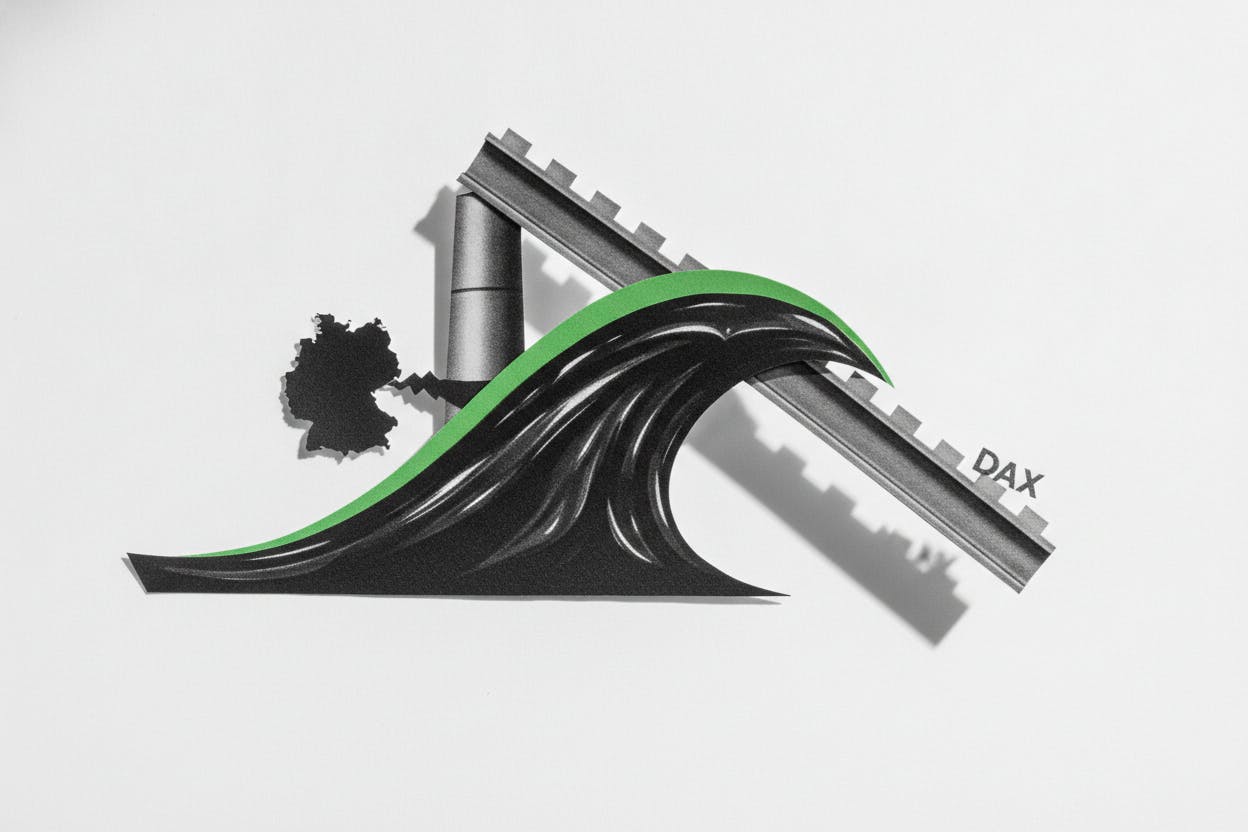
Germany's benchmark DAX index slid 2.35% on Wednesday, as a sharp escalation in US-Iran tensions rattled global markets and pushed oil prices higher. The sell-off came after fresh shipping attacks in the Strait of Hormuz and US military strikes on Iranian targets, which revived fears of supply disruptions in one of the world's most critical oil transit chokepoints.
Brent crude, the international oil benchmark, rose more than 2% to trade near $76 a barrel. The jump followed reports of new attacks on vessels in the Strait of Hormuz, through which about 20% of the world's oil passes. The US said it struck more than 80 Iranian targets, while the Treasury moved to revoke a waiver tied to Iranian oil sales. Iran's Revolutionary Guards claimed they targeted US military bases in Bahrain and Kuwait, and President Donald Trump declared that the interim memorandum of understanding with Iran was "over," dashing hopes for a quick diplomatic resolution.
Oil Surge and Risk-Off Mood
The spike in oil prices rippled through global markets, hitting stock indices particularly hard in Europe and Asia. Germany's export-heavy DAX is especially sensitive to rising energy costs, which can squeeze margins for manufacturers and logistics companies. The broader risk-off sentiment also weighed on sectors like autos, chemicals, and industrials.
Investors are now watching for further developments in the Middle East. Any sustained disruption to oil flows through the Strait of Hormuz could push crude prices higher, feeding into inflation concerns and potentially delaying central bank rate cuts. For context, higher oil prices tend to increase costs for businesses and consumers, which can slow economic growth and reduce corporate profits.
For more on how these tensions are affecting other markets, see our coverage of Asia Markets Split as Strait of Hormuz Tensions Hit Japan and South Korea Hard and Oil Surge on US-Iran Strikes Weighs on FTSE 100, Lifts Energy Stocks.
IMF Cuts Germany's Growth Forecast
Adding to the gloomy outlook for Germany, the International Monetary Fund (IMF) trimmed its 2026 growth forecast for the country to 0.7%. That's a modest downgrade from previous estimates, reflecting persistent headwinds from weak global demand, high energy costs, and structural challenges in key industries like automotive and manufacturing.
Germany's economy has been struggling with a slowdown in exports, particularly to China, and the lingering effects of higher interest rates. The IMF's revision underscores the fragility of the recovery, even as inflation has eased from its peaks. For everyday investors, a slower-growth environment can mean lower returns from German equities and a more cautious stance from companies on hiring and investment.
What It Means for Investors
The combination of geopolitical risk and weaker economic data creates a challenging backdrop for stock markets. Higher oil prices can act as a tax on consumers and businesses, reducing spending power and corporate earnings. For German investors, the DAX's decline reflects both the direct impact of energy costs and the broader uncertainty around global trade and security.
Energy stocks, however, have been a bright spot. The oil rally has lifted shares of producers and related companies, as seen in other markets like Canada's TSX, which gained 0.2% as energy gains offset a tech selloff. For more on that, check out Oil Rally Lifts TSX 0.2% as Energy Surge Offsets Global Chip Selloff.
Investors should also keep an eye on currency markets. A weaker euro could help German exporters by making their goods cheaper abroad, but it also raises the cost of imported energy, which is priced in dollars. The net effect is uncertain.
Looking ahead, the key question is whether the US-Iran standoff will de-escalate or spiral further. Diplomatic channels appear closed for now, and the revocation of the oil waiver suggests the US is tightening the screws. Any further attacks in the Strait of Hormuz could push oil above $80, testing central banks' resolve to keep rates high. For now, the DAX and other risk assets are likely to remain volatile, with energy prices as the main driver.
For a deeper dive into the oil market dynamics, read Oil Surges Past $76 as US Revokes Iran Waiver and Strikes Targets Near Strait of Hormuz.