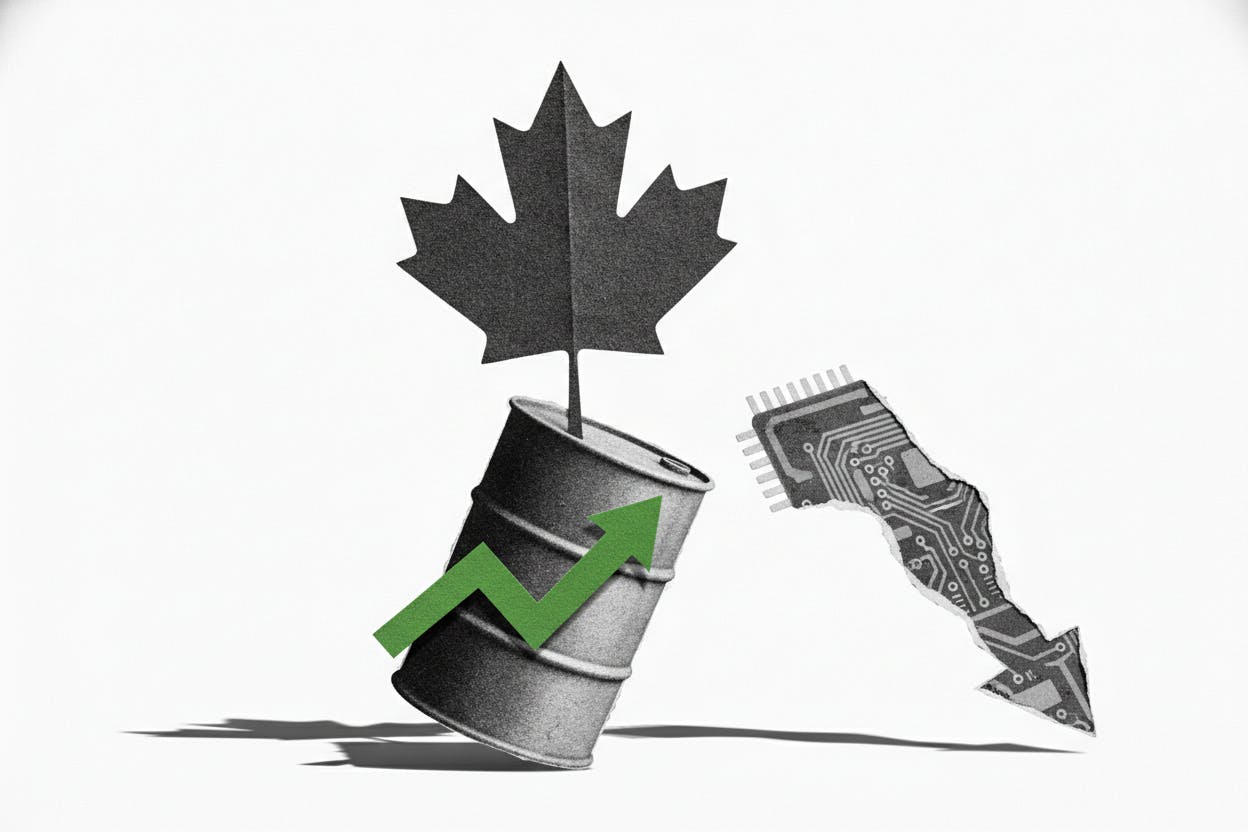
Canada's main stock index managed a modest gain on Tuesday, as a sharp rally in oil prices lifted energy shares and helped the market look past a global selloff in semiconductor stocks. The S&P/TSX Composite Index rose 0.2%, with the energy sector jumping 3% after crude oil settled 2.8% higher at $70.44 a barrel.
The move underscores how sensitive Canada's benchmark is to energy prices. When oil moves sharply, it can outweigh weakness in other heavily traded sectors like technology, where sentiment can flip quickly even on strong earnings reports.
What drove oil higher?
Crude prices climbed on a combination of supply-side headlines. Reports of vessel attacks near the Strait of Hormuz, a critical chokepoint for global oil shipments, raised concerns about potential disruptions. Separately, the U.S. revoked a license tied to Iranian crude exports, adding to the geopolitical risk premium.
For context, the Strait of Hormuz sees about one-fifth of the world's oil pass through it daily. Any threat to that route tends to push prices higher quickly, as traders price in the possibility of supply constraints.
The move also comes amid broader uncertainty in energy markets. OPEC+ production decisions, U.S. inventory data, and demand signals from major economies all remain in focus. But for now, the immediate catalyst was geopolitical, not fundamental.
Trade surplus hits four-year high
Adding to the positive tone, Canada's trade surplus reached its highest level in four years in May. The data, released earlier in the week, showed exports outpacing imports, helped in part by stronger energy shipments.
A wider trade surplus is generally supportive for the Canadian dollar, though currency markets have been more focused on interest rate differentials and global risk appetite. For a deeper look at how the oil rally is affecting the loonie, see our earlier report: Canada's Trade Surplus Hits Four-Year High as Oil Rally Lifts the Loonie.
What it means for investors
For everyday investors, the day's action is a reminder of how concentrated Canada's stock market is in energy and financials. When oil jumps, it can mask weakness elsewhere. That can be a double-edged sword: it provides a buffer during tech selloffs, but it also means the TSX is vulnerable if crude prices reverse.
Energy stocks tend to move in tandem with oil prices, but not always one-for-one. Company-specific factors—like production costs, debt levels, and dividend policies—also matter. Investors holding energy ETFs or individual producers should watch not just crude prices but also earnings reports and management guidance.
The chip selloff that weighed on global markets Tuesday was partly driven by profit-taking after a strong run in semiconductor stocks. While Canada has fewer pure-play chipmakers than the U.S. or Asia, the sector's influence on global sentiment can still ripple through to Canadian tech and growth stocks.
For context on how index changes can move markets, see our coverage of a recent major addition: SpaceX Joins Nasdaq-100 Just 15 Days After IPO, Triggering $4.3 Billion in Index Fund Buying.
What to watch next
Investors will be watching for further developments on the geopolitical front, as well as weekly U.S. crude inventory data due later this week. A larger-than-expected drawdown in stockpiles could extend the oil rally, while a build might cap gains.
On the trade front, the sustainability of Canada's surplus will depend on global demand for commodities and the health of the U.S. economy, Canada's largest trading partner. Any signs of a slowdown south of the border could weigh on export volumes.
For those tracking currency impacts, the loonie's path remains uncertain. A recent analysis from National Bank of Canada suggests the loonie's rebound may be delayed: National Bank of Canada Sees Loonie Rebound Delayed Until 2027.
Overall, Tuesday's session was a textbook example of how sector composition can shape a market's reaction to global events. For Canadian investors, understanding that dynamic is key to navigating the TSX's unique risk profile.