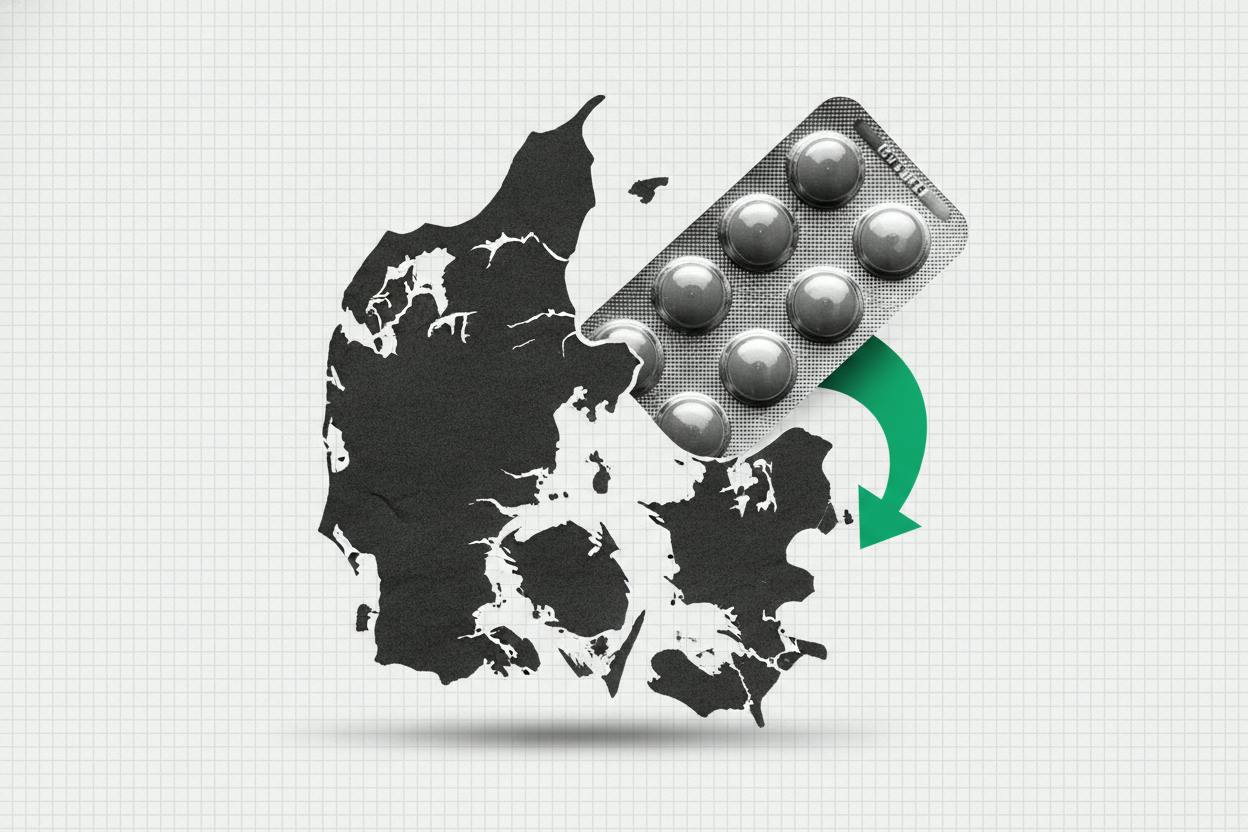
Denmark's central bank has sharply upgraded its view of the economy, now expecting growth of 4% this year. The main reason: a surge in pharmaceutical output abroad by Danish drugmakers.
Nationalbanken, as the central bank is known, said the upgrade follows what it called an extraordinary jump in pharmaceutical production outside Denmark during the first half of the year. When Danish multinationals manufacture and sell more goods in other countries, part of that value can still be counted in Denmark's national accounts, even if the factories and workers are elsewhere.
Why pharma output abroad counts at home
Denmark is home to some of the world's largest pharmaceutical companies, including Novo Nordisk, known for its diabetes and weight-loss drugs. These firms have expanded production facilities in the United States, Europe, and other regions to meet global demand.
In economic terms, the profits and intellectual property generated by these overseas operations flow back to Denmark, boosting the country's gross domestic product (GDP) even though the physical production happens abroad. This is a common pattern for small, open economies with large multinationals.
Governor Christian Kettel Thomsen has pointed to this dynamic as the key driver behind the upgraded forecast. The central bank's move echoes similar upgrades elsewhere, such as Germany's growth forecast being raised even as long-term concerns remain.
What the 4% figure means
A 4% growth rate would be a strong performance for any developed economy, and especially for Denmark, which has typically grown at a more modest pace in recent years. The upgrade suggests that the pharmaceutical sector's global expansion is having a bigger-than-expected impact on the Danish economy.
However, the central bank's forecast is not without caveats. The reliance on a single industry makes the outlook sensitive to changes in drug demand, regulatory decisions, or shifts in global trade. If the pharmaceutical boom fades, growth could quickly revert to more normal levels.
For everyday investors, this news is a reminder that a country's headline growth number can be heavily influenced by a few large companies. When those companies do well globally, the home economy can look stronger than its domestic fundamentals might suggest.
What it means for investors
For investors with exposure to Danish equities or funds, the upgraded forecast is a positive signal. It suggests that the earnings power of Denmark's largest companies is translating into broader economic strength, which can support corporate profits and, potentially, stock prices.
But it also carries a warning about concentration risk. If a large portion of a country's growth comes from one sector, a downturn in that sector can hit the economy and markets hard. Diversification across sectors and geographies remains a key principle for long-term investors.
The central bank's move also comes at a time when other central banks are adjusting their policies. For instance, Hungary's central bank has paused rate cuts due to global inflation risks, while Nigeria's central bank surprised with a large rate cut. Denmark's central bank, which pegs its currency to the euro, has less room for independent monetary policy, so its growth forecast is more about economic assessment than policy guidance.
Investors should also watch how the pharmaceutical boom affects Denmark's trade balance and currency. A stronger economy could attract foreign capital, potentially putting upward pressure on the krone, though the central bank's currency peg limits major moves.
The bigger picture
Denmark's experience is a case study in how globalisation can decouple a country's headline growth from its domestic activity. For investors, it underscores the importance of looking beyond GDP numbers to understand what is actually driving them.
As the year progresses, markets will be watching whether the pharmaceutical surge continues and whether other sectors can contribute to growth. The central bank's upgrade is a vote of confidence, but it also raises the bar for future performance.
For now, the message is clear: Denmark's economy is benefiting from the global success of its drugmakers, and that is showing up in the national accounts. Investors who understand this dynamic can better interpret the numbers and make more informed decisions.