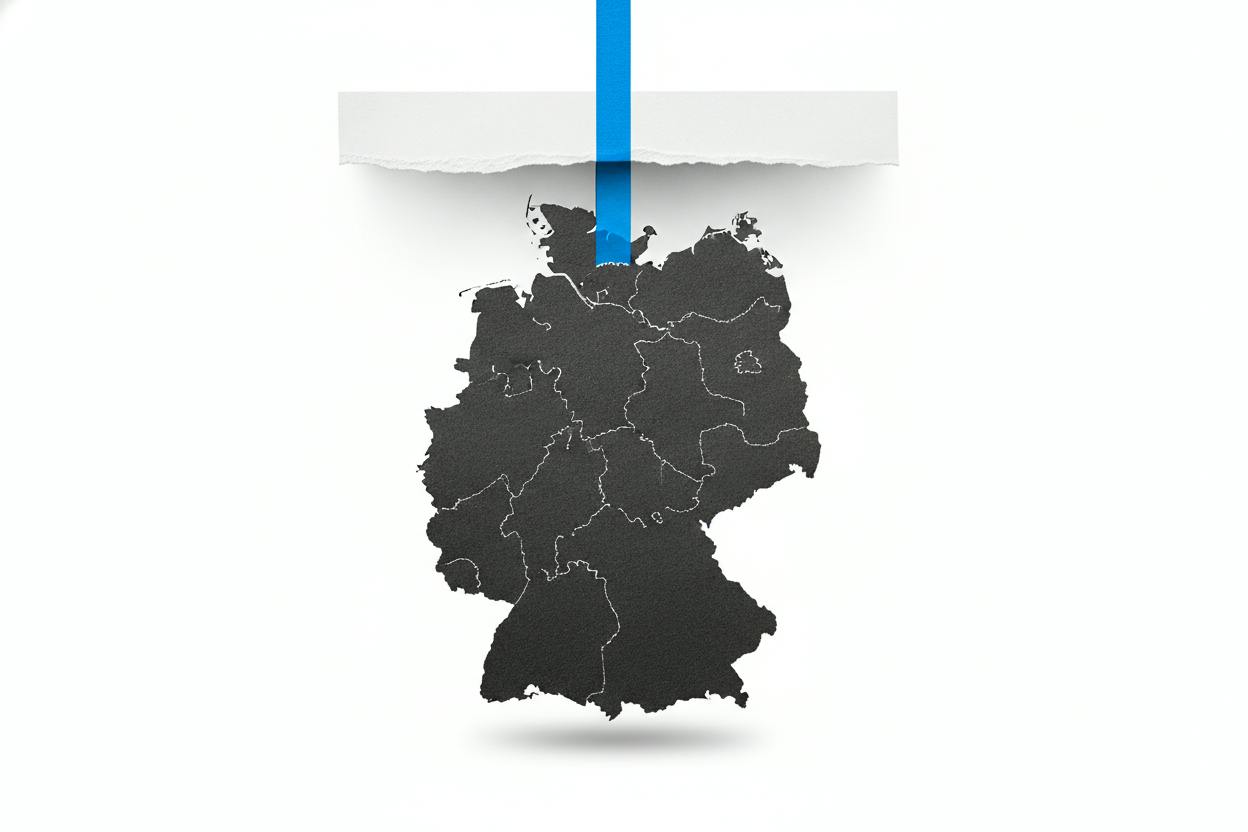
Germany's most closely watched economic forecasters have turned more optimistic about the near term. The country's five leading economic research institutes — RWI, Ifo, IfW, IWH, and DIW — now expect Europe's largest economy to grow 1.3% in 2026, a sharp upgrade from their previous estimate of 0.6%. For 2027, they lifted their forecast to 1.1% from 0.9%, according to Reuters.
The revisions reflect stronger-than-expected momentum in the first half of the year, continuing a pattern of gradual upgrades as German activity has held up better than many economists feared. But the same group expects growth to slow to just 0.4% in 2028, a reminder that the country's deeper problems have not gone away.
Why the upgrade matters
Germany is the eurozone's biggest economy, so its performance ripples across the entire currency bloc. When German factories, exporters, and consumers are doing better, it tends to lift demand for goods and services from neighboring countries and supports broader European corporate earnings. The five institutes' joint forecast is one of the most authoritative snapshots of where the economy is heading, and it is watched closely by the European Central Bank, bond investors, and multinational companies with German exposure.
The upgrade also follows a string of similar nudges higher from other forecasters, suggesting a broad consensus that Germany's near-term outlook has improved. That shift in sentiment can matter on its own: businesses and investors that feel more confident tend to spend and invest more, which can become self-reinforcing.
The structural problems that remain
The 2028 projection tells a different story. Growth of 0.4% would be barely above stall speed and far below what Germany needs to fund its aging population, energy transition, and defense commitments. The institutes' message is essentially that the recent pickup is cyclical — a rebound from weak conditions — rather than a fix for the country's underlying constraints.
Those constraints are well known. Germany's manufacturing base, long the engine of its economy, faces intense competition from cheaper producers abroad and higher energy costs at home. Its export-heavy model leaves it exposed to slowing global trade and shifting supply chains. Demographics are another drag: an aging workforce shrinks the pool of available labor and puts pressure on public finances. None of these issues can be solved by a single good quarter of growth.
Investors have been watching whether Berlin's policy response — including higher public investment in infrastructure and defense — can translate into a durable lift. So far, the institutes appear to see those efforts helping in the near term but not enough to change the longer-run trajectory.
What it means for investors
For everyday investors, the headline number matters less than the direction of travel. A stronger German economy is generally supportive for European equities, particularly industrial, automotive, and chemical companies that dominate the country's benchmark index. It can also influence the euro and the European Central Bank's thinking on interest rates: faster growth reduces the case for rate cuts, while a weak 2028 outlook keeps the door open for easier policy later.
German government bonds, known as bunds, are a key benchmark for European borrowing costs. If investors believe growth is improving, yields may drift higher; if the 2028 slowdown worries them, demand for safe-haven bunds could return. Either way, the forecast is a reminder that Germany remains a bellwether for Europe — and that its long-term challenges are not going away.
For those with exposure to European markets, the takeaway is to focus on the durability of the recovery rather than the headline upgrade. Cyclical rebounds can fade, and the institutes themselves are signaling that the structural story is unresolved. Watching upcoming data — industrial orders, exports, and business sentiment surveys — will show whether the improved momentum is holding or already cooling.
In short, Germany's near-term outlook is brighter, but the country still has work to do. Investors should treat the upgrade as a welcome sign, not a green light to assume the good times are back for good.