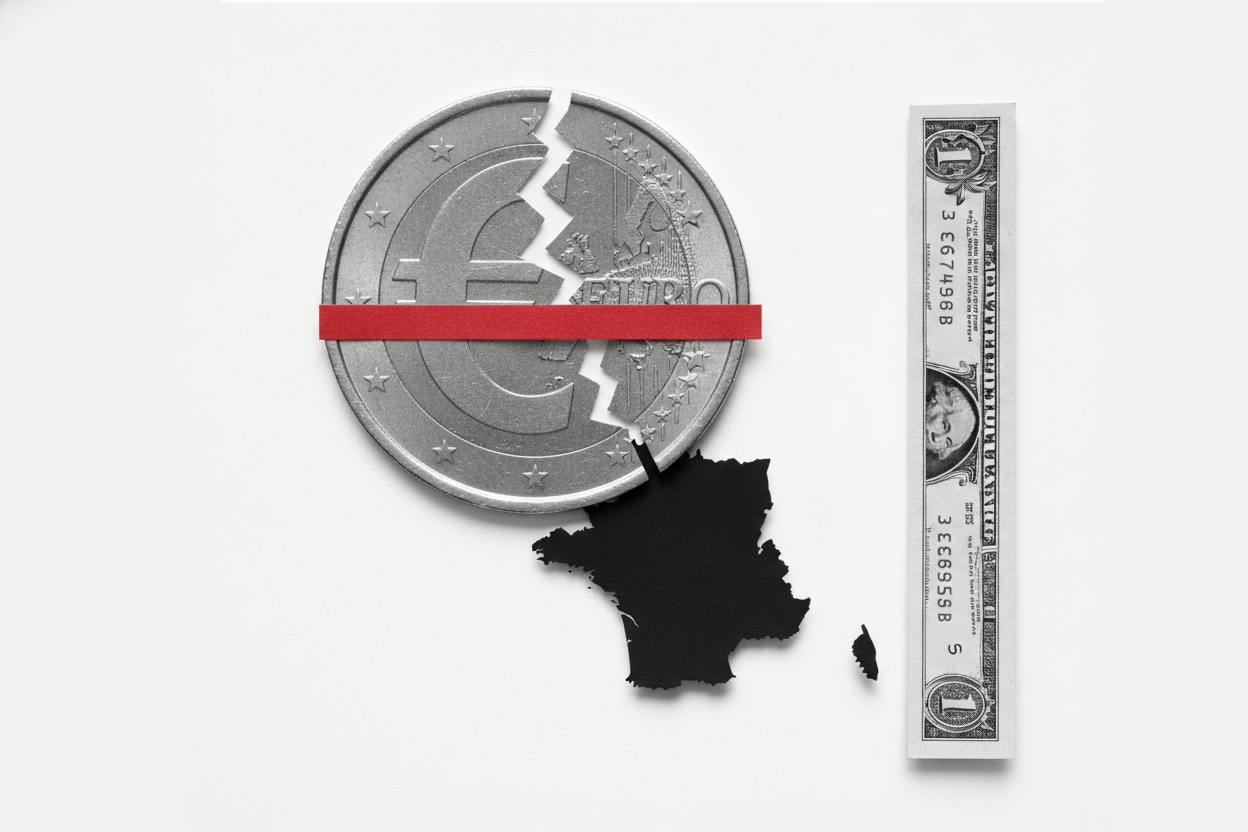
The US dollar began the week trading near a 17-month high, while the euro remained under pressure, hovering around its weakest level since May 2025. Investors are still digesting last week's global bond selloff and the shifting odds of a Federal Reserve rate hike, with France's shaky public finances adding an extra layer of anxiety for the single currency.
Bond market turmoil spills into currencies
Last week's selloff in government debt pushed borrowing costs to multi-decade highs in several major economies. French bonds took an especially hard hit as investors worried that higher oil prices could keep inflation sticky and complicate the country's budget arithmetic. That concern has kept the euro on the back foot, even as US Treasury yields have cooled slightly since the selloff.
Traders have scaled back the odds of a near-term Fed rate hike, but the dollar still looks attractive for two key reasons. First, US interest rates remain high relative to many of its peers, which makes dollar-denominated assets more rewarding for global investors. Second, when markets feel jumpy, investors often park money in the deepest, most liquid "safe-haven" markets — and the US dollar is the ultimate example.
The euro sat near $1.1246, after four straight weekly declines. Analysts point to France-specific concerns: heavy debt loads and the risk that politics makes it harder to put the budget on a steadier track ahead of next year's election. This has widened the gap between French and German bond yields, a key measure of perceived risk, to levels not seen in years.
Why France's fiscal jitters matter
France is one of the eurozone's largest economies, so its fiscal health has outsized influence on the single currency. When investors worry that a government may struggle to manage its debt, they demand higher yields to compensate for the added risk. That can raise borrowing costs for the government and, by extension, for businesses and households, potentially slowing economic growth.
The political dimension adds another layer. With an election on the horizon, there is concern that the government may be less willing to implement unpopular spending cuts or tax increases needed to stabilize the budget. This uncertainty makes it harder for investors to price French assets, and by extension the euro, with confidence.
Related coverage: France-Germany bond spread hits 2012 high and hedge funds blamed for half of France's bond sell-off.
What it means for investors
For everyday investors, the most immediate takeaway is that currency markets are being driven by volatility in interest-rate expectations. When those expectations swing around, strategies that borrow in low-yield currencies and buy higher-yield ones — known as carry trades — become harder to run. The income from the yield gap is slow and steady, but sudden exchange-rate moves can wipe it out quickly.
As rate volatility rises, leveraged investors often cut risk to stay within loss limits, which can trigger a chain reaction of position trimming. That tends to favor liquid havens like the US dollar and the Swiss franc, which was near 0.8286 per dollar, while putting headwinds on more "risk-on" currencies that investors treat as trades to reduce.
In practice, this can keep the dollar supported even if the market is dialing back the chance of an October Fed hike. It can also leave the euro, plus commodity-linked currencies like the Australian and New Zealand dollars, more vulnerable to being sold during choppy stretches. For a broader look at how the dollar's strength is affecting other currencies, see our piece on the Canadian dollar slipping to an 18-month low.
For investors with international exposure, these currency moves can have a real impact. A stronger dollar means that US-based investors holding foreign assets may see lower returns when converted back to dollars, while foreign investors in US assets may benefit. It also affects the competitiveness of US exporters and the cost of imported goods, which can feed into inflation and corporate earnings.
Looking ahead, markets will be watching for any further signs of stress in European bond markets, as well as upcoming US economic data that could influence the Fed's next move. The key US jobs report is often a major catalyst for currency moves, and any surprises could shift the outlook for rates and the dollar.
For now, the dollar's strength reflects a combination of relatively high US rates and a global appetite for safety. As long as those conditions persist, the greenback is likely to remain firm, and the euro may continue to feel the weight of France's fiscal troubles.