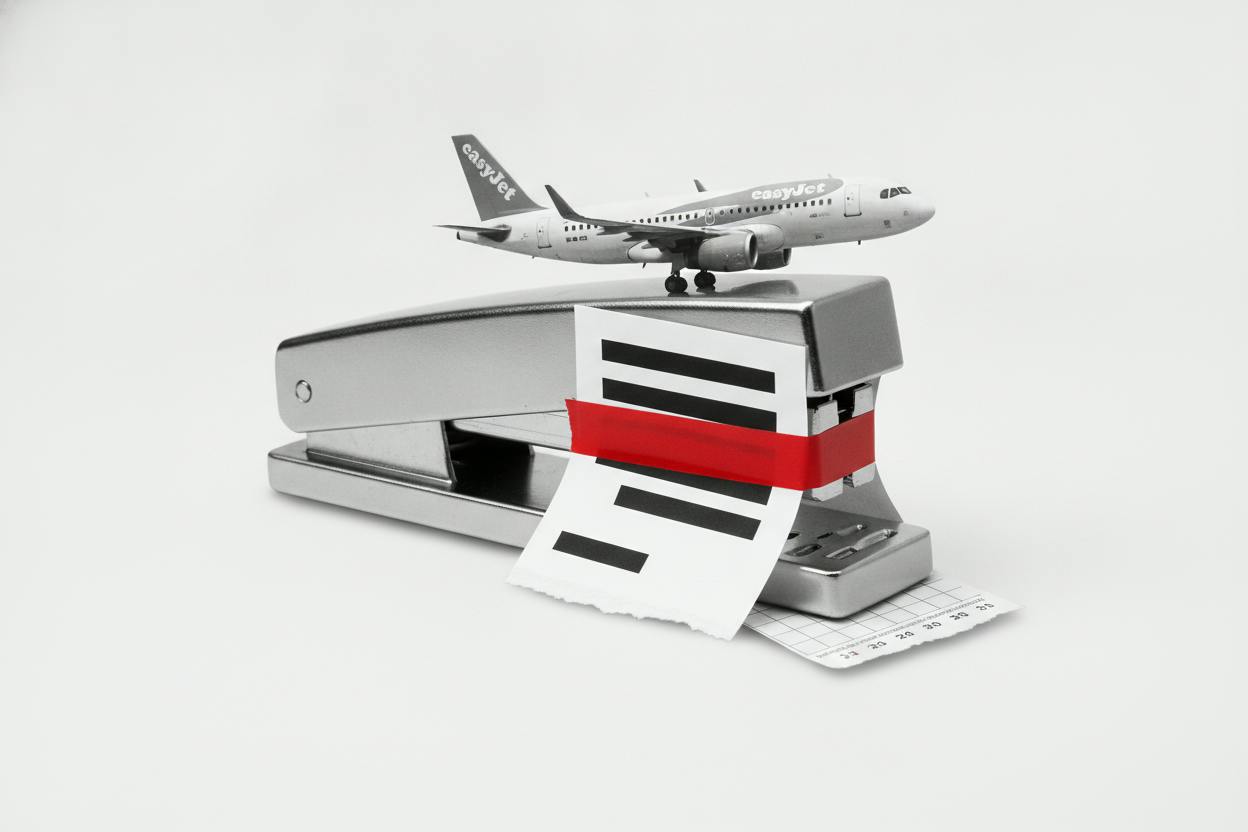
EasyJet has begun consulting staff on plans to cut around 50 roles at its Luton head office, a move that comes as the budget airline prepares for a 12-month layoff moratorium that would kick in once Apollo Global Management's £5.7 billion takeover closes.
The proposed reductions, first reported by The Times, would affect a small fraction of the airline's corporate workforce. EasyJet said the consultations involve "a very small proportion" of head office roles and stressed that it remains focused on operating efficiently while investing for future growth.
A person close to EasyJet disputed any link between the job consultations and the Apollo deal, saying the two are unrelated. But the timing has drawn attention because takeover agreements often include clauses that restrict how quickly a new owner can cut staff after closing.
What the Apollo deal means for EasyJet
Apollo Global Management, a major US private equity firm, agreed to acquire EasyJet in a deal valued at £5.7 billion. The transaction is expected to take EasyJet private, ending its listing on the London Stock Exchange. Private equity buyers typically look to improve profitability and efficiency, and headcount reductions are often part of that playbook.
However, the reported 12-month layoff moratorium would limit Apollo's ability to reduce staff in the first year after the deal completes. That constraint could push cost-cutting efforts into the pre-close period, or force the new owner to find savings through other means.
For context, airlines have high fixed costs—aircraft leases, fuel, airport fees, and crew salaries—so labour is a significant but not the only lever. When headcount reductions are temporarily off the table, companies often turn to renegotiating supplier contracts, adjusting flight schedules and capacity, or streamlining back-office processes. These measures can take longer to show up in financial results and carry more execution risk than straightforward job cuts.
Why the timing matters
The consultation on head office roles comes just as EasyJet approaches the point where such changes could become harder to make. If the Apollo deal closes with a no-layoff clause, any restructuring that involves job losses would need to be completed before that period begins—or postponed until after it ends.
This dynamic is not unique to EasyJet. In many takeovers, especially those involving private equity, the period between announcement and closing is a window for the target company to tidy up its operations. Management may accelerate decisions that would be more complicated under new ownership.
EasyJet's statement suggests the consultations are part of ongoing efficiency efforts rather than a reaction to the deal. The airline has faced rising costs and competitive pressure in the European short-haul market, and like other carriers has been looking for ways to protect margins.
What it means for investors
For shareholders, the key question is how quickly Apollo can improve EasyJet's performance after the deal closes. If the takeover includes a 12-month freeze on layoffs, the first-year "turnaround" narrative may depend less on quick job cuts and more on slower operational changes. That could make early progress harder to judge from headlines alone.
Investors should also watch how EasyJet manages its costs in the months before the deal completes. Pre-close restructuring can be a sign that management is trying to present a cleaner business to the new owner, but it can also create uncertainty for employees and disrupt operations.
The broader airline sector has been dealing with volatile fuel prices, labour shortages, and shifting travel demand. Turkish Airlines recently froze hiring as jet fuel costs weighed on profits, highlighting the industry-wide pressure on costs.
For everyday investors, this story is a reminder that takeover deals often come with strings attached. No-layoff clauses may sound like a worker-friendly provision, but they can influence how a company approaches cost-cutting both before and after the deal closes. Understanding those terms can give you a clearer picture of what to expect from a company under new ownership.
EasyJet's consultations are still at an early stage, and no final decisions have been made. The airline said it is committed to supporting affected employees through the process. The outcome will depend on the consultation and on whether the Apollo deal proceeds as planned.
As the deal moves closer to completion, investors will be watching for any signs of how Apollo plans to run EasyJet—and whether the promised efficiency gains come from headcount reductions or from more gradual operational improvements.