EOG Resources, one of the largest US shale producers, delivered a standout quarter as higher oil prices and record output combined to beat Wall Street's profit expectations. The company said its average realized crude and condensate price jumped to $86.72 a barrel from $65.95 a year earlier, while production rose 10.1% to a record 1.43 million barrels of oil equivalent per day (boed).
Revenue climbed 46.2% to $8.55 billion, well above the $7.40 billion analysts had forecast, according to Reuters. Adjusted profit came in at $4.87 per share, topping the $4.46 consensus from LSEG. The results show how a big shale operator can turn a price tailwind into extra cash when it can also grow volumes.
What drove the beat
EOG's production mix spans oil, natural gas liquids, and natural gas. The company lifted total output from 1.30 million boed in the year-ago quarter to 1.43 million boed, a record for the company. The jump came even as many US shale producers have been more cautious about spending, preferring to return cash to shareholders rather than chase aggressive growth.
The higher realized crude price was the main driver of the revenue surge. Crude prices have been supported by supply cuts from major producers and solid demand, though they remain volatile. For EOG, the combination of more barrels and better prices flowed straight to the bottom line.
Free cash flow—the cash left after operating costs and capital spending—came in at $2.18 billion for the quarter. EOG used $1 billion of that for share buybacks and raised its quarterly dividend by 8% to $1.10 per share. The dividend increase continues a trend among large energy companies of rewarding shareholders directly, a shift from the heavy reinvestment strategies of the past.
A new pricing lever for natural gas
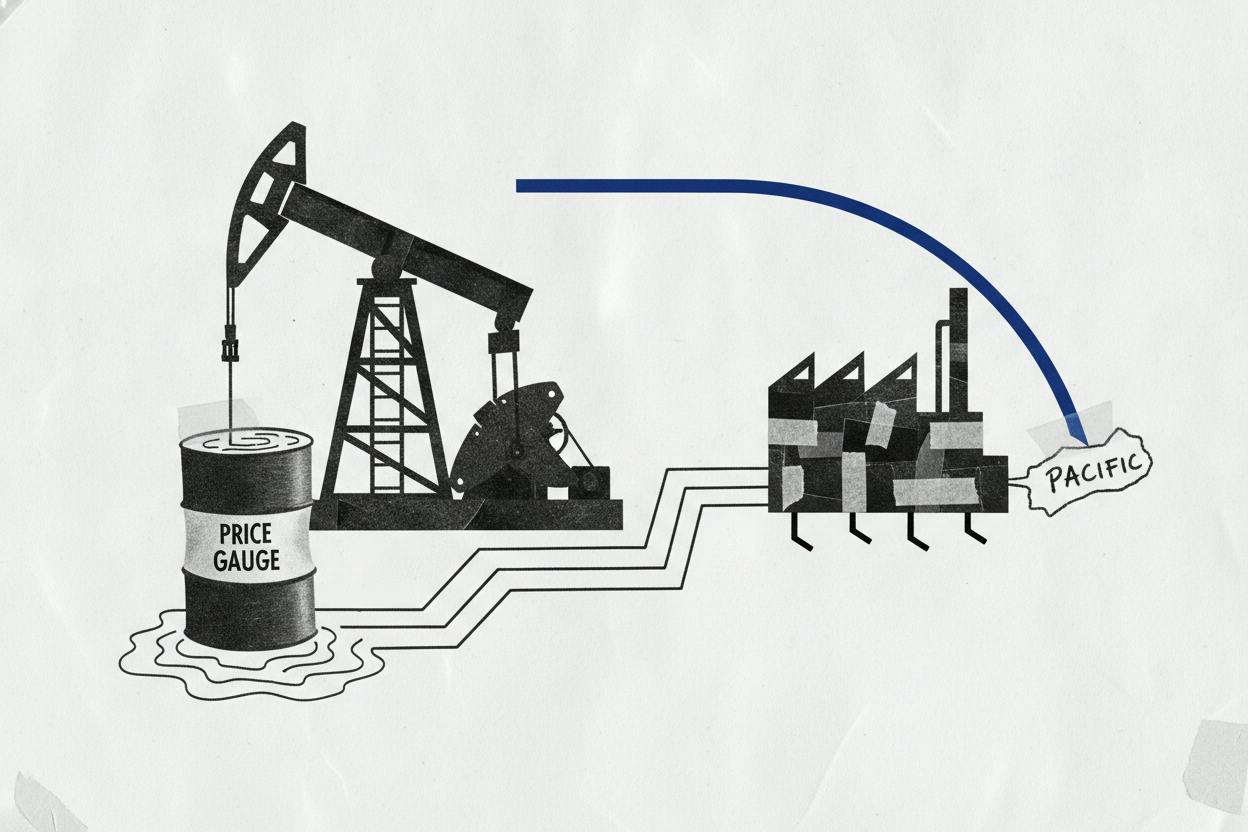
Beyond the headline numbers, EOG made two moves that could shape its future earnings. It approved an expansion of its Janus gas processing plant in the Delaware Basin, a key oil-and-gas region in West Texas and New Mexico. It also signed a long-term natural-gas sales agreement priced off the Japan-Korea Marker (JKM), a benchmark for liquefied natural gas (LNG) in Asia, with deliveries starting by 2030.
US shale gas is typically priced off Henry Hub, the main domestic benchmark. When local pipeline and processing capacity can't keep up with drilling, producers can get squeezed by low prices and bottlenecks. By expanding Janus and locking in a JKM-linked offtake deal, EOG is trying to reduce that risk while tying part of its future gas revenue to global LNG prices.
That could change how investors think about the durability of EOG's free-cash-flow engine. When oil prices cool, a slice of earnings could become less dependent on US gas gluts and more exposed to the ups and downs of international LNG markets. It's a way to diversify revenue streams, but it also introduces a new source of volatility.
What it means for investors
For everyday investors, EOG's quarter is a reminder that energy stocks can be powerful cash generators when commodity prices are favorable. The company's ability to beat profit forecasts and raise its dividend shows that disciplined operators can turn higher prices into tangible shareholder returns.
However, energy remains a cyclical business. Oil and gas prices can swing sharply, and what looks like a strong quarter today could reverse quickly if prices fall. Investors should watch how EOG manages its spending and whether it can maintain production growth without overextending.
The JKM-linked gas deal is a longer-term play. It won't affect earnings for years, but it signals that EOG is thinking about how to position itself in a global gas market that is increasingly tied to LNG. For now, the company's focus on free cash flow and shareholder returns is what's driving the stock.
EOG's results come as other energy producers also benefit from firm prices. ConocoPhillips recently raised its dividend after a strong quarter, and Devon Energy also beat profit estimates on higher output. The pattern is clear: when oil prices cooperate, the biggest US shale players are converting that into record cash returns.
But investors should also keep an eye on the broader economy. If demand weakens or supply increases, oil prices could fall, and the same leverage that boosted EOG's profits would work in reverse. That's why many analysts view energy stocks as a way to hedge against inflation, but not as a guaranteed growth engine.
For now, EOG's record output and strong cash generation make it a standout in the sector. The dividend hike and buybacks are signs of confidence, and the gas deal shows it's planning for the long term. As always, the key question is whether oil prices can hold up—and that's something no one can predict with certainty.