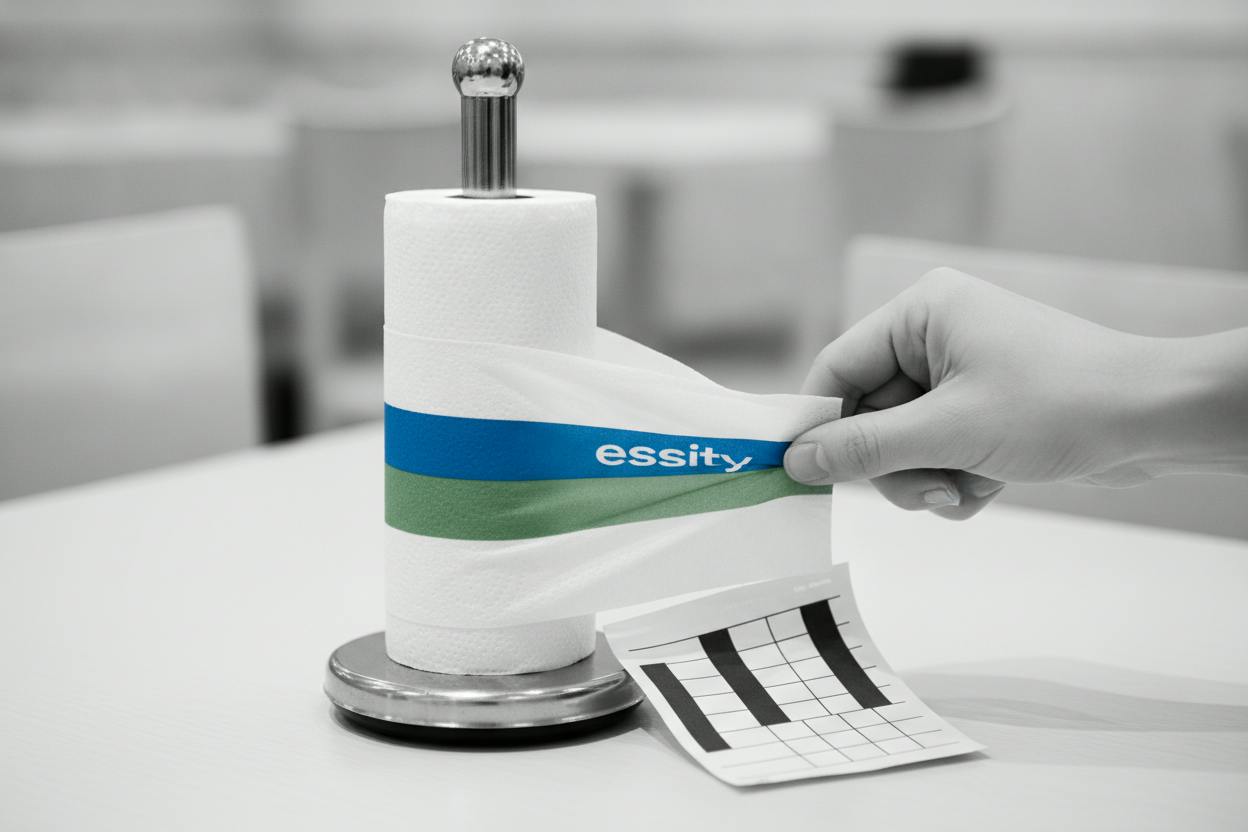
Essity, the Swedish company behind Tork paper towels and other hygiene products, has become the latest business to flag a slowdown in US consumer spending. The company said weaker demand from American restaurants is dragging on its professional unit, which supplies paper towels, soap dispensers and other “away-from-home” products to businesses. That unit generates about 40% of its revenue from the US, making it particularly sensitive to how much restaurants and other commercial customers are spending.
What's happening at Essity?
Essity is a major global player in hygiene and health products, with brands that include Tork, Libresse and Libero. Its professional unit sells to businesses rather than households — think office buildings, hotels, hospitals and, crucially, restaurants. When those customers tighten their budgets, demand for everyday supplies like paper towels and hand soap tends to fall.
According to the company, US restaurants are pulling back faster than their European counterparts. That is showing up in weaker orders for Tork paper towels and other supplies. The company did not provide specific numbers in the brief, but the message is clear: the US dining sector is feeling the pinch, and that is rippling through to its suppliers.
Why restaurants matter
Restaurants are a key customer group for Essity's professional division. When diners cut back on eating out — or when restaurants see higher costs and thinner margins — they often look for ways to save. Paper towels and other disposable supplies are an easy target for cost-cutting. A restaurant that used to stock extra rolls may now order less or switch to cheaper alternatives.
This is not just about one company. Essity's warning is a signal about the broader health of US consumer spending. Dining out is a discretionary expense, so when people tighten their belts, restaurants feel it first. That weakness can then travel up the supply chain to companies like Essity.
The trend also echoes what other consumer-facing companies have been saying. For example, Netflix recently guided to weaker fourth-quarter profit and cut its 2026 ad sales target, another sign that consumer and advertising budgets are under pressure. Similarly, Crocs' third-quarter report may look weaker due to an accounting shift, but the underlying demand picture remains uncertain.
What this means for investors
For everyday investors, Essity's comments are a useful barometer. The company is a bellwether for commercial demand, and its professional unit's reliance on the US makes it a direct read on how American businesses are feeling about the economy.
If restaurants are cutting back on paper towels, it suggests they are seeing fewer customers or tighter margins. That could be a warning for other companies that depend on discretionary spending, from casual dining chains to suppliers of other consumables.
Investors should also watch how Essity responds. The company may try to offset weaker US demand by cutting costs or focusing on other regions. But if the slowdown spreads, it could pressure the company's overall growth and profitability.
It's worth noting that Essity's professional unit is just one part of its business. The company also sells consumer products like diapers and feminine care items, which tend to be more resilient in a downturn. Still, the professional unit is a significant profit driver, and a prolonged slump in US dining could weigh on the stock.
Broader economic backdrop
The news comes at a time when investors are closely watching for signs of a slowdown. Asian stocks were steady as chipmakers rebounded, but inflation data looms large. If inflation stays sticky, the Federal Reserve may keep interest rates higher for longer, which could further squeeze consumer spending and business investment.
Higher rates also make it more expensive for restaurants to borrow, which could accelerate cost-cutting. That would be bad news for Essity and other suppliers to the food service industry.
On the other hand, some companies are finding ways to adapt. Bank of England Governor Andrew Bailey recently warned that UK firms are cutting costs as energy prices jump, a similar theme of businesses tightening their belts. But not all sectors are struggling equally — China's stock market is split as strong loan growth meets automaker risks, showing that the global picture is mixed.
What to watch next
Investors will be watching Essity's next earnings report for more details on the extent of the US slowdown. They'll also be looking at data on restaurant traffic and consumer confidence for clues about whether the pullback is temporary or a longer-term trend.
For now, Essity's warning is a reminder that even everyday products like paper towels can tell us a lot about the economy. When businesses stop buying them, it's often a sign that they're feeling the squeeze — and that can have ripple effects across the market.