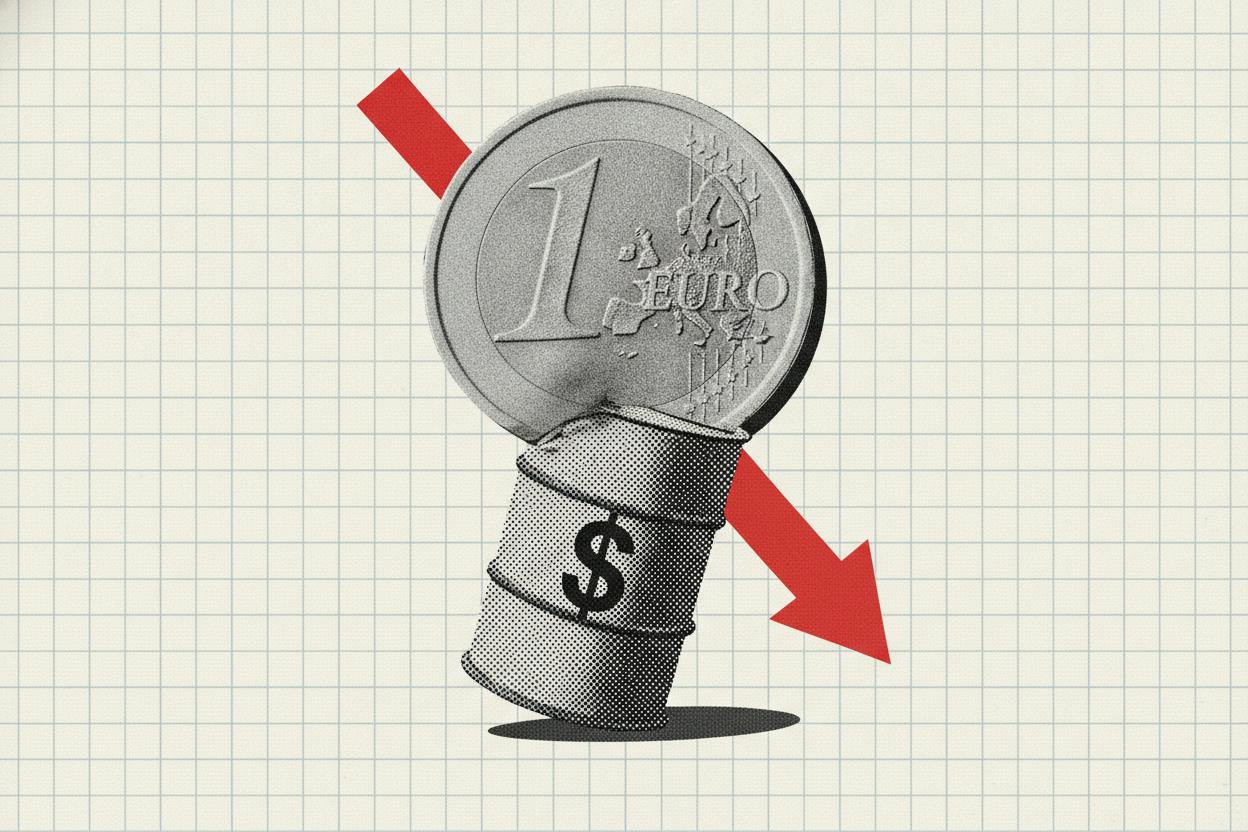
The euro dropped below $1.13 on Thursday for the first time since May 2025, marking a 17-month low. The currency has fallen nearly 2.5% in September alone, as investors grapple with rising energy costs and fresh political uncertainty in the region.
The move is rippling through European markets. French government bond yields pushed to a new 14-year high, a sign that investors are again focusing on the country's strained public finances. Even German bonds, typically seen as a safe haven, faced selling pressure, while European stocks also declined.
Why the euro is under pressure
A weaker euro is closely tied to energy prices. Oil and natural gas are largely priced in US dollars, so when the euro falls, the same barrel of oil or unit of gas becomes more expensive for European buyers. That raises import costs and can feed into broader inflation, making it harder for the European Central Bank to bring price growth back to its target.
At the same time, political developments are adding to the currency's woes. Investors are wary of fiscal instability in some of the region's largest economies, and any signs of political gridlock can quickly translate into selling pressure on the euro and on government bonds.
The combination of expensive energy and political risk is a familiar one for European markets. In the past, such episodes have led to wider yield spreads between peripheral and core eurozone bonds, as investors demand a higher premium for holding riskier debt.
What this means for investors
For everyday investors, a weaker euro has mixed implications. On the one hand, it can make European exports cheaper and more competitive globally, which could support some companies that sell heavily abroad. On the other hand, it raises the cost of imported goods, especially energy, which can squeeze household budgets and corporate margins.
For those holding European assets, the currency move is a reminder that exchange rates can have a big impact on returns, especially for international investors. A falling euro can erode the value of euro-denominated investments when converted back into other currencies.
The rise in French bond yields is also worth watching. Higher yields mean the government pays more to borrow, which can strain public finances further. For bond investors, rising yields translate into falling bond prices, so existing holders of long-dated French debt could see losses.
German bonds, often considered a benchmark for the region, also faced selling pressure, suggesting that the move is not just about France but reflects broader concerns about the eurozone economy.
What to watch next
Investors will be closely monitoring energy prices, particularly natural gas, as winter approaches. Any further spikes could add to inflation pressures and keep the euro under pressure. Political headlines from France and other major eurozone economies will also be in focus, as any escalation could deepen the selloff.
Central bank policy is another key factor. The European Central Bank has been trying to balance fighting inflation with supporting growth, and a weaker euro complicates that task by making imported inflation worse. Markets will be listening for any signals from policymakers about how they plan to respond.
For now, the euro's slide below $1.13 is a clear sign that investors are nervous about the region's outlook. While a weaker currency can help exporters, the broader implications for inflation and government finances are keeping many on edge.