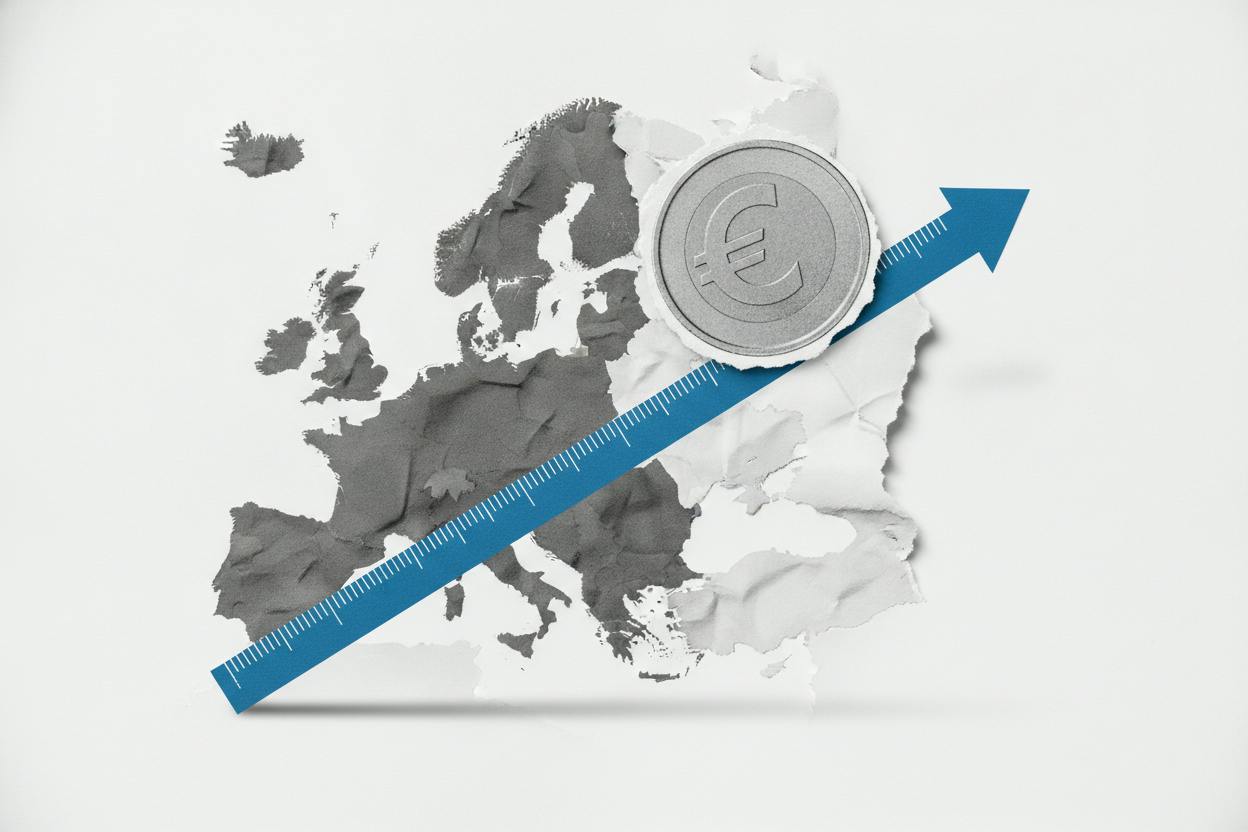
The euro tumbled to its weakest level in 17 months on Tuesday, slipping below $1.13 for the first time since May 2025. The move came as a surge in US Treasury yields boosted the dollar, while Europe grappled with higher energy costs and fresh political uncertainty.
At last check, the euro was trading near $1.1291, down sharply from recent levels. The decline marks a continuation of a broader trend that has seen the single currency lose ground against the greenback for several quarters.
Why the dollar is so strong
The dollar's recent strength has been driven largely by interest rates. Longer-term US Treasury yields have climbed sharply, with Reuters noting the biggest quarterly jump since 1994. That rise makes dollar-denominated assets more attractive to global investors, pulling capital into the US and pushing the greenback higher against a basket of major currencies.
Even after softer US inflation data reduced expectations for a near-term Federal Reserve rate hike, the dollar has held its ground. National Australia Bank strategist Ray Attrill said the day-to-day driver for currency markets is increasingly the level of the US 10-year yield. When that yield rises, the dollar tends to strengthen, and the euro tends to weaken.
Europe's tougher mix
Europe, meanwhile, is facing a more difficult set of circumstances. Oil prices have climbed, and because the region imports most of its energy, higher crude costs hit harder there than in the US. That can keep inflation sticky even as economic growth slows, a painful combination for policymakers and businesses alike.
Political uncertainty is adding to the pressure. Rabobank strategist Jane Foley pointed to lingering growth worries and political tensions, including friction in French politics and pressure on Germany's leadership after strong far-right results in regional polls. These factors make investors more cautious about holding euro-area assets.
The strain is visible across European markets. Stocks have slid, and bond prices have fallen, pushing yields higher. French borrowing costs recently hit a 14-year high, and even benchmark German debt has been sold off. When investors demand a bigger "risk premium" to hold euro-area assets, it can push yields up further, pressure local equities, and encourage global investors to cut exposure across both markets at once.
What it means for investors
For everyday investors, a weaker euro has several implications. If you hold European stocks or bonds, the currency decline can reduce the value of your investments when converted back to dollars or other stronger currencies. It also makes European exports cheaper for foreign buyers, which could help some companies, but it raises the cost of imported goods, particularly energy, which can feed into inflation.
The euro's weakness is not just against the dollar. It has also lost ground against traditional safe havens like the Japanese yen and the Swiss franc, reflecting a broad shift away from euro-denominated assets. Even if expectations for Fed rate hikes cool, the euro could remain under pressure as long as US yields stay elevated and Europe's political and economic challenges persist.
For those watching the markets, the key number to track is the US 10-year Treasury yield. If it keeps climbing, the dollar is likely to stay strong, and the euro could test lower levels. On the European side, watch for any resolution to the political tensions in France and Germany, as well as signs that energy prices are stabilizing. A drop in oil prices would ease some of the pressure on the region's inflation and growth outlook.
Currency markets are notoriously hard to predict, but the current trend is clear: the euro is under pressure, and the forces driving it lower show little sign of reversing soon. As always, it's wise to keep a long-term perspective and avoid making hasty decisions based on short-term currency swings.