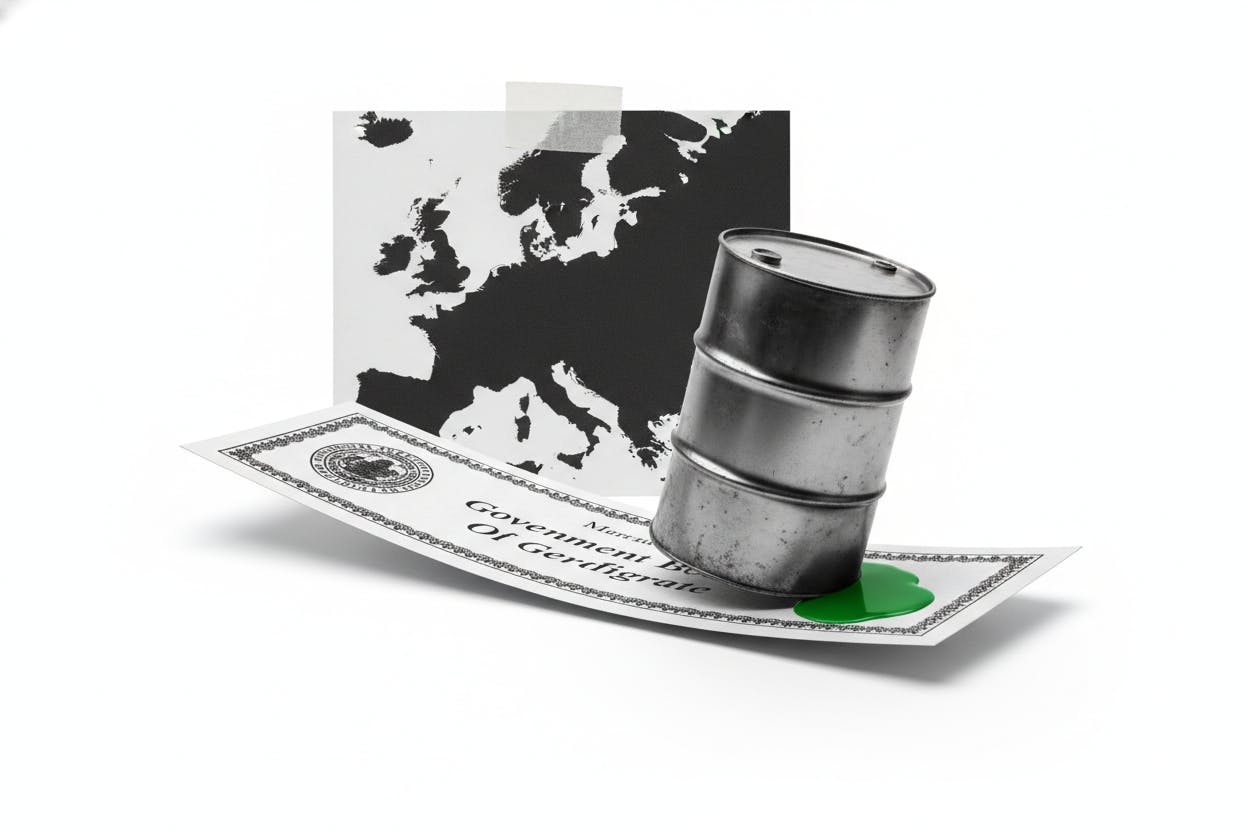
Euro zone government bond yields eased on Tuesday as oil prices hovered near four-month lows, giving traders reason to dial back expectations for near-term inflation and further interest rate hikes from the European Central Bank.
Germany's 10-year yield, the benchmark for the euro zone, dipped to 2.893%, while its 2-year yield — which is more sensitive to ECB rate expectations — slipped to 2.532%. The moves came as Brent crude fell 1.4% to $72.35 a barrel, with markets watching whether diplomatic talks between the US and Iran in Qatar could keep Middle East tensions contained and oil supply flowing.
Why Oil Matters for Bond Markets
Oil is one of the fastest-moving inputs into inflation, and lower energy prices can quickly filter through to consumer prices. That matters for bond investors because it reduces the urgency for central banks like the ECB to keep raising interest rates to cool inflation.
When crude falls, traders often revise down their expectations for headline inflation in the coming months. That shift tends to show up first in short-term bond yields, which is why Germany's 2-year yield reacted more sharply than the 10-year. The 2-year yield is a common yardstick for where investors think policy rates are headed in the near term, while the 10-year also reflects longer-run growth and inflation views.
At the same time, France's June inflation came in softer than expected, adding to the case that price pressures may be easing. Euro zone-wide inflation data is due on Wednesday, which will give a clearer picture of whether the trend is broad-based.
ECB in Focus at Sintra
The bond market moves come as ECB policymakers gather in Sintra, Portugal, for their annual forum. Speakers including ECB board member Isabel Schnabel are scheduled to address the conference, and markets will be watching for any signals about the path of interest rates.
Money markets are still pricing in one more 25-basis-point rate hike from the ECB later this year, but the softer inflation data and lower oil prices have reduced the probability of further tightening beyond that. The ECB has already raised rates at a record pace over the past year to combat inflation that peaked above 10% in the euro zone.
Investors are also keeping an eye on the US-Iran talks in Doha, which could affect oil supply through the Strait of Hormuz, a critical chokepoint for global crude shipments. Any escalation in tensions could quickly reverse the recent decline in oil prices and reignite inflation fears.
What It Means for Investors
For everyday investors, the relationship between oil prices and bond yields is a key signal for how financial markets are pricing in the economic outlook. Lower bond yields generally mean lower borrowing costs for governments and companies, which can support stock prices, especially for growth-oriented sectors.
However, the recent moves also reflect uncertainty about the pace of economic growth. If inflation continues to ease without a sharp slowdown in the economy, that would be a positive scenario for both bonds and stocks. But if lower oil prices are a sign of weakening demand rather than just easing supply pressures, it could point to a recession risk.
The front end of the bond curve — short-term yields — is likely to remain the main pressure point for euro rate pricing in the coming days, with Wednesday's euro zone inflation print and fresh messaging from Sintra providing the next catalysts.
In other markets, India's 10-year bond yield neared 6.75% on foreign buying and cheaper oil, while Japan's bond yields rose as the yen plunged to a 1986 low, stoking inflation fears there. The contrasting moves highlight how different economies are responding to the same global forces of lower oil prices and shifting rate expectations.