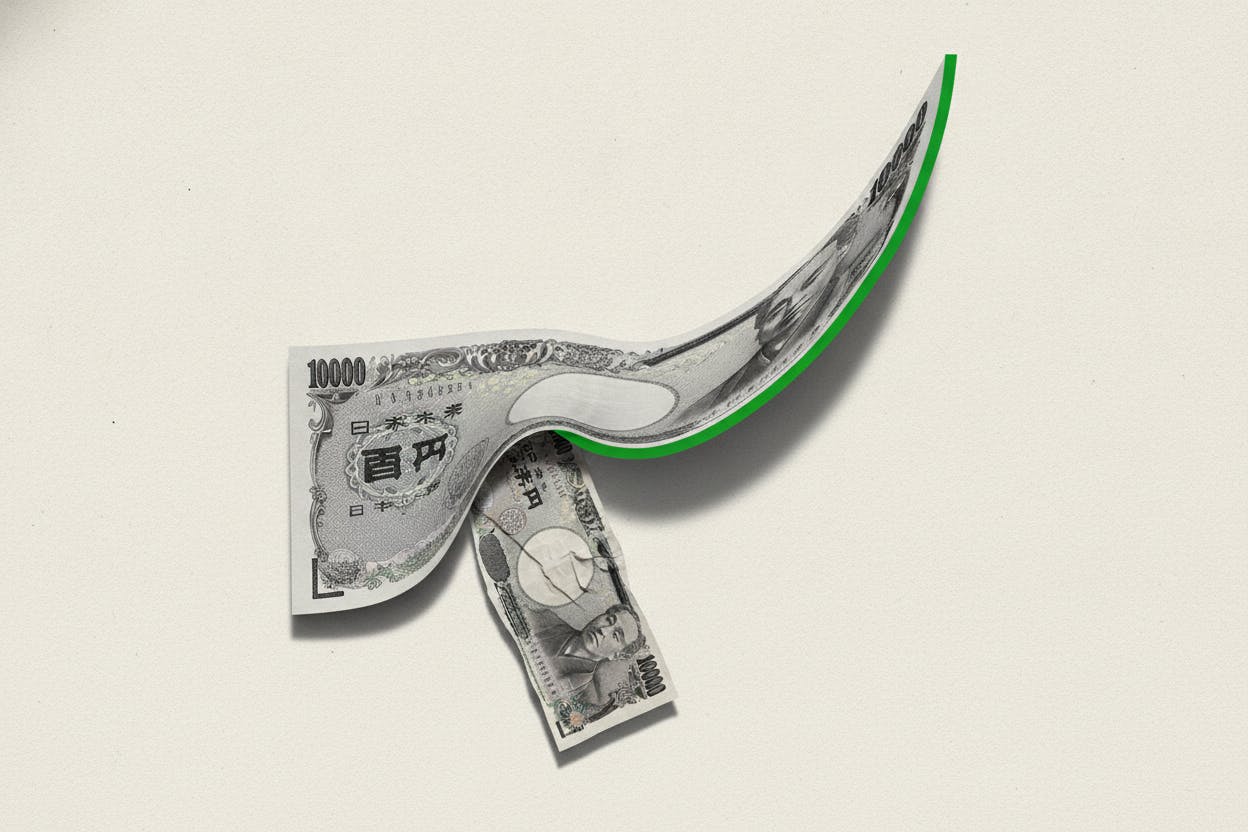
Japan's government bond yields climbed on Wednesday as the yen weakened to the 162-per-dollar range, its lowest level since 1986. The move refocused traders on inflation risks and the Bank of Japan's (BOJ) next policy steps.
The 10-year Japanese government bond (JGB) yield rose to 2.650%, while the 20-year yield reached 3.580%. The two-year yield hovered near 1.395% ahead of a Ministry of Finance (MOF) auction of about 2.8 trillion yen ($17.3 billion) in two-year notes.
Why Yields Are Rising
Bond yields move inversely to prices. When investors sell bonds, yields go up. In this case, traders leaned toward selling JGBs due to concerns that a weaker yen could push up import costs and fuel inflation. Higher inflation expectations often lead investors to demand higher yields to compensate for the erosion of purchasing power.
The yen's slide to 162 per dollar marks its weakest point in nearly four decades. A cheaper yen makes imports—especially energy and raw materials—more expensive for Japan, which relies heavily on foreign goods. That dynamic can feed into consumer prices, complicating the BOJ's efforts to manage inflation.
The MOF's auction of two-year notes added to the pressure. Ahead of the sale, investors asked for slightly higher yields across much of the curve, according to Reuters. This is a common pattern: when the government issues new debt, traders often demand a premium if they see rising inflation or policy uncertainty.
What It Means for Investors
For everyday investors, the rise in JGB yields signals that markets are pricing in a higher chance of BOJ policy tightening. The central bank has kept interest rates ultra-low for years to stimulate the economy, but persistent inflation and a weak yen are testing that stance.
If the BOJ eventually raises rates, it could have ripple effects. Higher Japanese yields might attract capital back to Japan, potentially strengthening the yen. That could impact global bond markets, as Japanese investors are major buyers of U.S. Treasuries and other foreign debt. A shift in their behavior could push yields higher elsewhere.
For investors holding Japanese stocks, a weaker yen has been a double-edged sword. It benefits exporters like Toyota and Sony by making their products cheaper abroad. But it also raises costs for importers and squeezes household budgets. The recent bond yield rise adds another layer of uncertainty, as higher rates could slow economic growth.
In the broader context, Japan's situation mirrors trends in other major economies. Treasury yields have also edged up recently as oil price gains stoked inflation concerns. Similarly, euro zone bond yields have moved in response to shifting rate hike bets. The global bond market is sensitive to any signs that central banks might need to act.
What to Watch Next
Investors will be watching the BOJ's next policy meeting for clues on whether it will adjust its yield curve control program or raise short-term rates. The central bank has signaled it may eventually normalize policy, but it has moved cautiously to avoid disrupting markets.
Also on the radar: Japan's jobs data, which recently showed a steady unemployment rate of 2.5% but cooling hiring signals. That complicates the BOJ's next move, as a tight labor market could push wages up and add to inflation, while slower hiring suggests economic weakness.
For now, the yen's slide and rising bond yields are a reminder that Japan's long era of ultra-low rates may be nearing an end. Investors should brace for more volatility as the market digests these shifts.