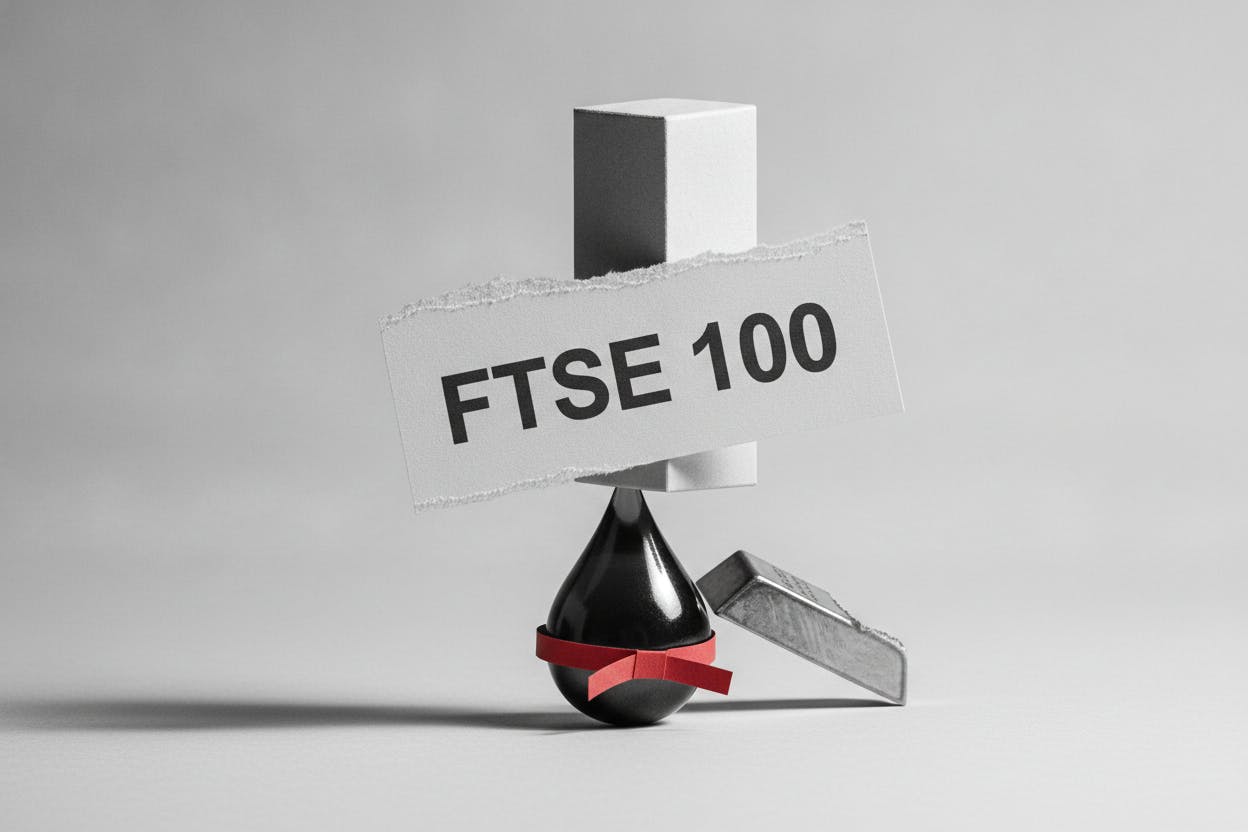
London's FTSE 100 is expected to open about 0.3% higher on Tuesday, with energy stocks leading the charge after oil prices edged up on fresh supply worries and BP announced a new gas project in Venezuela.
The move comes after a down day for the index, which slipped as mining-heavy stocks weighed on sentiment following a bout of copper price jitters. Now, the momentum has shifted to the oil patch, where crude prices are climbing on geopolitical tensions.
Why oil is rising
Reuters reported that crude prices edged higher after the United States floated the idea of an indefinite naval blockade of Iran. While no immediate action has been taken, the mere suggestion is enough to unsettle markets. Traders often build a "risk premium" into oil prices when there's a chance that shipments from a major producer could be disrupted. Even if nothing changes right away, the threat itself can lift prices.
Iran is a significant oil producer, and any blockade of its waters could tighten global supply. That's why energy stocks, which benefit directly from higher crude prices, are likely to be among the biggest gainers on the FTSE 100 today.
This isn't the first time Iran has been in the spotlight for oil markets. Talks between the US and Iran have previously complicated the outlook for the Strait of Hormuz, a crucial shipping lane for oil. And when Iran ruled out talks with the US, markets stayed flat but oil still edged higher. Today's blockade threat is the latest twist in a long-running saga.
BP's Venezuela bet
In company news, BP has signed a deal to develop the Loran offshore gas field in Venezuela. This is a significant move for the British energy giant, which has been expanding its gas portfolio. Loran is part of a larger gas-rich area in the Caribbean, and developing it could provide a new source of revenue for BP.
For Venezuela, the deal represents a potential boost to its struggling energy sector, which has been hampered by sanctions and underinvestment. For BP, it's a chance to tap into one of the world's largest gas reserves, though the project will likely take years to come online.
Investors will be watching to see how the market reacts to the news. Energy stocks often rise on such announcements, but the real payoff will come in the long term.
What it means for investors
For everyday investors, the key takeaway is that oil prices are a major driver of the FTSE 100, which is heavily weighted toward energy and mining companies. When crude rises, the index tends to benefit, as it did today. But that also means the index is vulnerable to swings in commodity prices.
If you hold a UK index fund or tracker, you're indirectly exposed to these moves. A higher oil price can boost the profits of companies like BP and Shell, which in turn can lift the value of your investment. But it also means higher fuel costs for consumers, which can feed into inflation and affect the broader economy.
Geopolitical tensions, like the Iran blockade threat, are notoriously hard to predict. Markets often overreact to headlines, and prices can reverse quickly if the situation de-escalates. Oil and gold have both been sensitive to US inflation data, which suggests that economic factors are also at play.
For now, the FTSE 100's higher open is a positive sign, but investors should keep an eye on oil prices and any further developments in the Iran situation. Stocks have been edging higher on hopes that the Federal Reserve will pause rate hikes, which could provide additional support.
The bigger picture
The FTSE 100's performance is often a reflection of global commodity prices, and today is no exception. While energy stocks are buoyant, mining shares may remain under pressure after the recent copper jitters. Copper is often seen as a bellwether for the global economy, and any weakness there can drag on the index.
Investors should also consider the broader backdrop. Central banks, including the Bank of England, are still grappling with inflation, and interest rates remain elevated. Other central banks, like the Reserve Bank of Australia, have noted that higher rates are starting to bite, which could slow economic growth and, in turn, demand for commodities.
For now, the market's focus is on oil and the geopolitical risks that come with it. But as always, investors should keep a diversified portfolio and not put all their eggs in one basket.