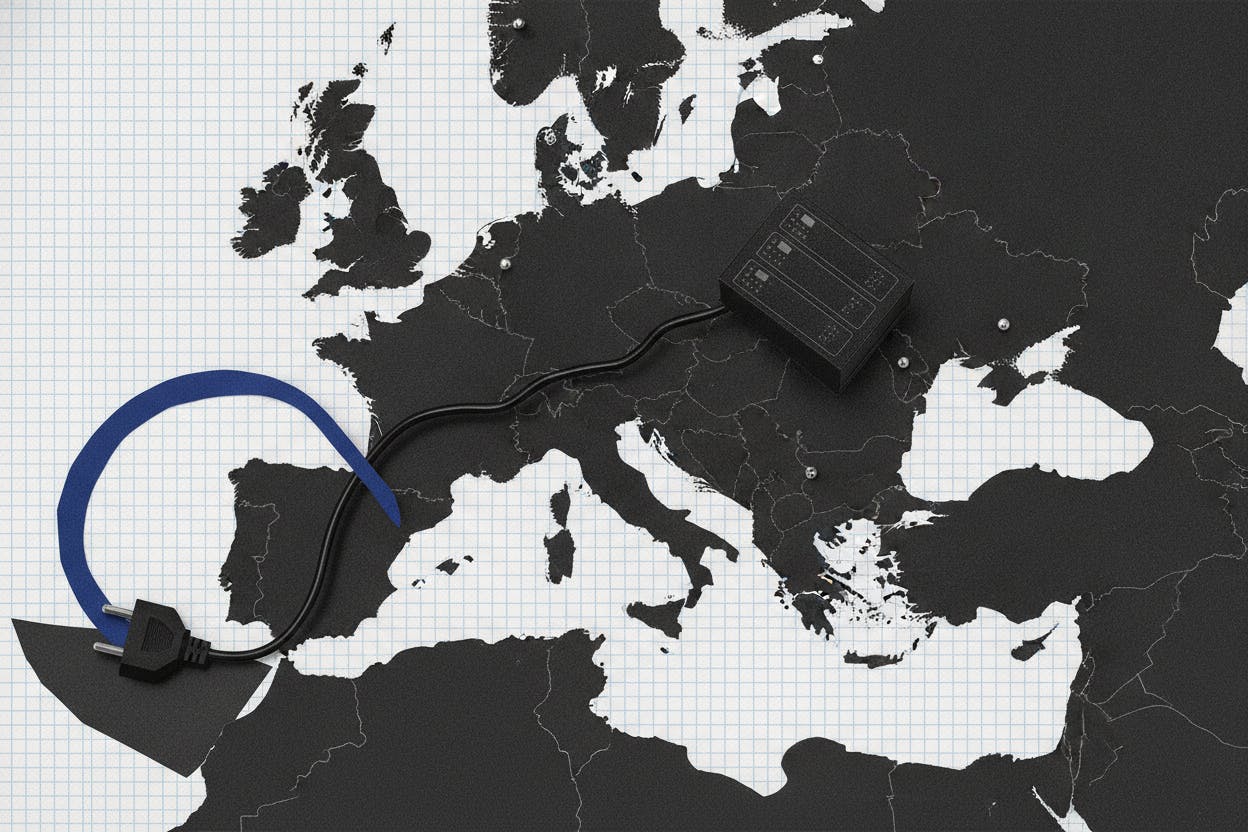
Europe's artificial-intelligence boom is reshaping where data centers get built. The next wave of massive "hyperscale" projects is moving well away from the continent's traditional tech hubs, according to real estate firm JLL data cited by Reuters. Sites planned for 2026 to 2028 sit an average of 175 kilometers from major city centers, compared with just 46 kilometers for projects delivered between 2022 and 2025.
That shift is a direct response to the enormous demands of training AI systems. Unlike a typical website or streaming service, AI models need huge, steady supplies of electricity to run the powerful chips that crunch through billions of calculations. They also need large amounts of water to keep those chips cool. Finding both in the heart of a crowded city is getting harder by the year.
Why are developers leaving the big hubs?
Europe's core data-center markets—London, Frankfurt, Amsterdam, Paris, and Dublin—have long been the go-to locations for tech infrastructure. But those cities are now running into serious constraints. Land is scarce and expensive. Planning rules are stricter, often reflecting local opposition to the noise, traffic, and visual impact of giant server warehouses. And perhaps most critically, getting a grid connection can take years because the local power network simply doesn't have spare capacity.
That has turned "powered land"—a site that already has, or can quickly get, access to electricity—into the most valuable commodity in the industry. Developers are increasingly willing to trade proximity to customers for a plot of land that can actually plug into the grid without a decade-long wait.
The trend is not unique to Europe. In the United States, data-center developers have been moving into rural areas and smaller towns for similar reasons. But the European shift is notable because the region's data-center industry has historically clustered so tightly around a handful of urban centers.
What does this mean for local communities?
Moving farther out brings its own set of challenges. Many rural and semi-rural areas are not prepared for the sudden arrival of a hyperscale data center. The most immediate concerns are water and the local power grid.
Data centers use water for cooling, and in regions already under water stress, a new facility can strain local supplies. Meanwhile, even a remote site needs a robust grid connection, and the local network may need significant upgrades to handle the load. That can mean higher costs for everyone, as utilities pass on infrastructure investments through rates.
There is also a question of what these facilities bring to the community. A data center employs relatively few people once it is built—mostly security and maintenance staff. So the economic benefit to a small town is often limited, even as the facility consumes a large share of local power and water. That dynamic is already fueling debate in several European countries about how to balance the AI boom with local needs.
What it means for investors
For everyday investors, this trend is a reminder that the AI boom is not just about chipmakers and software companies. It is also a massive physical infrastructure build-out, with real-world consequences for land, power, and water markets.
Companies that own or develop data centers—such as real estate investment trusts (REITs) and specialized developers—are likely to see their strategies shift. Those that can secure "powered land" in less crowded areas may have a competitive edge, even if their sites are farther from major cities. On the other hand, utilities and grid operators in rural regions could see new demand, but also new costs and regulatory scrutiny.
The move also highlights the growing importance of energy and water as investment themes. As Nvidia and others raise billions for AI data centers, the demand for electricity and cooling is only going to grow. That could benefit companies in the power, renewable energy, and water infrastructure sectors, though it also raises questions about sustainability and local opposition.
For now, the data-center industry is adapting to a simple reality: the easiest places to build are no longer the best places to build. The next few years will show whether Europe can balance its AI ambitions with the needs of the communities that are being asked to host these massive facilities.
Investors should watch how this plays out, especially as European stocks hover near records and the broader market digests the implications of the AI build-out. The shift to remote data centers is a structural change that could affect everything from local property values to national energy policy.
As always, it's worth remembering that no single trend tells the whole story. The AI data-center boom is real, but so are the challenges it brings. For investors, the key is to understand the full picture—not just the excitement of new technology, but also the practical limits of land, power, and water.