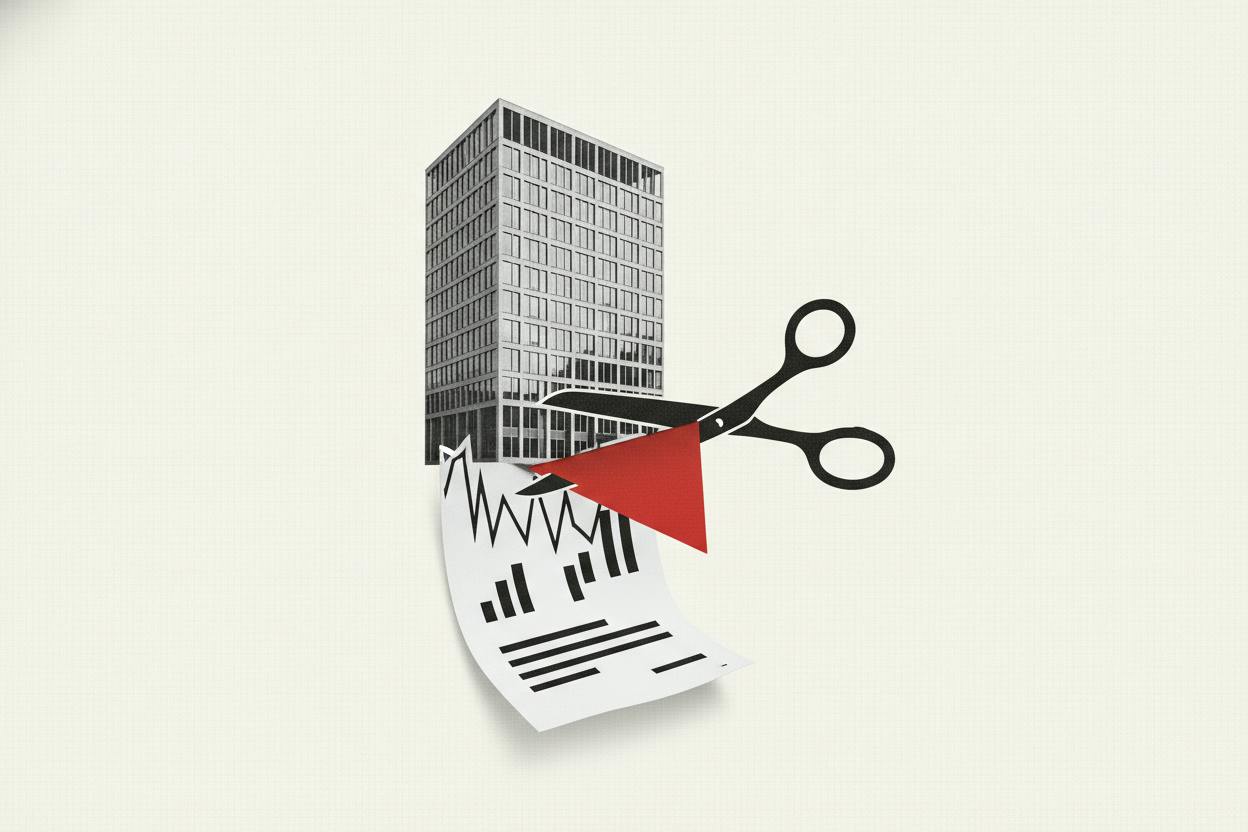
European commercial property deals are increasingly being renegotiated late in the process, with buyers pushing for price cuts of 2% to 3% on average — and sometimes more than 10% — as higher borrowing costs make financing more expensive. The trend is a direct consequence of the sharp rise in government bond yields across the region, which has raised the cost of debt for property investors and reduced the amount lenders are willing to advance against buildings.
Why higher rates hit property so hard
Commercial real estate is one of the most debt-dependent asset classes. Developers and investors typically borrow a large share of a property's value, using the building itself as collateral. When interest rates rise, two things happen: new loans become more expensive, and refinancing existing debt costs more. At the same time, lenders usually become more cautious, lowering the loan-to-value ratios they are prepared to offer. That means buyers must put up more equity and accept a lower return on their investment.
To make the numbers work, buyers demand a higher yield from the same property. Since rental income is largely fixed in the short term, the only way to achieve that higher yield is to pay less for the asset. This is why rising rates typically push property prices down — and why deals that were agreed when rates were lower are now being revisited.
The repricing is happening late in the transaction process, often after a price has already been agreed and contracts are being finalised. Investors say the cuts are usually modest — in the 2% to 3% range — but in some cases they exceed 10%, particularly for assets that are highly leveraged or in weaker locations. The result is a market where deals are taking longer to close, and some are falling apart altogether.
Sales volumes sink as buyers and sellers dig in
The renegotiation trend is accompanied by a sharp drop in transaction volumes. When buyers and sellers cannot agree on price, activity slows. Sellers are often reluctant to accept lower prices because they have their own financing and valuation expectations to meet, while buyers are unwilling to overpay in a higher-rate environment. This standoff has led to a thinner market, with fewer deals completing and more properties sitting on the market for longer.
The situation is most acute in markets where interest rates have risen fastest and where property values are most sensitive to borrowing costs. Offices, retail, and some logistics assets have been particularly affected, while residential and prime assets have been somewhat more resilient. But the overall trend is broad-based, touching most parts of the European commercial property market.
Investors are also watching the broader economic backdrop. The European Central Bank has been navigating a delicate path between fighting inflation and supporting growth, and its decisions on rates will directly influence property financing costs. A recent uptick in European stocks came as markets awaited the ECB's latest move, but the property sector remains under pressure from the rate environment.
What it means for investors
For everyday investors, the re-trading of property deals is a signal that commercial real estate values are still adjusting to a higher-rate world. If you hold shares in property companies, real estate investment trusts (REITs), or funds with property exposure, you may see continued volatility in valuations. The renegotiation trend suggests that the market has not yet found a stable price level, and further downward adjustments are possible.
It also highlights the importance of refinancing risk. Property owners with debt maturing in the next few years will face higher interest costs when they refinance, which could squeeze their cash flows and force them to sell assets at lower prices. This is a key risk for highly leveraged companies, and it is one reason why banks with large property loan books are being watched closely.
For those considering direct property investment, the current environment means that patience can pay off. Buyers who wait may find better prices as sellers become more realistic, but there is also a risk that rates stay higher for longer, keeping prices under pressure. The key is to focus on the underlying income a property generates, rather than hoping for quick capital gains.
On the positive side, the repricing is part of a natural market correction. By forcing prices down to levels where returns are more attractive, higher rates are making property more affordable for long-term investors with cash. This could eventually set the stage for a healthier market, but for now, the adjustment is still underway.
As the earnings season unfolds, investors will be listening for what property companies say about valuations and refinancing costs. Any guidance on how they are handling the higher-rate environment will be closely scrutinised. The re-trading trend is a reminder that in real estate, the price you agree to is not always the price you pay.